Department of Nephrology, Kaohsiung Chang Gung Memorial Hospital and Chang Gung University College of Medicine, 123 Ta-Pei Road, Niao-Sung, Kaohsiung, Taiwan.
Department of Biological Science, National Sun Yat-Sen University, Kaohsiung, Taiwan.
Eur Radiol. 2019 Mar;29(3):1415-1424. doi: 10.1007/s00330-018-5675-9. Epub 2018 Aug 13.
The aim of this study was to evaluate the relationship between cognitive impairment and brain perfusion using arterial spin labelling (ASL) in end-stage renal disease (ESRD) patients undergoing PD.
ESRD patients undergoing PD were recruited. Laboratory screening, neuropsychological tests and ASL magnetic resonance imaging (MRI) were conducted prior to and after 6 months of PD. Age- and sex-matched normal subjects without ESRD served as the control group. Comparisons of regional CBF between ESRD patients before or after undergoing PD and normal controls were performed. Correlations between biochemical, neuropsychological and CBF data were also conducted to evaluate the relationships.
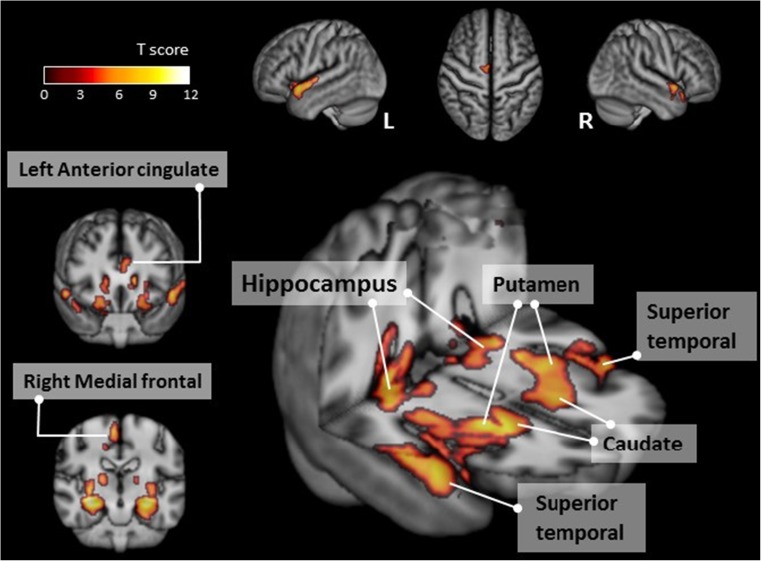
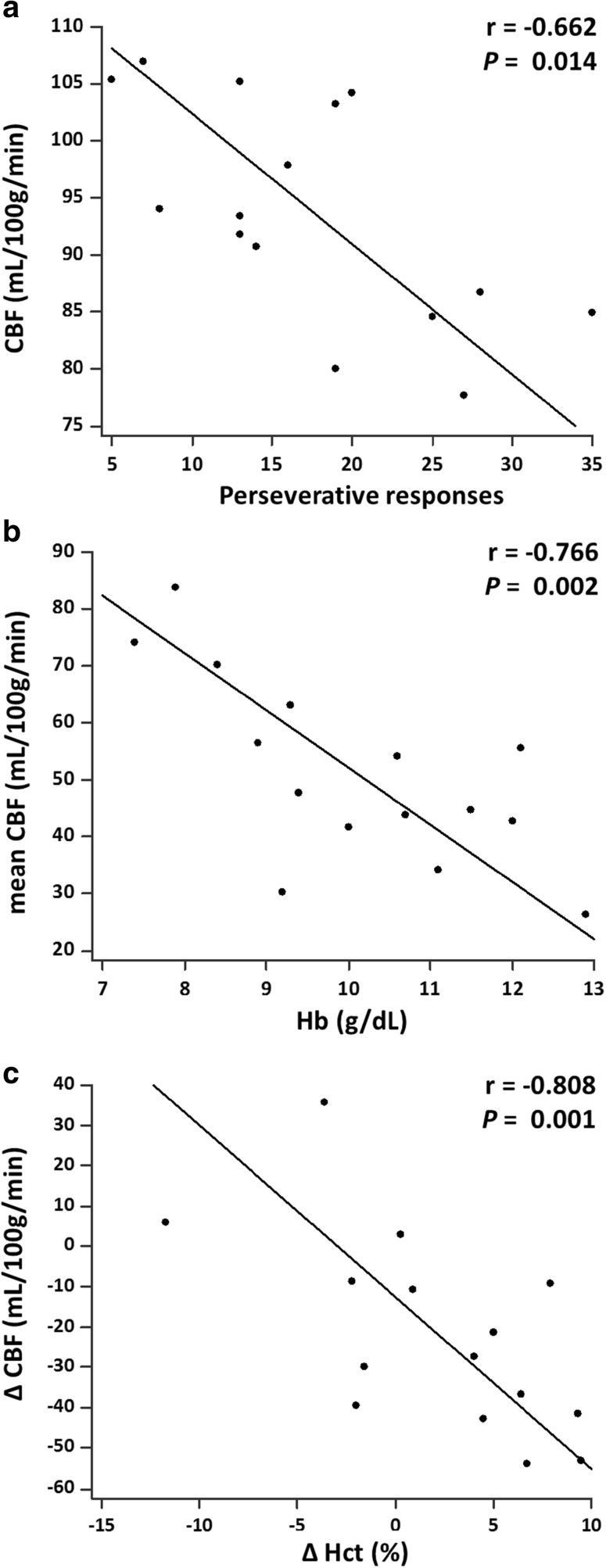
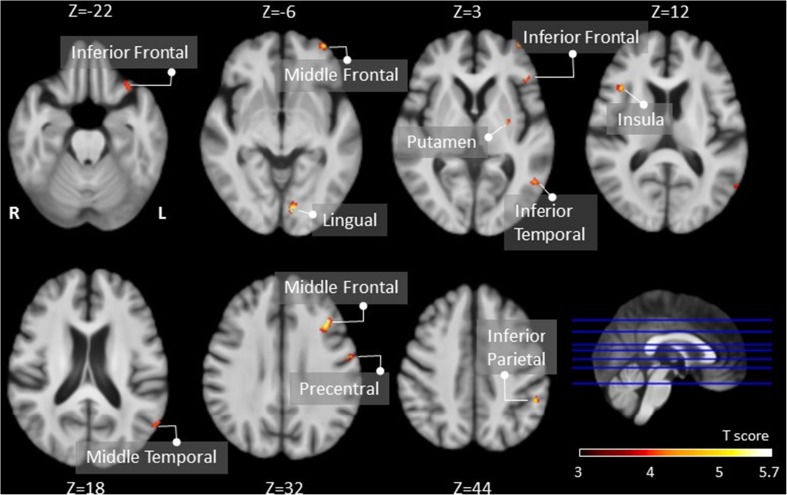
ESRD patients showed poor performance in many of the neuropsychological tests; PD improved cognition in some domains. Pre-PD patients had higher mean CBF than post-PD patients and normal controls, but no significant difference was found between the normal controls and post-PD patients. Negative correlations were observed pre-PD (regional CBF in left hippocampus vs. perseverative responses, r = -0.662, p = 0.014), post-PD (mean CBF vs. haemoglobin level, r = -0.766, p = 0.002), and before and after PD (change in CBF in the left putamen vs. change in haematocrit percentage, r = -0.808, p = 0.001).
Before PD, ESRD patients had increased cerebral perfusion that was related to poorer executive function, especially in the left hippocampus. Post-PD patients performed better in some cognitive test domains than pre-PD patients. The degree of anaemia, i.e., haemoglobin level or haematocrit percentage, might predict cognitive impairment in PD patients.
• In this study, ESRD patients before PD had cerebral hyperperfusion that was related to poorer executive function. • Post-PD patients performed better in some cognitive test domains than pre-PD patients did. • The degree of anaemia might predict cognitive impairment in PD patients.
本研究旨在评估终末期肾病(ESRD)患者接受 PD 治疗前后,通过动脉自旋标记(ASL)评估认知障碍与脑灌注之间的关系。
招募接受 PD 治疗的 ESRD 患者。在 PD 治疗前和治疗后 6 个月进行实验室筛查、神经心理学测试和 ASL 磁共振成像(MRI)。无 ESRD 的年龄和性别匹配的正常受试者作为对照组。比较 ESRD 患者 PD 治疗前后与正常对照组之间的局部脑血流量(CBF)。还进行了生化、神经心理学和 CBF 数据之间的相关性分析,以评估这些关系。
ESRD 患者在多项神经心理学测试中表现不佳;PD 在某些领域改善了认知。与 PD 治疗后和正常对照组相比,PD 治疗前的患者平均 CBF 更高,但正常对照组和 PD 治疗后患者之间没有显著差异。PD 治疗前(左海马区 CBF 与持续反应,r = -0.662,p = 0.014)、PD 治疗后(平均 CBF 与血红蛋白水平,r = -0.766,p = 0.002)以及 PD 治疗前后(左壳核 CBF 变化与红细胞压积百分比变化,r = -0.808,p = 0.001)均存在负相关。
在 PD 治疗前,ESRD 患者的脑灌注增加,与执行功能较差有关,尤其是左海马区。与 PD 治疗前患者相比,PD 治疗后患者在一些认知测试领域的表现更好。贫血程度,即血红蛋白水平或红细胞压积百分比,可能预测 PD 患者的认知障碍。
在这项研究中,PD 治疗前的 ESRD 患者存在与执行功能较差相关的脑过度灌注。
PD 治疗后患者在一些认知测试领域的表现优于 PD 治疗前患者。
贫血程度可能预测 PD 患者的认知障碍。