Towle K M, Vederas J C
Department of Chemistry , University of Alberta , Edmonton , Alberta , T6G 2G2 Canada . Email:
Medchemcomm. 2017 Jan 11;8(2):276-285. doi: 10.1039/c6md00607h. eCollection 2017 Feb 1.
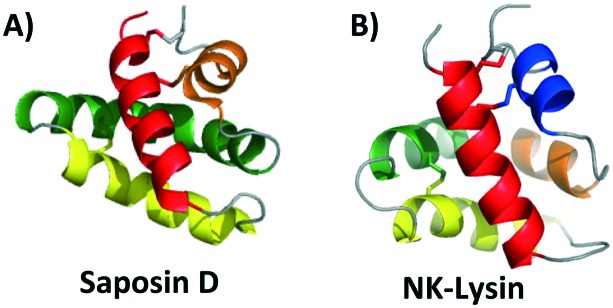
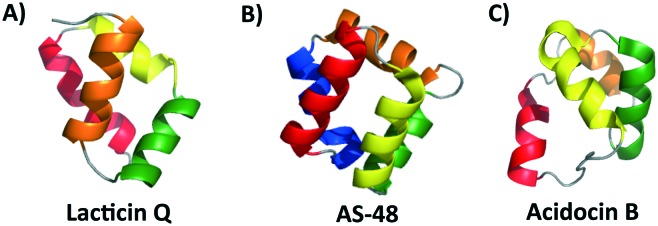
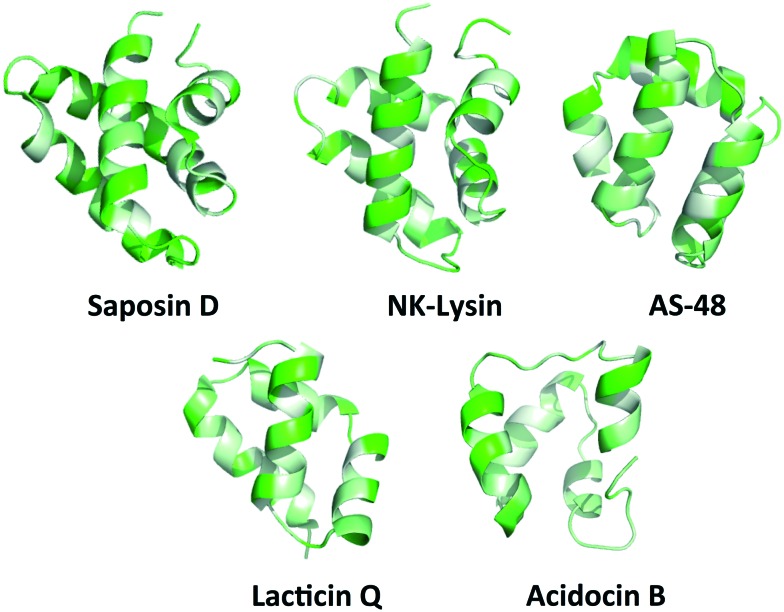
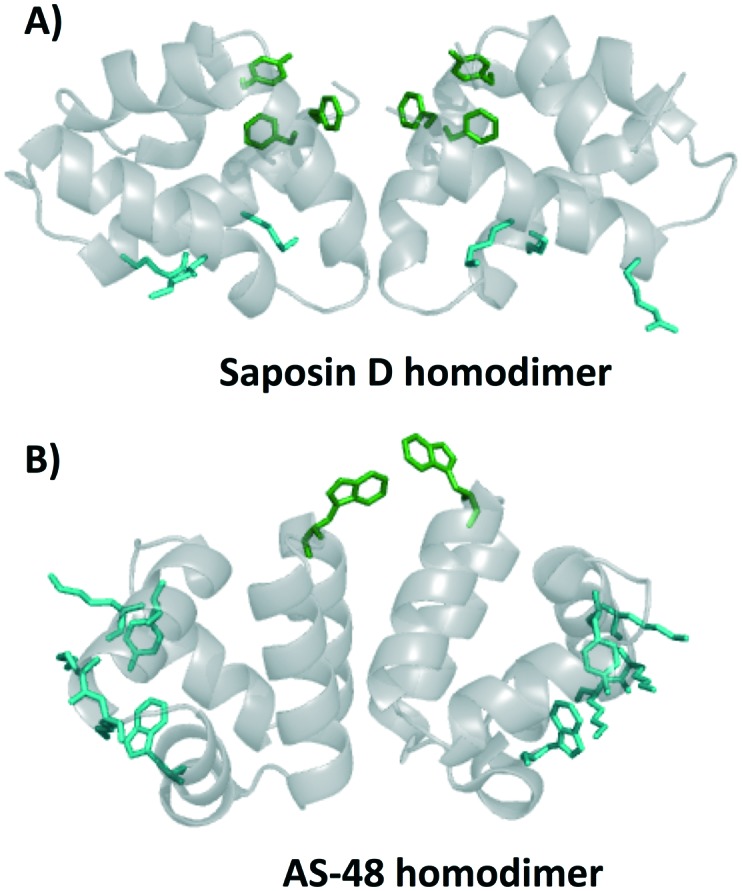
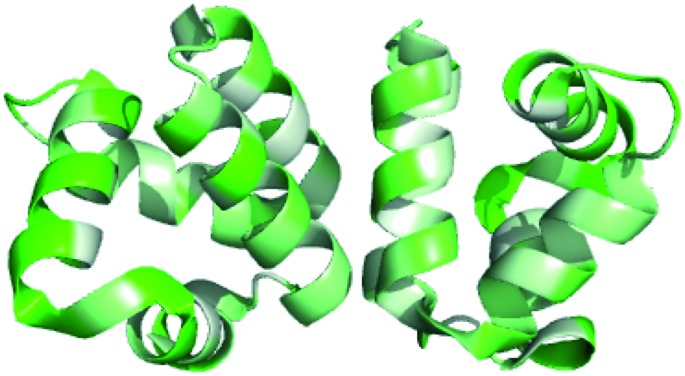
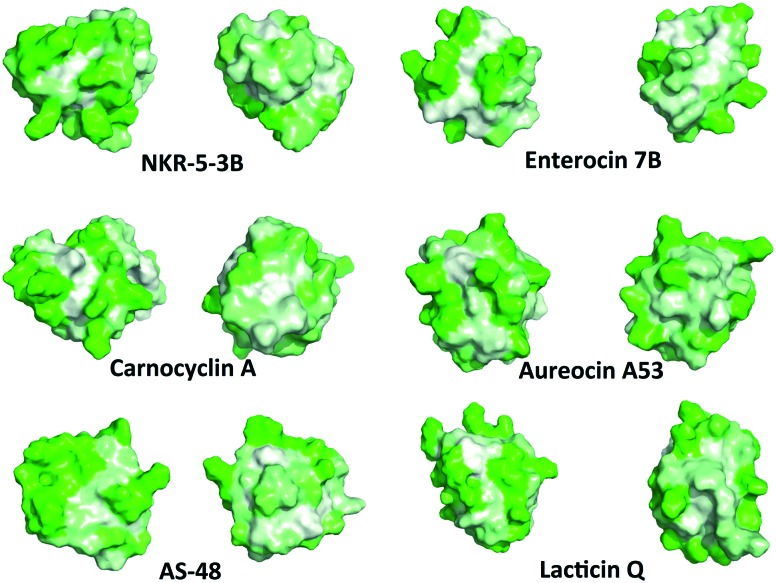
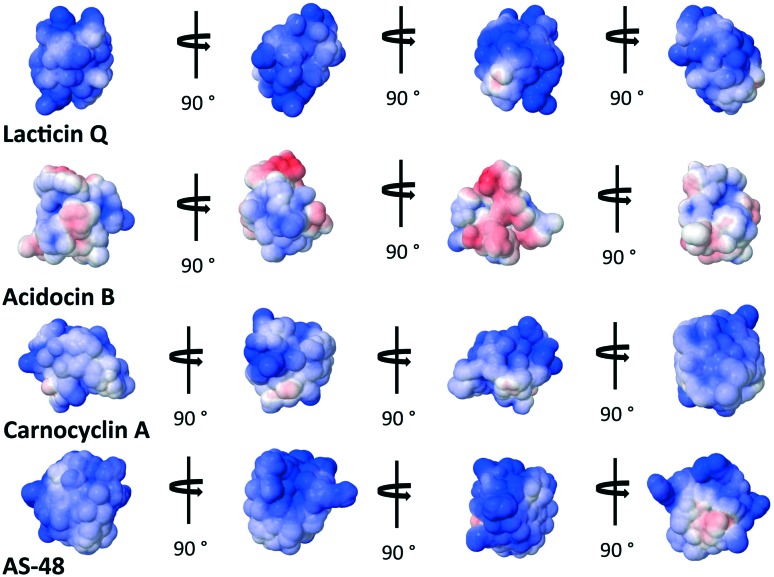
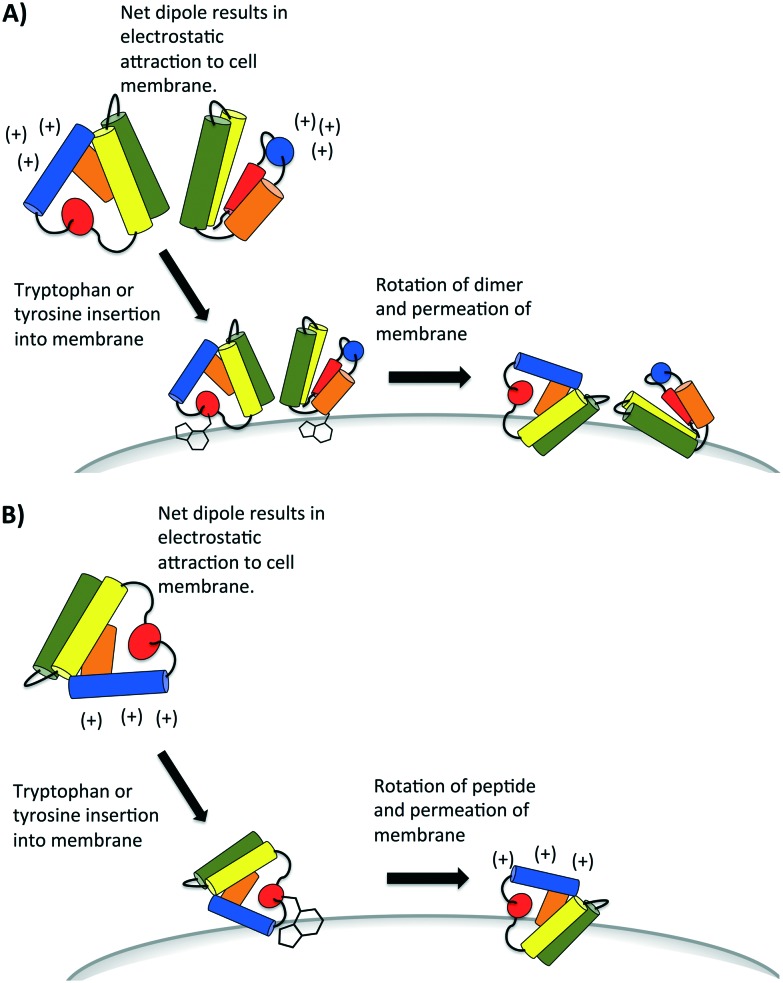
Bacteriocins are potent antimicrobial peptides that are ribosomally produced and exported by bacteria, presumably to aid elimination of competing microorganisms. Many circular and linear leaderless bacteriocins have a recuring three dimensional structural motif known as a saposin-like fold. Although these bacteriocin sizes and sequences are often quite different, and their mechanisms of action vary, this conserved motif of multiple helices appears critical for activity and may enable peptide-lipid and peptide-receptor interactions in target bacterial cell membranes. Comparisons between electrostatic surfaces and hydrophobic surface maps of different bacteriocins are discussed emphasizing similarities and differences in the context of proposed modes of action.
细菌素是由细菌核糖体产生并分泌的强效抗菌肽,可能有助于消除竞争性微生物。许多环状和线性无前导肽的细菌素具有一种反复出现的三维结构基序,称为类鞘脂激活蛋白折叠。尽管这些细菌素的大小和序列通常有很大差异,作用机制也各不相同,但这种由多个螺旋组成的保守基序似乎对活性至关重要,并且可能促成与靶细菌细胞膜中的肽-脂质和肽-受体相互作用。本文讨论了不同细菌素的静电表面和疏水表面图谱之间的比较,重点强调了在假定作用模式背景下的异同。