ElBakri Ali, Mogane Lazarus, Ezzedine Sinda, Potgieter Natasha, Bessong Pascal, AbuOdeh Raed, Samie Amidou
Medical Laboratory Sciences Department, College of Health Sciences, University of Sharjah, Sharjah, United Arab Emirates.
University of Venda, Department of Microbiology, Thohoyandou, South Africa.
Afr J Infect Dis. 2018 Jun 18;12(2):7-13. doi: 10.21010/ajid.v12i2.2. eCollection 2018.
Epidemiological data on infections in the United Arab Emirates (UAE) is scarce. Therefore, the main objective of this study was to determine the prevalence of species among a community of expatriates in Sharjah, UAE working in different sectors, including the food industry, house maids and other domestic occupations.
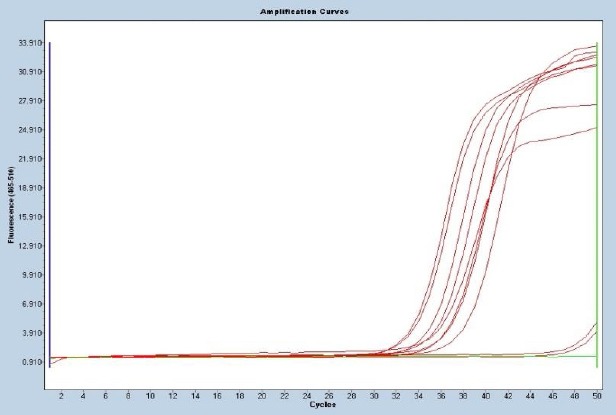
One hundred and thirty four stool samples were collected from asymptomatic individuals presenting to the Sharjah Municipality Public Health Clinic (SMPHC) for screening of intestinal parasites for work permission purposes between 2009 and 2011. Demographic information such as age, sex, and country of origin was collected. Genomic DNA extracted from the stool samples were tested for species using real-time PCR (qPCR).
Twenty-six individuals (19.4%) were positive for sp. by PCR. The infection rate was found to be highest in Afghan nationals (33%; 3/9) compared with the rest of the study population; yet, no significant association existed between nationality and infection rate. Moreover, no association was observed between infection rate and gender (χ = 2.439; P = 0.118), nor infection rate and age group (χ = 1.219; P = 0.544).
Infection by sp. was common in the study group, and further studies are needed within the native Emirati population before any conclusions can be made about foreigners potentially transmitting the parasite. Furthermore, data provided in this study could help determine its public and veterinary significance particularly in outbreaks in the country.
阿拉伯联合酋长国(阿联酋)关于感染的流行病学数据匮乏。因此,本研究的主要目的是确定在阿联酋沙迦从事不同行业(包括食品行业、家庭女佣和其他家政职业)的外籍人士群体中[某种寄生虫]物种的流行情况。
2009年至2011年间,从前往沙迦市公共卫生诊所(SMPHC)进行肠道寄生虫筛查以获取工作许可的无症状个体中收集了134份粪便样本。收集了年龄、性别和原籍国等人口统计学信息。使用实时荧光定量聚合酶链反应(qPCR)对从粪便样本中提取的基因组DNA进行[某种寄生虫]物种检测。
通过PCR检测,26人(19.4%)[某种寄生虫]呈阳性。发现阿富汗国民的感染率最高(33%;3/9),高于其他研究人群;然而,国籍与感染率之间不存在显著关联。此外,未观察到感染率与性别之间的关联(χ² = 2.439;P = 0.118),也未观察到感染率与年龄组之间的关联(χ² = 1.219;P = 0.544)。
[某种寄生虫]感染在研究组中很常见,在对外国人可能传播该寄生虫得出任何结论之前,需要在阿联酋本土人群中进行进一步研究。此外,本研究提供的数据有助于确定其公共卫生和兽医意义,特别是在该国的疫情爆发中。