Wang Xinyu, Wang Wei, Lowry Greg, Li Xiaoyan, Guo Yajie, Li Tielong
College of Environmental Science and Engineering/Tianjin Key Laboratory of Environmental Remediation and Pollution Control/Ministry of Education Key Laboratory of Pollution Processes and Environmental Criteria, Nankai University, Wei Jin Road 94, Tianjin 300071, People's Republic of China.
Department of Civil and Environmental Engineering, Carnegie Mellon University, Pittsburgh, PA 15213, USA.
R Soc Open Sci. 2018 Jun 27;5(6):172242. doi: 10.1098/rsos.172242. eCollection 2018 Jun.
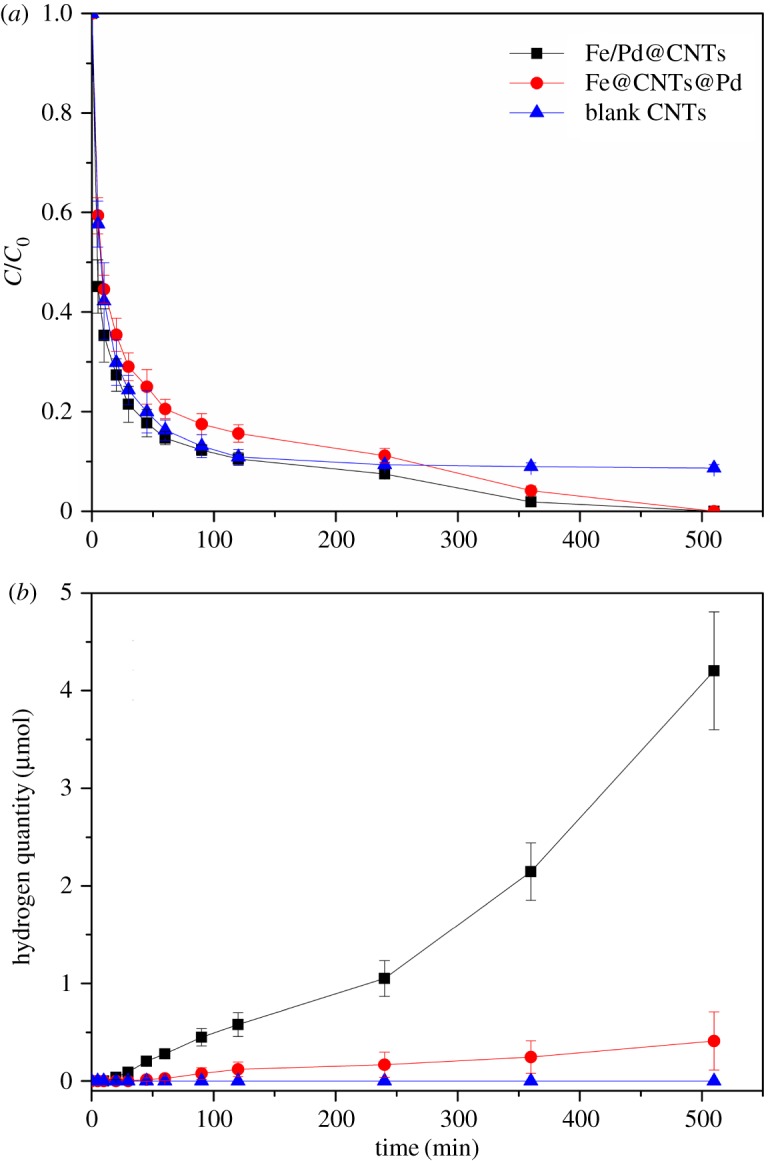
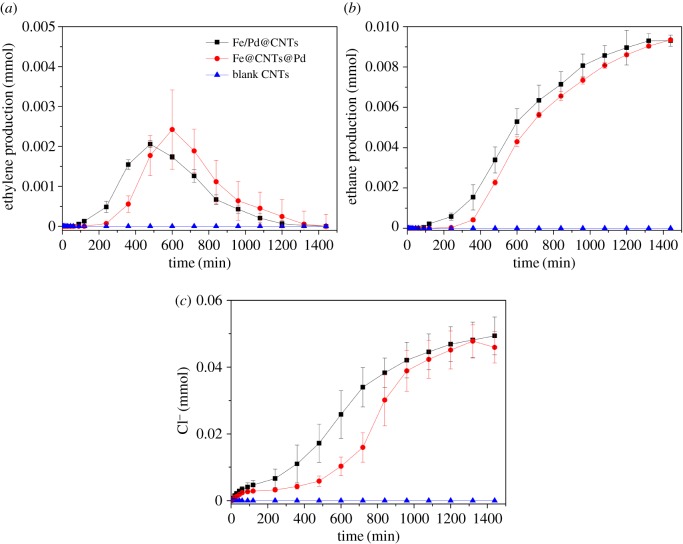
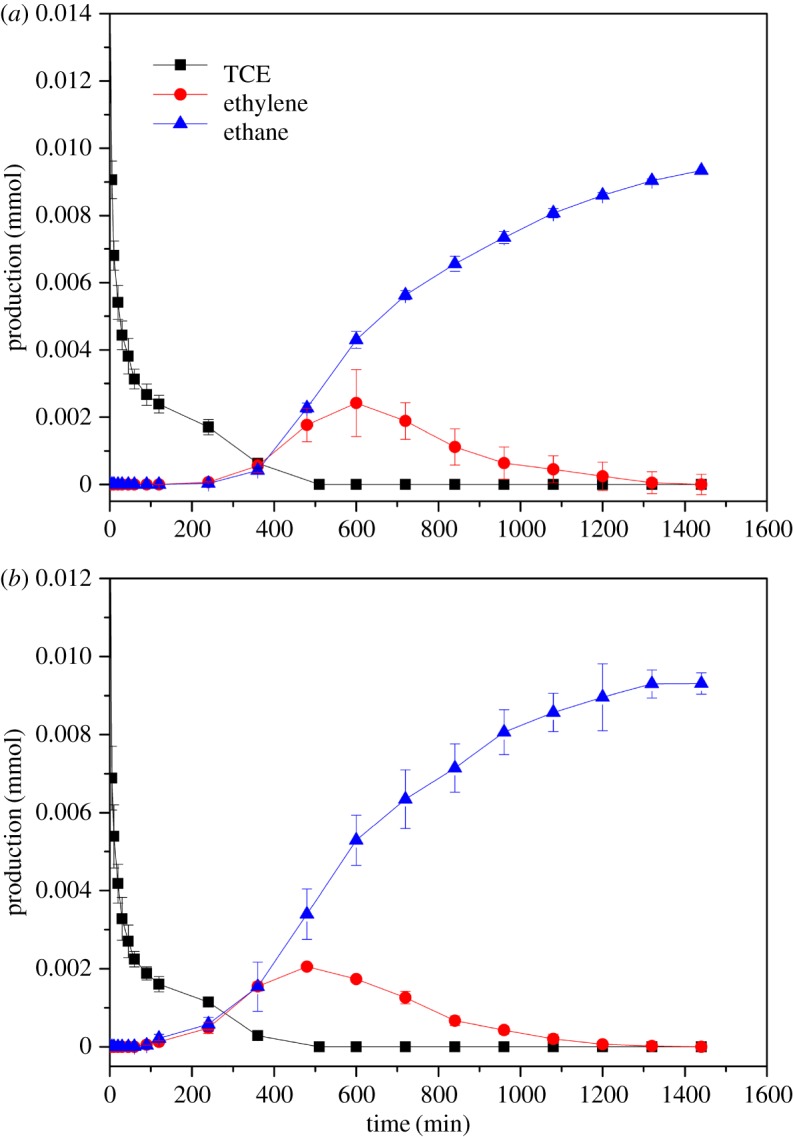
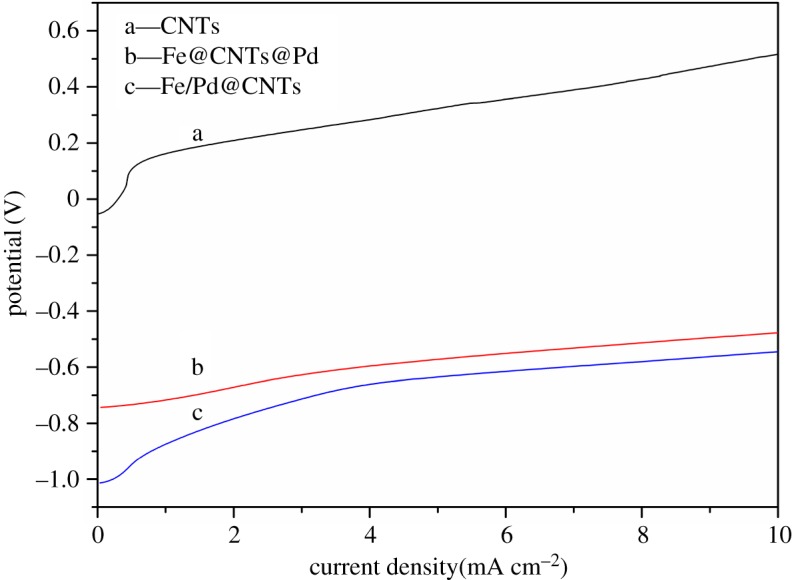
A method developed based on the capillary effect and capillary condensation theory was used to synthesize an innovative Fe/C/Pd composite in this study. This composite (Fe@CNTs@Pd) consists of carbon nanotubes (CNTs) with nanoscale zerovalent iron (NZVI) on the inner surface and palladium nanoparticles supported on the outer surface of CNTs. This structure successfully addresses the problems of high iron corrosion rate and lower utilization rate of hydrogen in the application of bimetal nanoparticles for trichloroethylene (TCE) removal. TCE degradation experiments and electrochemical tests were conducted to investigate the material properties and reaction mechanisms of the composite. It is found that the prepared composite material contribute a high level of TCE dechlorination rate and substantially reduced hydrogen production during iron corrosion in water compared with the conventional CNTs-supported bimetal materials (Fe/Pd@CNTs). Hydrogen spillover effect helps the reactivity of Fe@CNTs@Pd for TCE degradation and suppressed the galvanic cell effect, which results in a stronger resistance to corrosion. Although the of Fe@CNTs@Pd was 16.87% lower than that of Fe/Pd@CNTs, the hydrogen production rate of Fe@CNTs@Pd was 10 times slower than that of Fe/Pd@CNTs. Therefore, Fe@CNTs@Pd shows a significant reduction in the corrosion rate at a cost of slightly slower degradation of TCE. In sum, the prepared composites demonstrate important characteristics, including alleviating NZVI agglomeration, maintaining high TCE removal efficiency and reducing the corrosion of NZVI.
本研究采用基于毛细作用和毛细凝聚理论开发的方法合成了一种新型的Fe/C/Pd复合材料。这种复合材料(Fe@CNTs@Pd)由内表面带有纳米级零价铁(NZVI)的碳纳米管(CNTs)以及负载在碳纳米管外表面的钯纳米颗粒组成。这种结构成功解决了双金属纳米颗粒在去除三氯乙烯(TCE)应用中铁腐蚀速率高和氢利用率低的问题。进行了TCE降解实验和电化学测试,以研究该复合材料的材料性能和反应机理。结果发现,与传统的碳纳米管负载双金属材料(Fe/Pd@CNTs)相比,所制备的复合材料具有较高的TCE脱氯率,并且在水中铁腐蚀过程中氢气产量大幅降低。氢溢流效应有助于Fe@CNTs@Pd对TCE降解的反应活性,并抑制了原电池效应,从而使其具有更强的抗腐蚀能力。虽然Fe@CNTs@Pd的比表面积比Fe/Pd@CNTs低16.87%,但其产氢速率比Fe/Pd@CNTs慢10倍。因此,Fe@CNTs@Pd以TCE降解稍慢为代价,显著降低了腐蚀速率。总之,所制备的复合材料表现出重要特性,包括减轻NZVI团聚、保持高TCE去除效率以及减少NZVI的腐蚀。