Ravi Saranya, Parry Traci L, Willis Monte S, Lockyer Pamela, Patterson Cam, Bain James R, Stevens Robert D, Ilkayeva Olga R, Newgard Christopher B, Schisler Jonathan C
McAllister Heart Institute at The University of North Carolina at Chapel Hill, Chapel Hill, NC 27599, USA.
Indiana Center for Musculoskeletal Health, University of Indiana School of Medicine, Indianapolis, IN 46202, USA.
J Cardiovasc Dev Dis. 2018 Aug 15;5(3):43. doi: 10.3390/jcdd5030043.
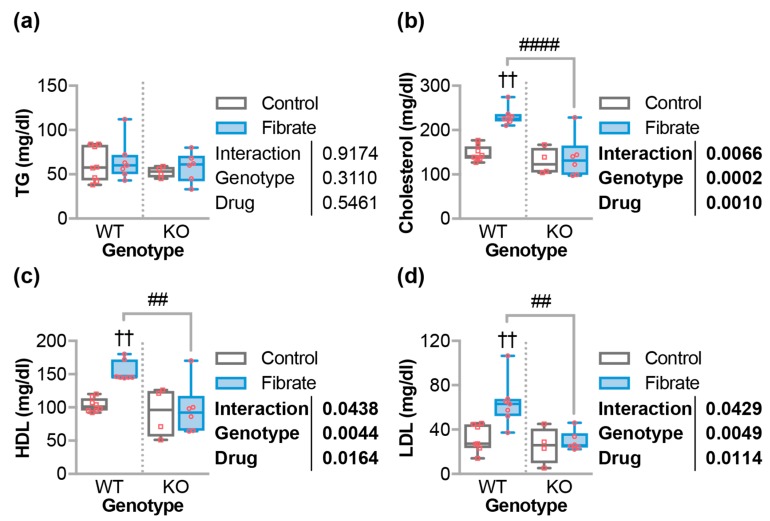
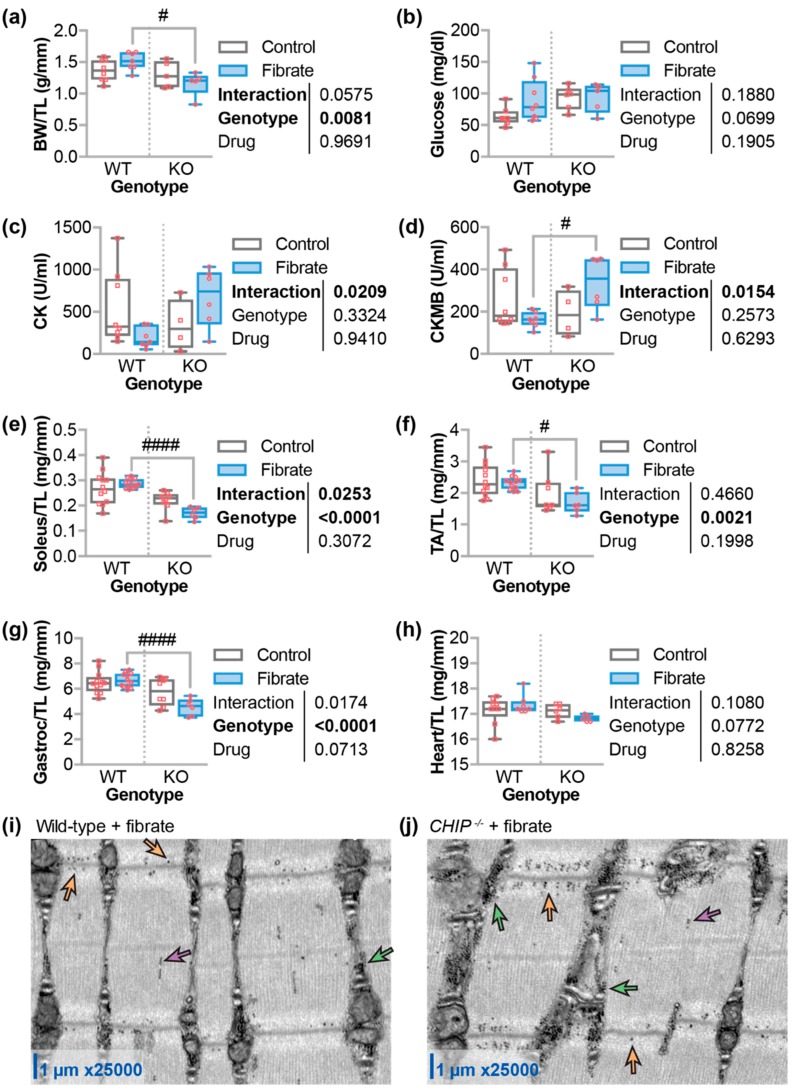
We previously reported how the loss of CHIP expression (Carboxyl terminus of Hsc70-Interacting Protein) during pressure overload resulted in robust cardiac dysfunction, which was accompanied by a failure to maintain ATP levels in the face of increased energy demand. In this study, we analyzed the cardiac metabolome after seven days of pressure overload and found an increase in long-chain and medium-chain fatty acid metabolites in wild-type hearts. This response was attenuated in mice that lack expression of CHIP (). These findings suggest that CHIP may play an essential role in regulating oxidative metabolism pathways that are regulated, in part, by the nuclear receptor PPARα (Peroxisome Proliferator-Activated Receptor alpha). Next, we challenged mice with the PPARα agonist called fenofibrate. We found that treating mice with fenofibrate for five weeks under non-pressure overload conditions resulted in decreased skeletal muscle mass, compared to wild-type mice, and a marked increase in cardiac fibrosis accompanied by a decrease in cardiac function. Fenofibrate resulted in decreased mitochondrial cristae density in hearts as well as decreased expression of genes involved in the initiation of autophagy and mitophagy, which suggests that a metabolic challenge, in the absence of CHIP expression, impacts pathways that contribute to mitochondrial quality control. In conclusion, in the absence of functional CHIP expression, fenofibrate results in unexpected skeletal muscle and cardiac pathologies. These findings are particularly relevant to patients harboring loss-of-function mutations in CHIP and are consistent with a prominent role for CHIP in regulating cardiac metabolism.
我们之前报道过,压力过载期间CHIP表达缺失(Hsc70相互作用蛋白的羧基末端)如何导致严重的心脏功能障碍,这伴随着在能量需求增加时无法维持ATP水平。在本研究中,我们分析了压力过载七天后的心脏代谢组,发现野生型心脏中长链和中链脂肪酸代谢物增加。在缺乏CHIP表达的小鼠中,这种反应减弱。这些发现表明,CHIP可能在调节氧化代谢途径中起重要作用,这些途径部分受核受体PPARα(过氧化物酶体增殖物激活受体α)调节。接下来,我们用称为非诺贝特的PPARα激动剂对小鼠进行挑战。我们发现,在非压力过载条件下,用非诺贝特处理小鼠五周后,与野生型小鼠相比,骨骼肌质量下降,心脏纤维化明显增加,同时心脏功能下降。非诺贝特导致小鼠心脏线粒体嵴密度降低以及参与自噬和线粒体自噬起始的基因表达降低,这表明在缺乏CHIP表达的情况下,代谢挑战会影响有助于线粒体质量控制的途径。总之,在缺乏功能性CHIP表达的情况下,非诺贝特会导致意外的骨骼肌和心脏病变。这些发现与携带CHIP功能丧失突变的患者特别相关,并且与CHIP在调节心脏代谢中的重要作用一致。