François Achille, Bouzelha Mohammed, Lecomte Emilie, Broucque Frédéric, Penaud-Budloo Magalie, Adjali Oumeya, Moullier Philippe, Blouin Véronique, Ayuso Eduard
INSERM UMR1089, University of Nantes, Centre Hospitalier Universitaire, Nantes, France.
Mol Ther Methods Clin Dev. 2018 Jul 27;10:223-236. doi: 10.1016/j.omtm.2018.07.004. eCollection 2018 Sep 21.
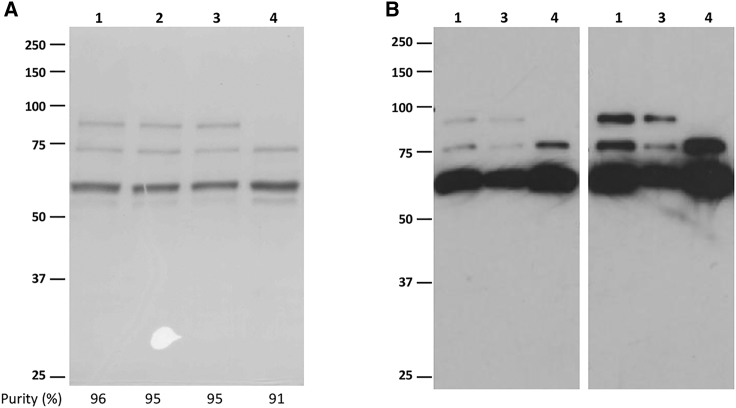
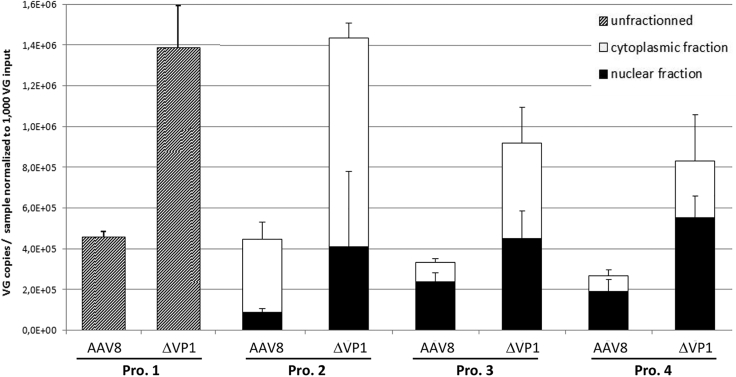
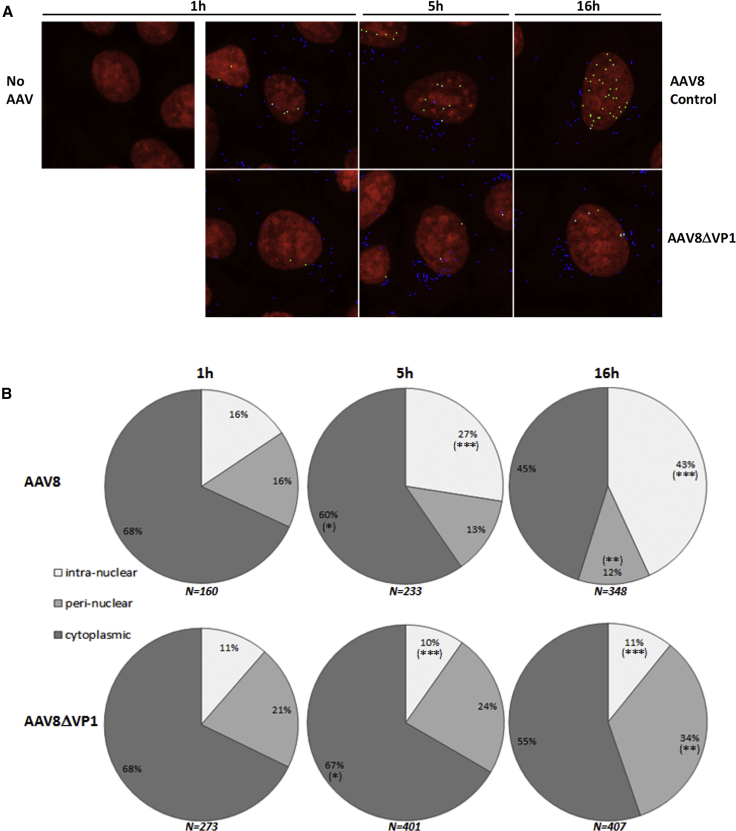
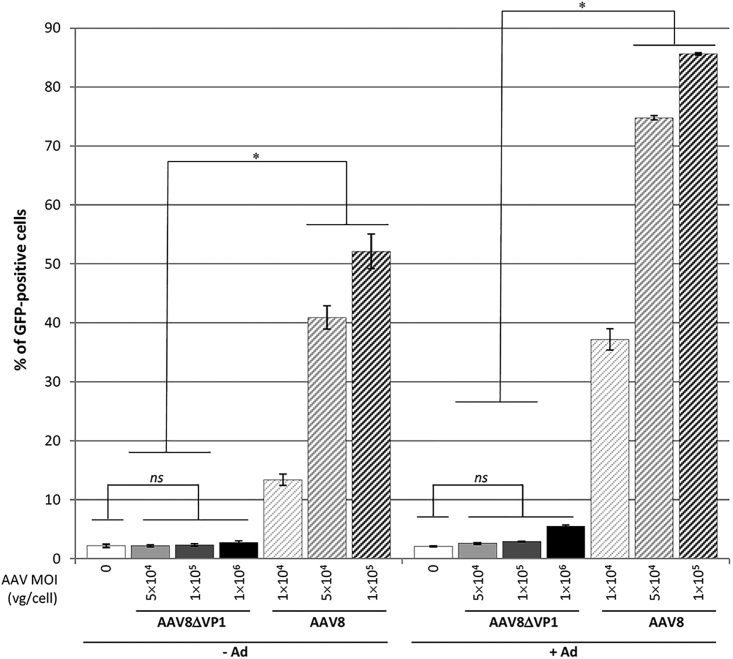
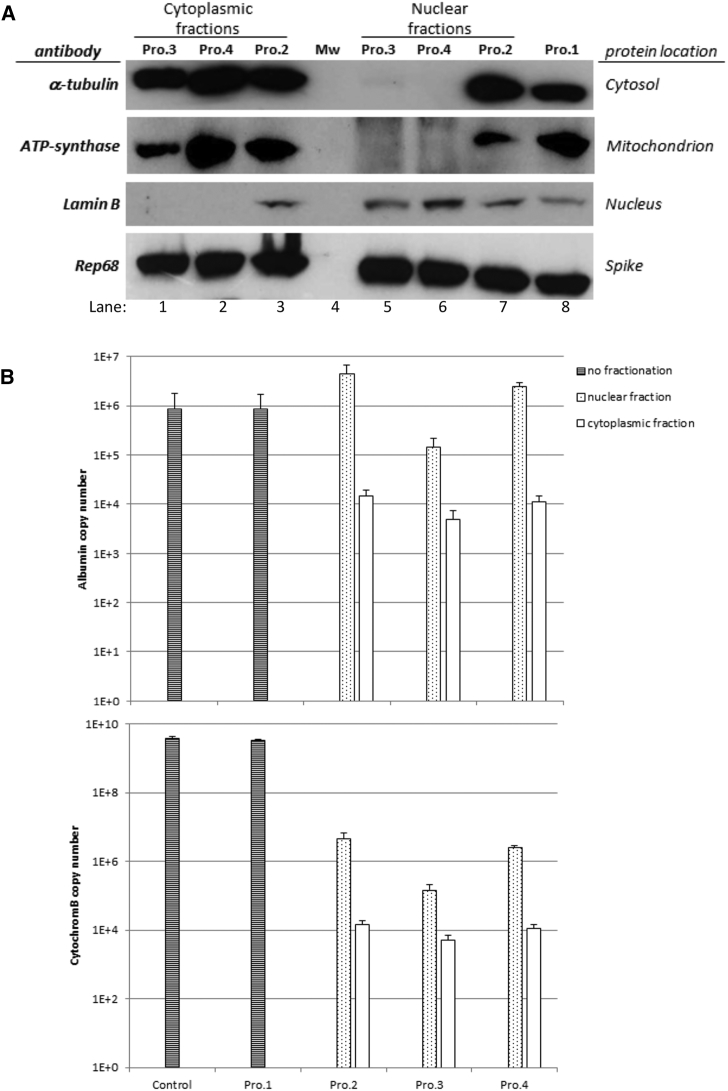
Although the clinical use of recombinant adeno-associated virus (rAAV) vectors is constantly increasing, the development of suitable quality control methods is still needed for accurate vector characterization. Among the quality criteria, the titration of infectious particles is critical to determine vector efficacy. Different methods have been developed for the measurement of rAAV infectivity , based on detection of vector genome replication in -complementing cells infected with adenovirus, detection of transgene expression in permissive cells, or simply detection of intracellular vector genomes following the infection of indicator cells. In the present study, we have compared these methods for the titration of infectious rAAV8 vector particles, and, to assess their ability to discriminate infectious and non-infectious rAAV serotype 8 particles, we have generated a VP1-defective AAV8-GFP vector. Since VP1 is required to enter the cell nucleus, the lack of VP1 should drastically reduce the infectivity of rAAV particles. The AAV8 reference standard material was used as a positive control. Our results demonstrated that methods based on measurement of rAAV biological activity (i.e., vector genome replication or transgene expression) were able to accurately discriminate infectious versus non-infectious particles, whereas methods simply measuring intracellular vector genomes were not. Several cell fractionation protocols were tested in an attempt to specifically measure vector genomes that had reached the nucleus, but genomes from wild-type and VP1-defective AAV8 particles were equally detected in the nuclear fraction by qPCR. These data highlight the importance of using suitable controls, including a negative control, for the development of biological assays such as infectious unit titration.
尽管重组腺相关病毒(rAAV)载体的临床应用正在不断增加,但仍需要开发合适的质量控制方法来准确表征载体。在质量标准中,感染性颗粒的滴定对于确定载体效力至关重要。基于在感染腺病毒的互补细胞中检测载体基因组复制、在允许细胞中检测转基因表达或仅仅在指示细胞感染后检测细胞内载体基因组,已经开发了不同的方法来测量rAAV的感染性。在本研究中,我们比较了这些用于滴定感染性rAAV8载体颗粒的方法,并且,为了评估它们区分感染性和非感染性rAAV血清型8颗粒的能力,我们构建了一种VP1缺陷型AAV8-GFP载体。由于进入细胞核需要VP1,VP1的缺失应会大幅降低rAAV颗粒的感染性。AAV8参考标准物质用作阳性对照。我们的结果表明,基于测量rAAV生物活性(即载体基因组复制或转基因表达)的方法能够准确区分感染性与非感染性颗粒,而仅仅测量细胞内载体基因组的方法则不能。测试了几种细胞分级分离方案,试图特异性测量到达细胞核的载体基因组,但通过qPCR在核级分中同样检测到野生型和VP1缺陷型AAV8颗粒的基因组。这些数据突出了在开发诸如感染单位滴定等生物学测定方法时使用合适对照(包括阴性对照)的重要性。