IHR Academic Clinical Fellow in Psychiatry,Mental Health and Wellbeing,Warwick Medical School,University of Warwick,UK.
NIHR Academic Clinical Fellow in Psychiatry,Mental Health and Wellbeing, Warwick Medical School,University of Warwick,UK.
Br J Psychiatry. 2018 Sep;213(3):514-525. doi: 10.1192/bjp.2018.144.
A reliable biomarker signature for bipolar disorder sensitive to illness phase would be of considerable clinical benefit. Among circulating blood-derived markers there has been a significant amount of research into inflammatory markers, neurotrophins and oxidative stress markers.AimsTo synthesise and interpret existing evidence of inflammatory markers, neurotrophins and oxidative stress markers in bipolar disorder focusing on the mood phase of illness.
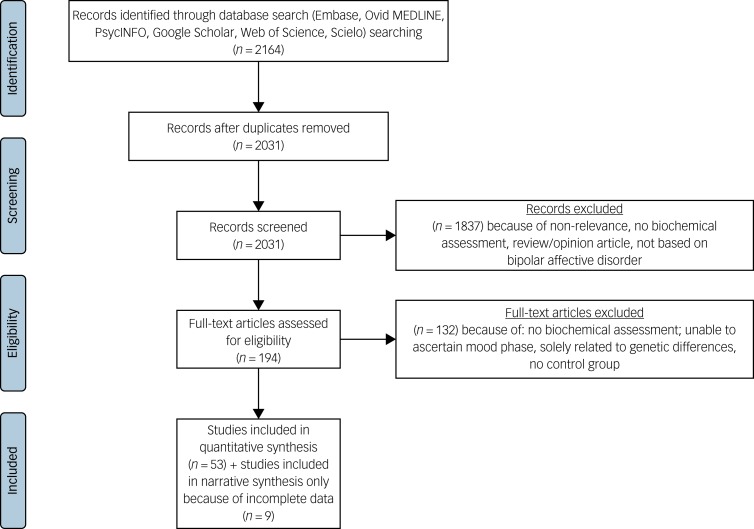
Following PRISMA (Preferred Reporting Items for Systematic reviews and Meta-analyses) guidelines, a systematic review was conducted for studies investigating peripheral biomarkers in bipolar disorder compared with healthy controls. We searched Medline, Embase, PsycINFO, SciELO and Web of Science, and separated studies by bipolar mood phase (mania, depression and euthymia). Extracted data on each biomarker in separate mood phases were synthesised using random-effects model meta-analyses.
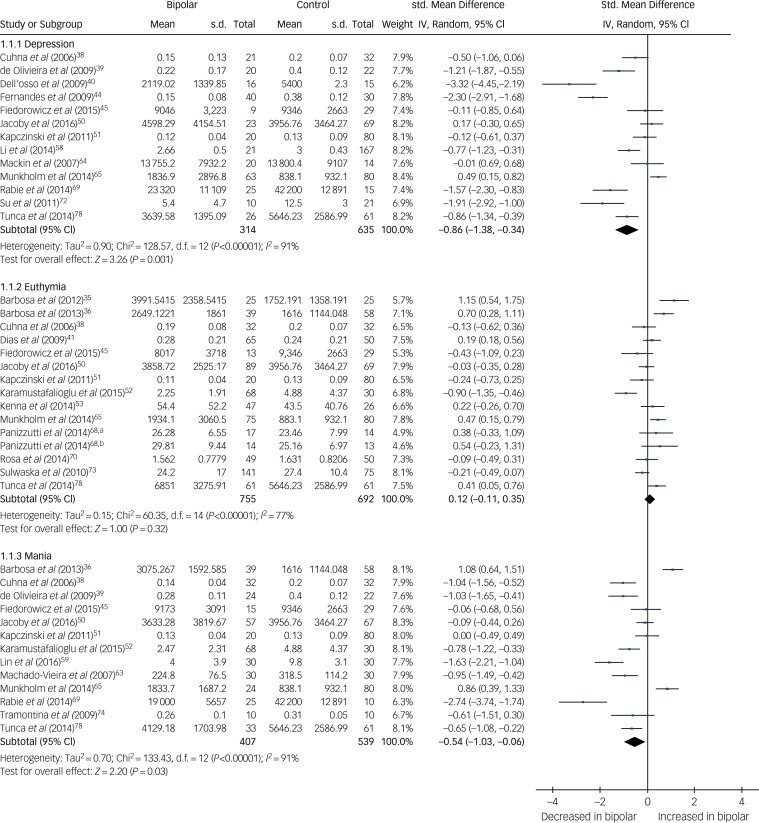
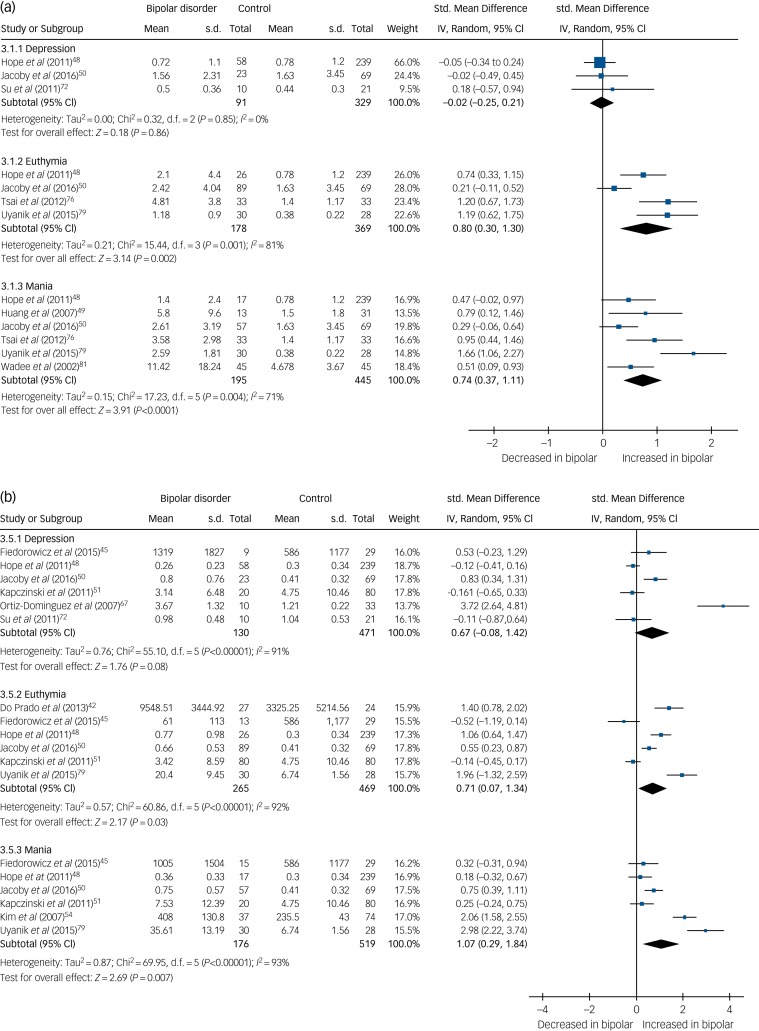
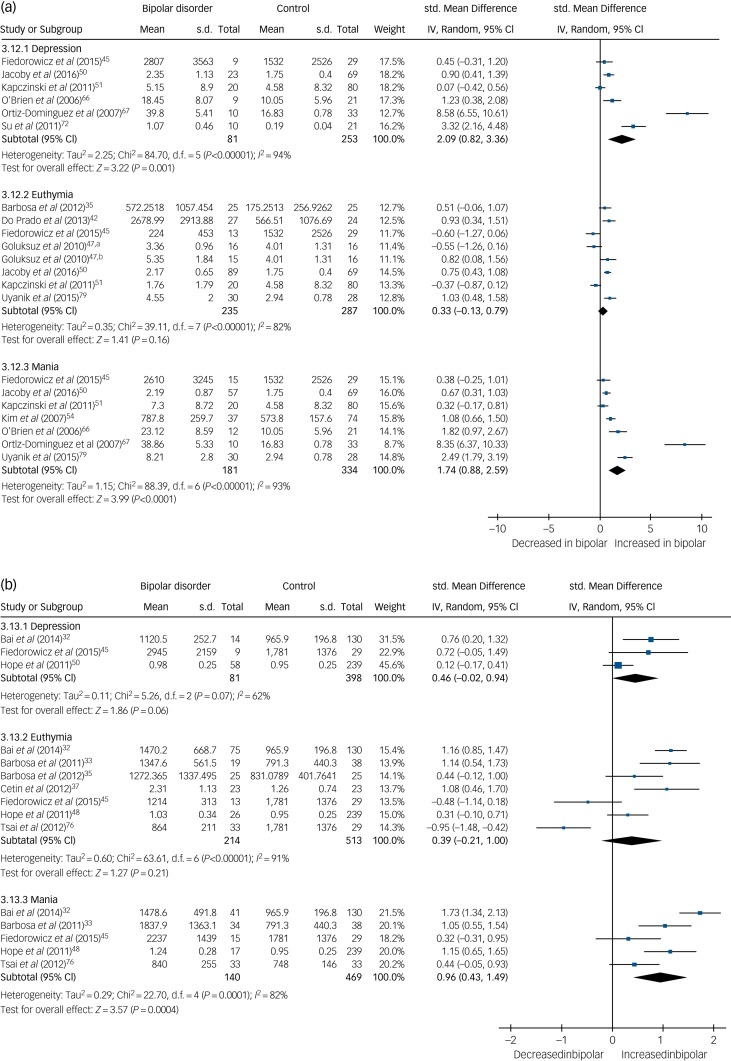
In total, 53 studies were included, comprising 2467 cases and 2360 controls. Fourteen biomarkers were identified from meta-analyses of three or more studies. No biomarker differentiated mood phase in bipolar disorder individually. Biomarker meta-analyses suggest a combination of high-sensitivity C-reactive protein/interleukin-6, brain derived neurotrophic factor/tumour necrosis factor (TNF)-α and soluble TNF-α receptor 1 can differentiate specific mood phase in bipolar disorder. Several other biomarkers of interest were identified.
Combining biomarker results could differentiate individuals with bipolar disorder from healthy controls and indicate a specific mood-phase signature. Future research should seek to test these combinations of biomarkers in longitudinal studies.Declaration of interestNone.
对于双相情感障碍,一种能敏感反映疾病阶段且可靠的生物标志物将具有重要的临床价值。在循环血液衍生标志物中,炎症标志物、神经生长因子和氧化应激标志物已得到广泛研究。目的:综合并解释现有关于双相情感障碍炎症标志物、神经生长因子和氧化应激标志物的证据,重点关注疾病的情绪阶段。方法:按照 PRISMA(系统评价和荟萃分析的首选报告项目)指南,对比较双相情感障碍与健康对照组的外周生物标志物的研究进行了系统综述。我们检索了 Medline、Embase、PsycINFO、SciELO 和 Web of Science,并根据双相情感障碍的情绪阶段(躁狂、抑郁和轻躁狂)对研究进行了分组。使用随机效应模型荟萃分析综合了每个情绪阶段中每个生物标志物的提取数据。结果:共纳入 53 项研究,包括 2467 例病例和 2360 例对照。从三项或更多研究的荟萃分析中确定了 14 种生物标志物。没有一种生物标志物可以单独区分双相情感障碍的情绪阶段。生物标志物荟萃分析表明,高敏 C 反应蛋白/白细胞介素 6、脑源性神经营养因子/肿瘤坏死因子 (TNF)-α 和可溶性 TNF-α 受体 1 的组合可以区分双相情感障碍的特定情绪阶段。还确定了其他几种有意义的生物标志物。结论:结合生物标志物的结果可以区分双相情感障碍患者和健康对照者,并表明存在特定的情绪阶段特征。未来的研究应在纵向研究中测试这些生物标志物组合。声明的利益关系无。