Ahmed Mahmoud, Lai Trang Huyen, Zada Sahib, Hwang Jin Seok, Pham Trang Minh, Yun Miyong, Kim Deok Ryong
Department of Biochemistry and Convergence Medical Sciences and Institute of Health Sciences, Gyeongsang National University School of Medicine, Jinju 527-27, Korea.
Department of Bioindustry and Bioresource Engineering, College of Life Sciences, Sejong University, Seoul 05006, Korea.
Cancers (Basel). 2018 Aug 16;10(8):273. doi: 10.3390/cancers10080273.
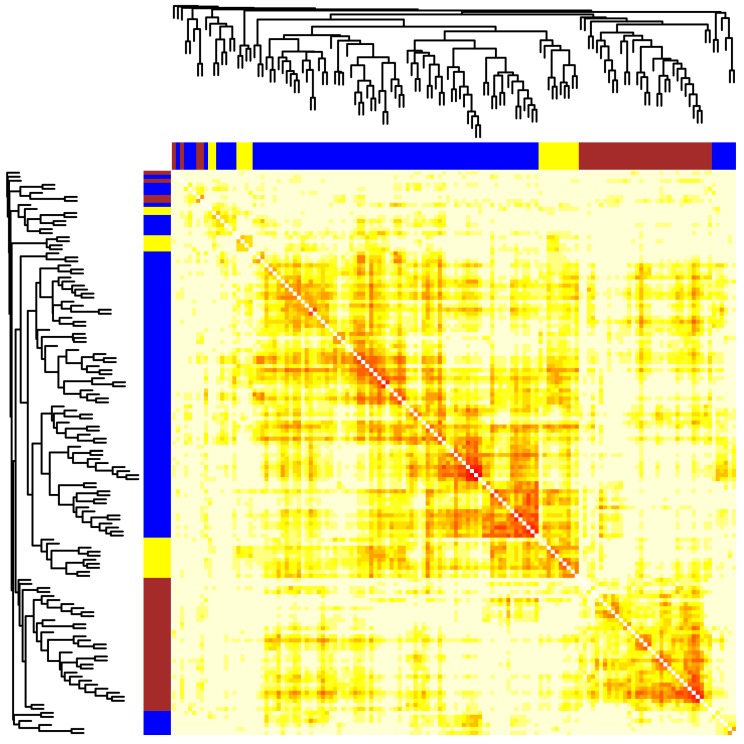
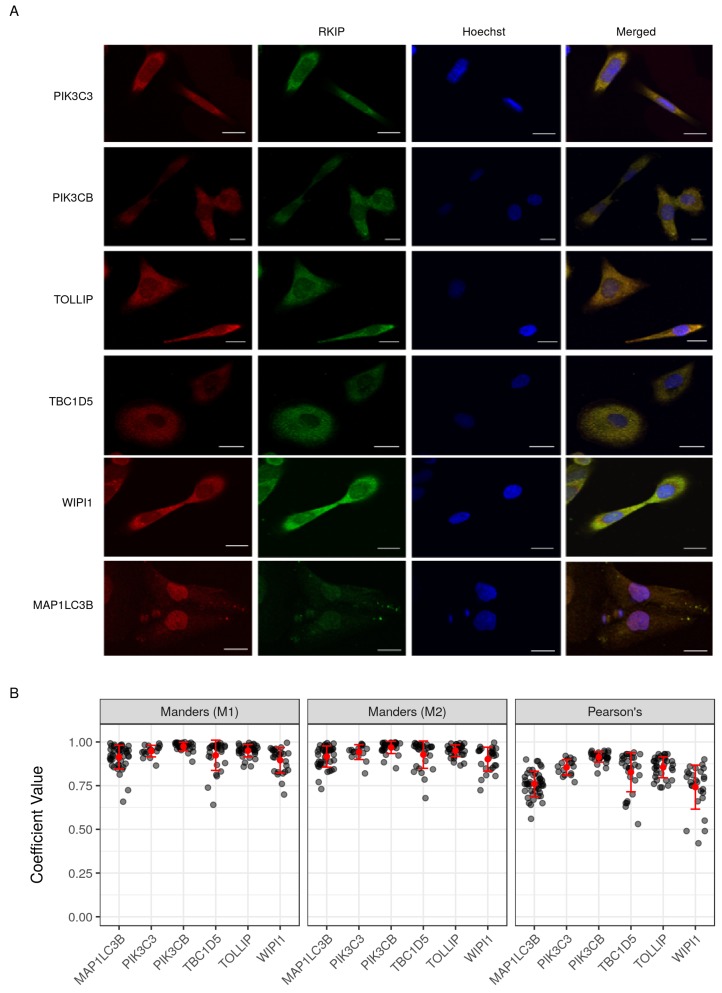
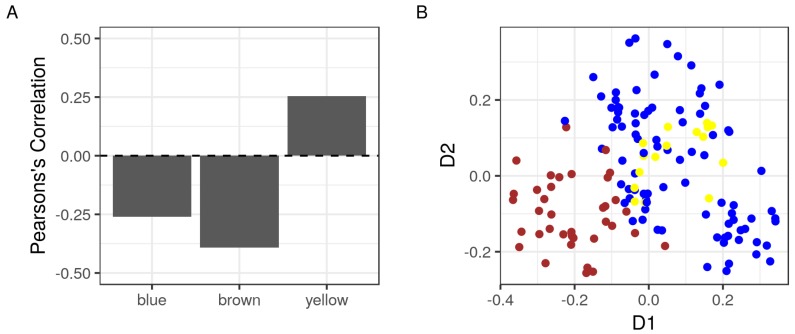
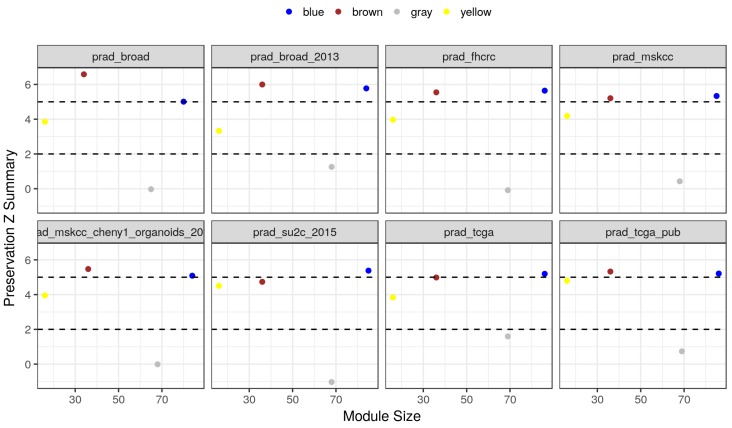
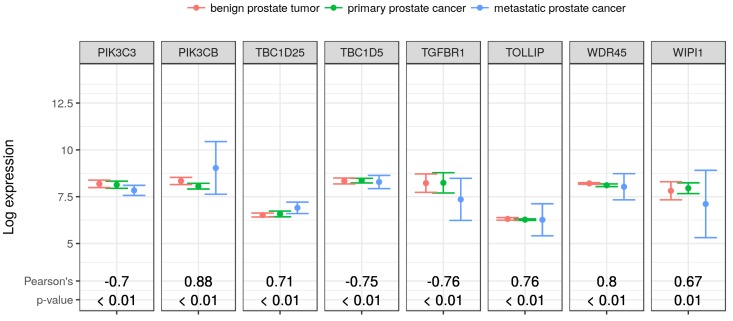
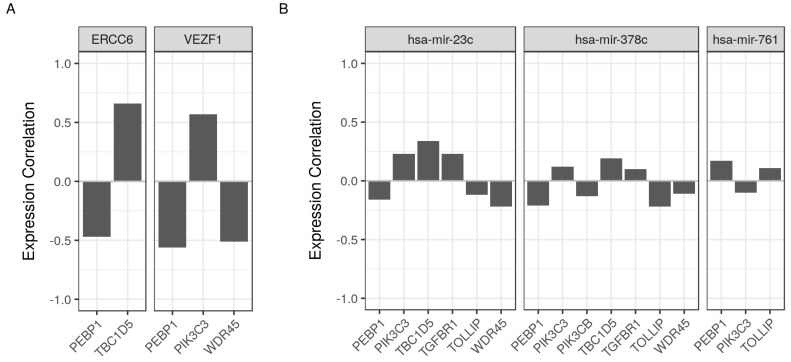
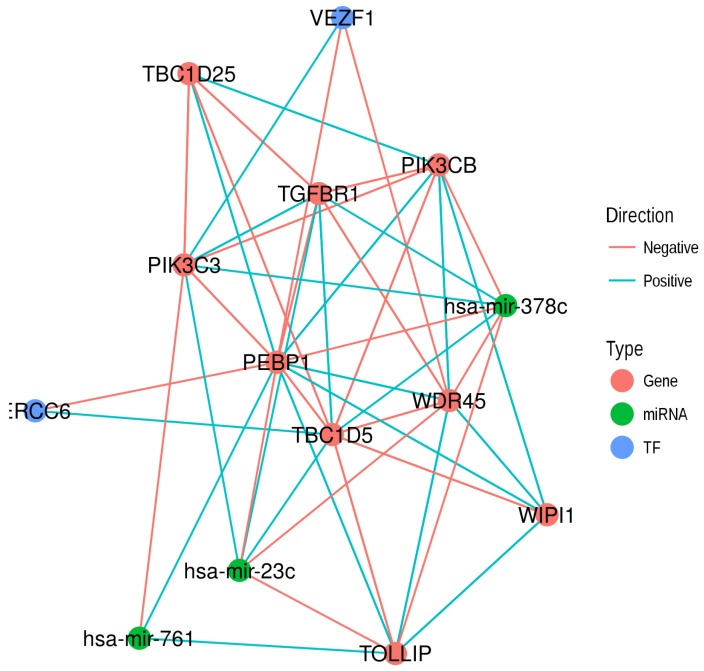
Raf kinase inhibitor protein (RKIP) plays a critical role in many signaling pathways as a multi-functional adapter protein. In particular, the loss of RKIP's function in certain types of cancer cells results in epithelial to mesenchymal transition (EMT) and the promotion of cancer metastasis. In addition, RKIP inhibits autophagy by modulating LC3-lipidation and mTORC1. How the RKIP-dependent inhibition of autophagy is linked to EMT and cancer progression is still under investigation. In this study, we investigated the ways by which RKIP interacts with key gene products in EMT and autophagy during the progression of prostate cancer. We first identified the gene products of interest using the corresponding gene ontology terms. The weighted-gene co-expression network analysis (WGCNA) was applied on a gene expression dataset from three groups of prostate tissues; benign prostate hyperplasia, primary and metastatic cancer. We found two modules of highly co-expressed genes, which were preserved in other independent datasets of prostate cancer tissues. RKIP showed potentially novel interactions with one EMT and seven autophagy gene products (TGFBR1; PIK3C3, PIK3CB, TBC1D25, TBC1D5, TOLLIP, WDR45 and WIPI1). In addition, we identified several upstream transcription modulators that could regulate the expression of these gene products. Finally, we verified some RKIP novel interactions by co-localization using the confocal microscopy analysis in a prostate cancer cell line. To summarize, RKIP interacts with EMT and autophagy as part of the same functional unit in developing prostate cancer.
拉菲激酶抑制蛋白(RKIP)作为一种多功能衔接蛋白,在许多信号通路中发挥着关键作用。特别是,RKIP在某些类型的癌细胞中功能丧失会导致上皮-间质转化(EMT)并促进癌症转移。此外,RKIP通过调节LC3脂化和mTORC1来抑制自噬。RKIP依赖的自噬抑制与EMT和癌症进展之间的联系仍在研究中。在本研究中,我们调查了在前列腺癌进展过程中RKIP与EMT和自噬中的关键基因产物相互作用的方式。我们首先使用相应的基因本体术语鉴定了感兴趣的基因产物。加权基因共表达网络分析(WGCNA)应用于来自三组前列腺组织(良性前列腺增生、原发性和转移性癌症)的基因表达数据集。我们发现了两个高度共表达的基因模块,它们在其他独立的前列腺癌组织数据集中得以保留。RKIP与一种EMT基因产物和七种自噬基因产物(TGFBR1;PIK3C3、PIK3CB、TBC1D25、TBC1D5、TOLLIP、WDR45和WIPI1)显示出潜在的新型相互作用。此外,我们鉴定了几种可调节这些基因产物表达的上游转录调节因子。最后,我们在前列腺癌细胞系中使用共聚焦显微镜分析通过共定位验证了一些RKIP新型相互作用。总之,在前列腺癌发展过程中,RKIP作为同一功能单元一部分与EMT和自噬相互作用。