Department of Histology and Embryology, School of Basic Medical Sciences, Xinjiang Medical University, Urumqi, Xinjiang, China.
Department of Pharmacology, Pharmacy College, Xinjiang Medical University, Urumqi, China.
Biomed Res Int. 2021 Jun 18;2021:8848227. doi: 10.1155/2021/8848227. eCollection 2021.
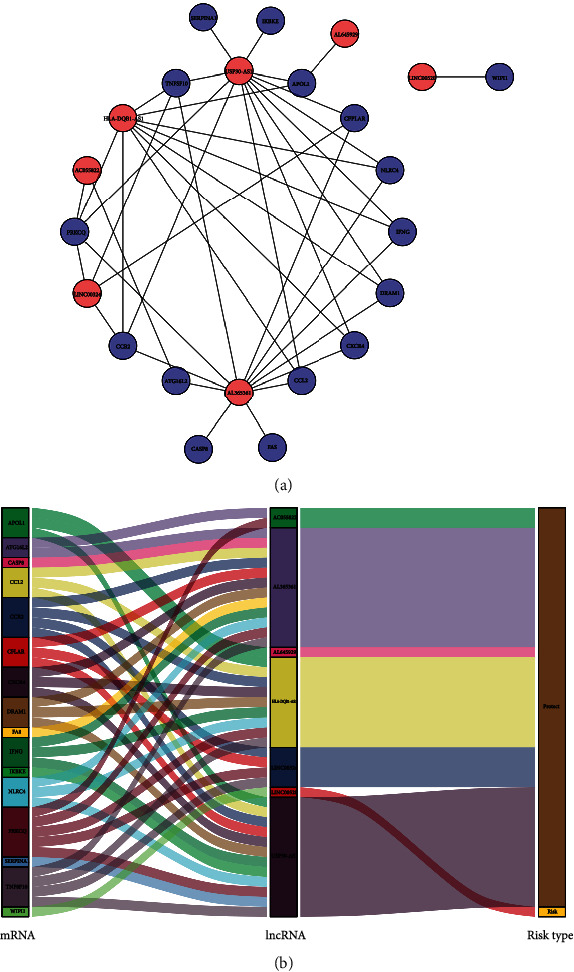
Autophagy and long noncoding RNAs (lncRNAs) have been the focus of research on the pathogenesis of melanoma. However, the autophagy network of lncRNAs in melanoma has not been reported. The purpose of this study was to investigate the lncRNA prognostic markers related to melanoma autophagy and predict the prognosis of patients with melanoma.
We downloaded RNA sequencing data and clinical information of melanoma from the Cancer Genome Atlas. The coexpression of autophagy-related genes (ARGs) and lncRNAs was analyzed. The risk model of autophagy-related lncRNAs was established by univariate and multivariate Cox regression analyses, and the best prognostic index was evaluated combined with clinical data. Finally, gene set enrichment analysis was performed on patients in the high- and low-risk groups.
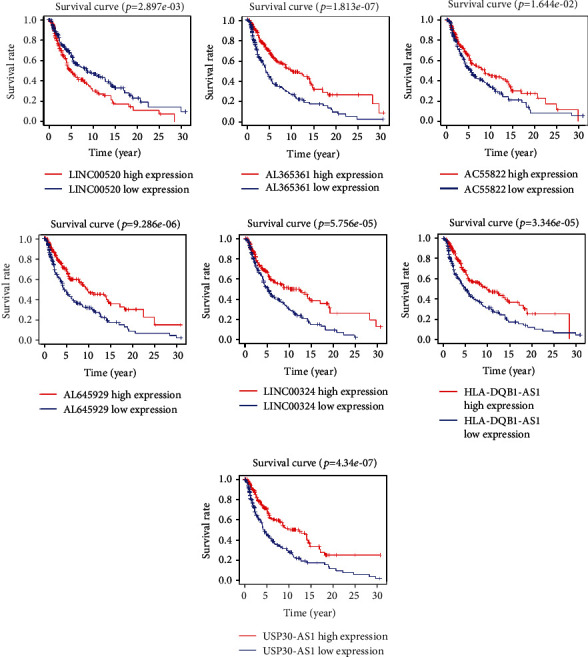
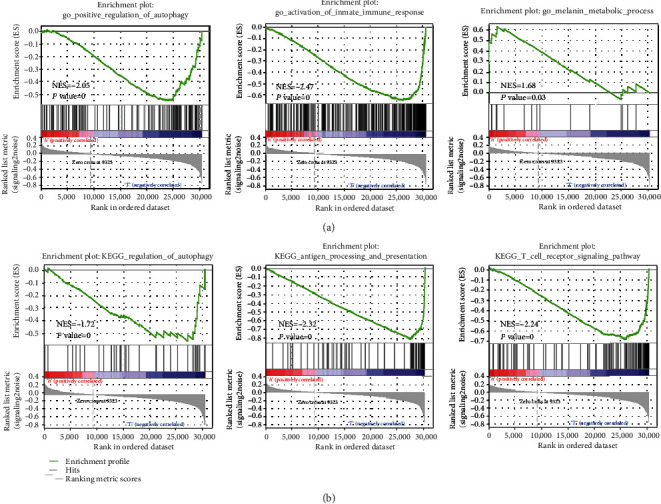
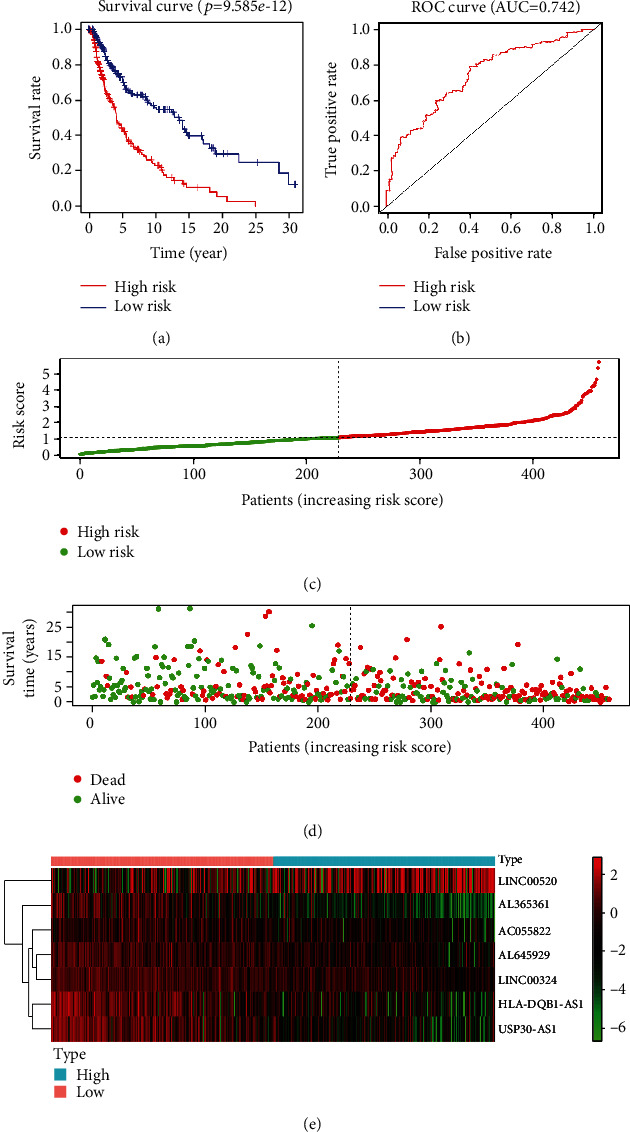
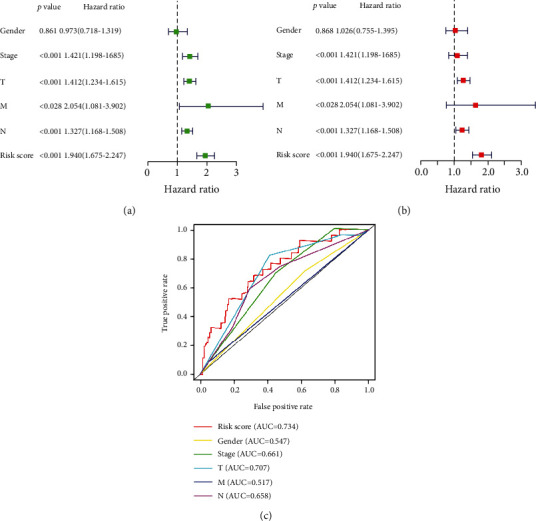
According to the results of the univariate Cox analysis, only the overexpression of LINC00520 was associated with poor overall survival, unlike HLA-DQB1-AS1, USP30-AS1, AL645929, AL365361, LINC00324, and AC055822. The results of the multivariate Cox analysis showed that the overall survival of patients in the high-risk group was shorter than that recorded in the low-risk group ( < 0.001). Moreover, in the receiver operating characteristic curve of the risk model we constructed, the area under the curve (AUC) was 0.734, while the AUC of T and N was 0.707 and 0.658, respectively. The Gene Ontology was mainly enriched with the positive regulation of autophagy and the activation of the immune system. The results of the Kyoto Encyclopedia of Genes and Genomes enrichment were mostly related to autophagy, immunity, and melanin metabolism.
The positive regulation of autophagy may slow the transition from low-risk patients to high-risk patients in melanoma. Furthermore, compared with clinical information, the autophagy-related lncRNA risk model may better predict the prognosis of patients with melanoma and provide new treatment ideas.
自噬和长链非编码 RNA(lncRNA)一直是黑色素瘤发病机制研究的重点。然而,黑色素瘤中 lncRNA 的自噬网络尚未报道。本研究旨在探讨与黑色素瘤自噬相关的 lncRNA 预后标志物,并预测黑色素瘤患者的预后。
我们从癌症基因组图谱中下载了黑色素瘤的 RNA 测序数据和临床信息。分析自噬相关基因(ARGs)和 lncRNA 的共表达。通过单因素和多因素 Cox 回归分析建立自噬相关 lncRNA 的风险模型,并结合临床资料评估最佳预后指数。最后,对高、低风险组患者进行基因集富集分析。
根据单因素 Cox 分析结果,只有 LINC00520 的过表达与总生存期不良相关,而 HLA-DQB1-AS1、USP30-AS1、AL645929、AL365361、LINC00324 和 AC055822 则不然。多因素 Cox 分析结果表明,高风险组患者的总生存期短于低风险组(<0.001)。此外,我们构建的风险模型的受试者工作特征曲线中,曲线下面积(AUC)为 0.734,而 T 和 N 的 AUC 分别为 0.707 和 0.658。基因本体论主要富集自噬的正调控和免疫系统的激活。京都基因与基因组百科全书富集的结果主要与自噬、免疫和黑色素代谢有关。
自噬的正调控可能会减缓黑色素瘤中低风险患者向高风险患者的转变。此外,与临床信息相比,自噬相关 lncRNA 风险模型可能更好地预测黑色素瘤患者的预后,并为其提供新的治疗思路。