Tschandl Philipp
ViDIR Group, Department of Dermatology, Medical University of Vienna, Austria.
Dermatol Pract Concept. 2018 Jul 31;8(3):231-237. doi: 10.5826/dpc.0803a16. eCollection 2018 Jul.
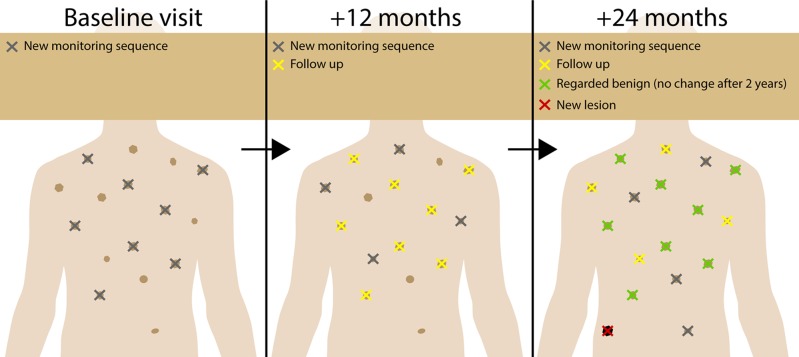
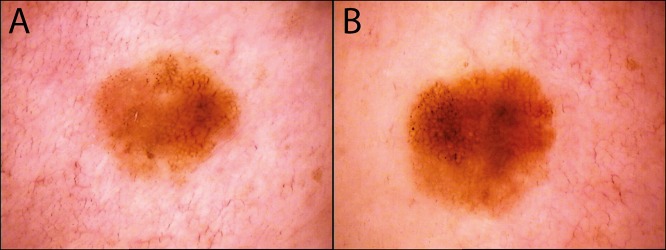
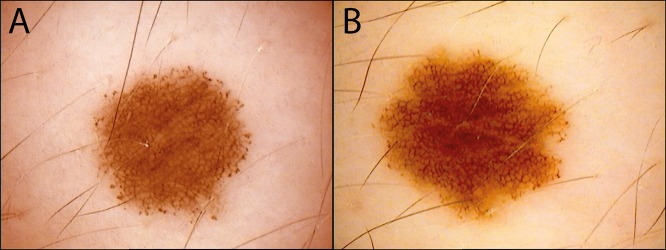
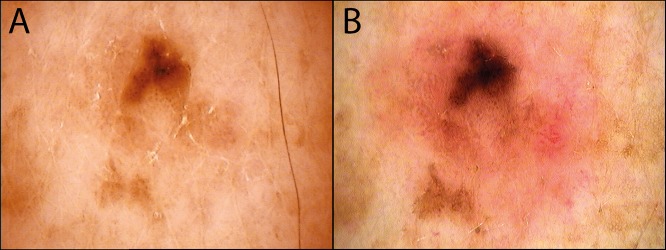
Patients with multiple atypical nevi are at higher risk of developing melanoma. Among different techniques, sequential digital dermatoscopic imaging (SDDI) is a state-of-the art method to enhance diagnostic accuracy in evaluating pigmented skin lesions. It relies on analyzing digital dermatoscopic images of a lesion over time to find specific dynamic criteria inferring biologic behavior. SDDI can reduce the number of necessary excisions and finds melanomas in an early-and potentially curable-stage, but precautions in selecting patients and lesions have to be met to reach those goals.
患有多个非典型痣的患者患黑色素瘤的风险更高。在不同技术中,序贯数字皮肤镜成像(SDDI)是一种用于提高色素性皮肤病变评估诊断准确性的先进方法。它依靠分析病变的数字皮肤镜图像随时间的变化,以找到推断生物学行为的特定动态标准。SDDI可以减少必要的切除次数,并在早期且可能可治愈的阶段发现黑色素瘤,但要实现这些目标,必须在选择患者和病变时采取预防措施。