Center for Infectious Disease Research, School of Medicine, Tsinghua University, Beijing, China.
MOE Key Laboratory of Bioinformatics, Bioinformatics Division, TNLIST and Department of Automation, Tsinghua University, Beijing, China.
Emerg Microbes Infect. 2018 Aug 17;7(1):149. doi: 10.1038/s41426-018-0148-4.
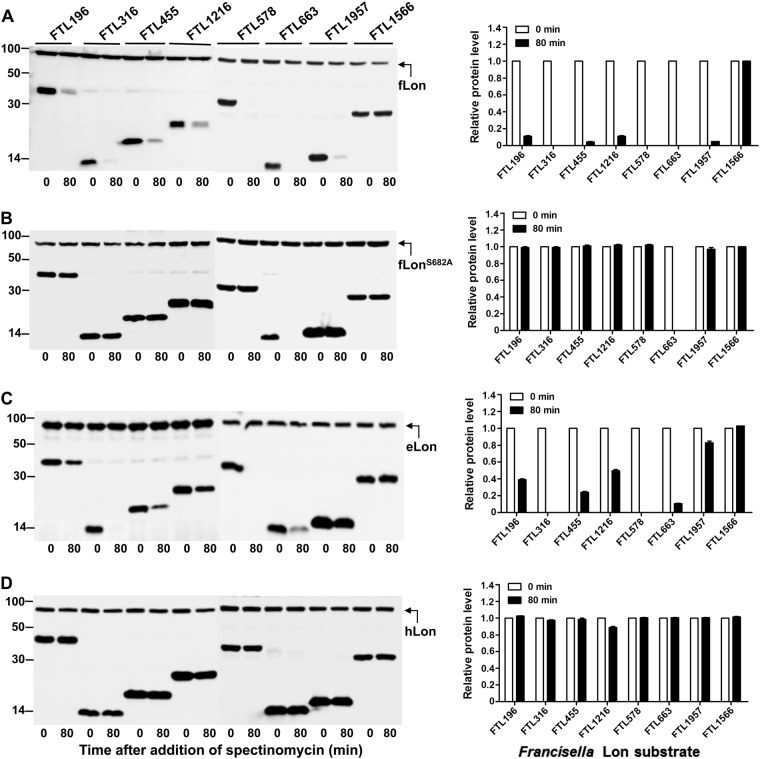
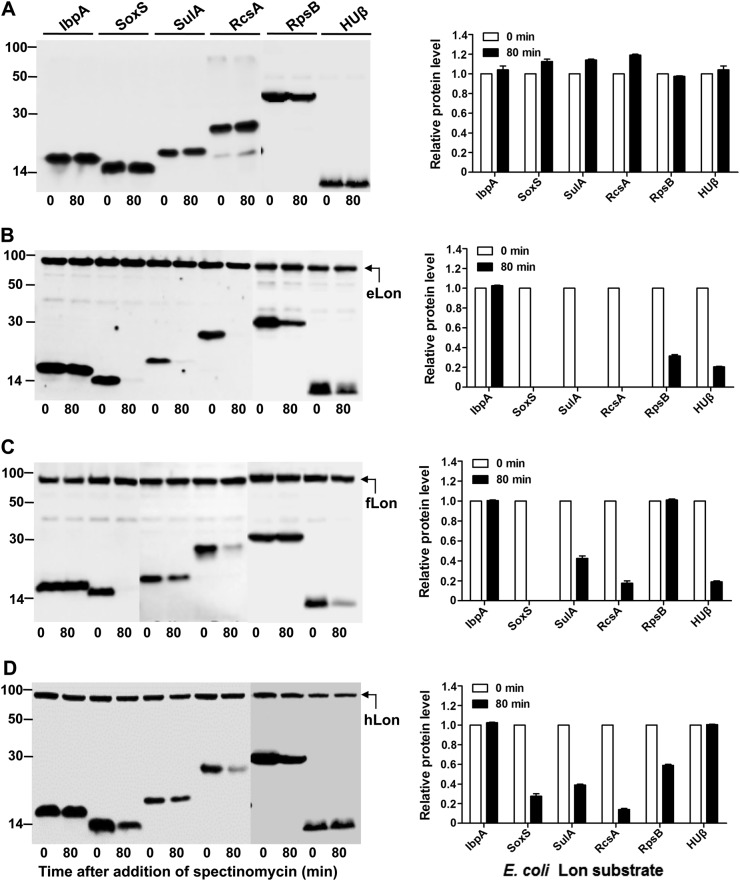
The Lon protease selectively degrades abnormal proteins or certain normal proteins in response to environmental and cellular conditions in many prokaryotic and eukaryotic organisms. However, the mechanism(s) behind the substrate selection of normal proteins remains largely unknown. In this study, we identified 10 new substrates of F. tularensis Lon from a total of 21 candidate substrates identified in our previous work, the largest number of novel Lon substrates from a single study. Cross-species degradation of these and other known Lon substrates revealed that human Lon is unable to degrade many bacterial Lon substrates, suggestive of a "organism-adapted" substrate selection mechanism for the natural Lon variants. However, individually replacing the N, A, and P domains of human Lon with the counterparts of bacterial Lon did not enable the human protease to degrade the same bacterial Lon substrates. This result showed that the "organism-adapted" substrate selection depends on multiple domains of the Lon proteases. Further in vitro proteolysis and mass spectrometry analysis revealed a similar substrate cleavage pattern between the bacterial and human Lon variants, which was exemplified by predominant representation of leucine, alanine, and other hydrophobic amino acids at the P(-1) site within the substrates. These observations suggest that the Lon proteases select their substrates at least in part by fine structural matching with the proteins in the same organisms.
Lon 蛋白酶在许多原核和真核生物中,能够根据环境和细胞条件,选择性地降解异常蛋白质或某些正常蛋白质。然而,正常蛋白质底物选择的机制在很大程度上仍然未知。在这项研究中,我们从之前工作中鉴定的 21 种候选底物中,确定了 10 种新的弗氏柠檬酸杆菌 Lon 的底物,这是从单一研究中鉴定出的最多数量的新 Lon 底物。这些和其他已知 Lon 底物的种间降解表明,人 Lon 无法降解许多细菌 Lon 底物,这表明天然 Lon 变体的底物选择机制具有“适应生物体”的特点。然而,单独用人 Lon 的 N、A 和 P 结构域替换细菌 Lon 的相应结构域,并没有使人类蛋白酶能够降解相同的细菌 Lon 底物。这一结果表明,“适应生物体”的底物选择取决于 Lon 蛋白酶的多个结构域。进一步的体外蛋白水解和质谱分析显示,细菌和人 Lon 变体之间存在相似的底物切割模式,这表现在底物的 P(-1)位上主要代表亮氨酸、丙氨酸和其他疏水性氨基酸。这些观察结果表明,Lon 蛋白酶至少部分通过与同一生物体中的蛋白质进行精细的结构匹配来选择其底物。