Neurodegeneration Imaging Group (NIG), Maurice Wohl Clinical Neuroscience Institute, Institute of Psychiatry, Psychology and Neuroscience (IoPPN), King's College London, 125 Coldharbour Lane, Camberwell, London, SE5 9NU, UK.
J Neurol. 2019 Jun;266(6):1293-1302. doi: 10.1007/s00415-018-9016-3. Epub 2018 Aug 17.
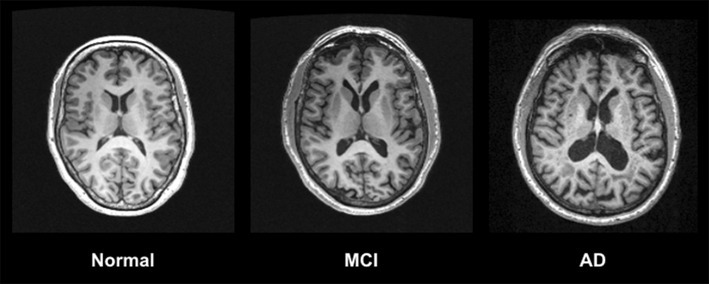
Research utilizing magnetic resonance imaging (MRI) has been crucial to the understanding of the neuropathological mechanisms behind and clinical identification of Alzheimer's disease (AD) and mild cognitive impairment (MCI). MRI modalities show patterns of brain damage that discriminate AD from other brain illnesses and brain abnormalities that are associated with risk of conversion to AD from MCI and other behavioural outcomes. This review discusses the application of various MRI techniques to and their clinical usefulness in AD and MCI. MRI modalities covered include structural MRI, diffusion tensor imaging (DTI), arterial spin labelling (ASL), magnetic resonance spectroscopy (MRS), and functional MRI (fMRI). There is much evidence supporting the validity of MRI as a biomarker for these disorders; however, only traditional structural imaging is currently recommended for routine use in clinical settings. Future research is needed to warrant the inclusion for more advanced MRI methodology in forthcoming revisions to diagnostic criteria for AD and MCI.
利用磁共振成像(MRI)的研究对于理解阿尔茨海默病(AD)和轻度认知障碍(MCI)背后的神经病理学机制以及临床识别至关重要。MRI 方式显示出区分 AD 与其他脑部疾病的脑损伤模式,以及与从 MCI 向 AD 转化的风险以及其他行为结果相关的脑异常。本综述讨论了各种 MRI 技术在 AD 和 MCI 中的应用及其临床实用性。涵盖的 MRI 方式包括结构 MRI、弥散张量成像(DTI)、动脉自旋标记(ASL)、磁共振波谱(MRS)和功能 MRI(fMRI)。有大量证据支持 MRI 作为这些疾病的生物标志物的有效性;然而,目前仅推荐传统的结构成像用于临床环境中的常规使用。需要进一步的研究来证明更先进的 MRI 方法在即将修订的 AD 和 MCI 诊断标准中的纳入是合理的。