Leksmono Cattleya S, Manzoni Claudia, Tomkins James E, Lucchesi Walter, Cottrell Graeme, Lewis Patrick A
School of Pharmacy, University of Reading.
School of Pharmacy, University of Reading; Department of Molecular Neuroscience, UCL Institute of Neurology.
J Vis Exp. 2018 Aug 6(138):54377. doi: 10.3791/54377.
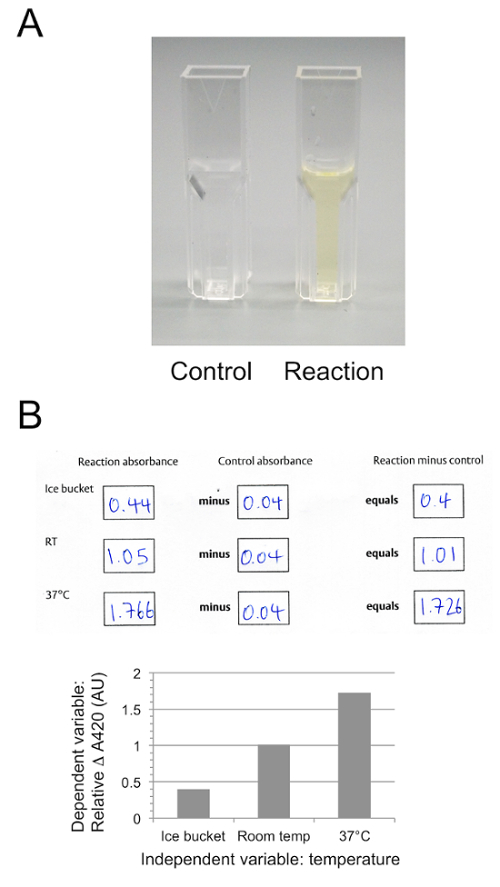
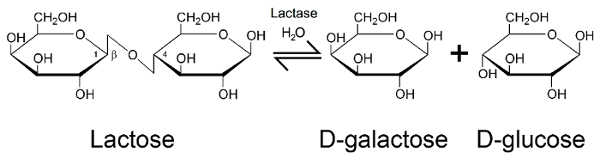
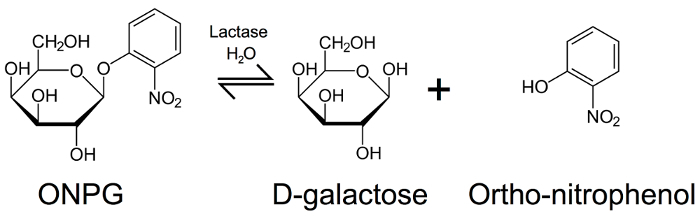
Understanding how enzymes work, and relating this to real life examples, is critical to a wide range of undergraduate degrees in the biological and biomedical sciences. This easy to follow protocol was developed for first year undergraduate pharmacy students and provides an entry-level introduction to enzyme reactions and analytical procedures for enzyme analysis. The enzyme of choice is lactase, as this represents an example of a commercially available enzyme relevant to human disease/pharmaceutical practice. Lactase is extracted from dietary supplement tablets, and assessed using a colorimetric assay based upon hydrolysis of an artificial substrate for lactase (ortho-nitrophenol-beta-D-galactopyranoside, ONPG). Release of ortho-nitrophenol following the hydrolytic cleavage of ONPG by lactase is measured by a change in absorbance at 420 nm, and the effect of the temperature on the enzymatic reaction is evaluated by carrying out the reaction on ice, at room temperature and at 37 °C. More advanced analysis can be implemented using this protocol by assessing the enzyme activity under different conditions and using different reagents.
了解酶的工作原理,并将其与实际生活中的例子联系起来,对于生物和生物医学科学领域的众多本科学位课程至关重要。这个易于遵循的实验方案是为本科一年级药学专业学生制定的,它为酶反应和酶分析的分析程序提供了入门级介绍。选择的酶是乳糖酶,因为它代表了一种与人类疾病/制药实践相关的市售酶的例子。乳糖酶从膳食补充剂片剂中提取,并使用基于乳糖酶人工底物(邻硝基苯酚-β-D-吡喃半乳糖苷,ONPG)水解的比色法进行评估。通过测量420nm处吸光度的变化来测定乳糖酶水解ONPG后邻硝基苯酚的释放,并通过在冰上、室温下和37°C下进行反应来评估温度对酶促反应的影响。通过在不同条件下使用不同试剂评估酶活性,可以使用该实验方案进行更高级的分析。