Wong Wing H, Tong R Spencer, Young Andrew L, Druley Todd E
Department of Pediatrics, Division of Hematology and Oncology, Washington University School of Medicine; Center for Genome Sciences and Systems Biology, Washington University School of Medicine.
Department of Pediatrics, Division of Hematology and Oncology, Washington University School of Medicine; Center for Genome Sciences and Systems Biology, Washington University School of Medicine;
J Vis Exp. 2018 Aug 3(138):57509. doi: 10.3791/57509.
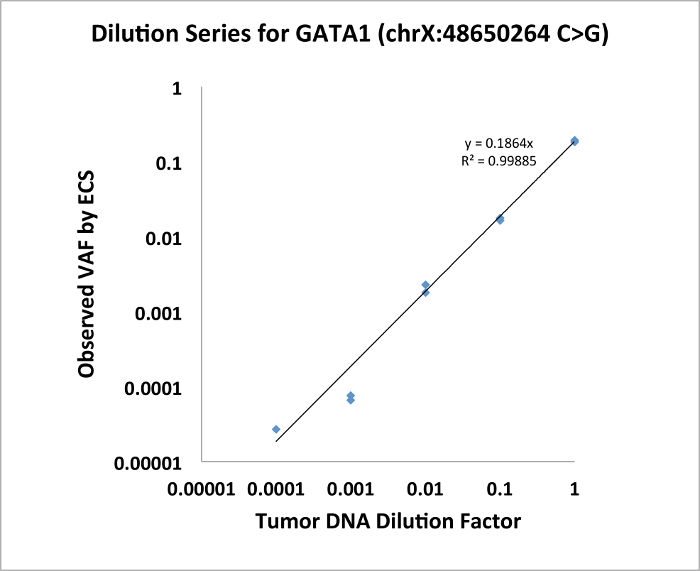
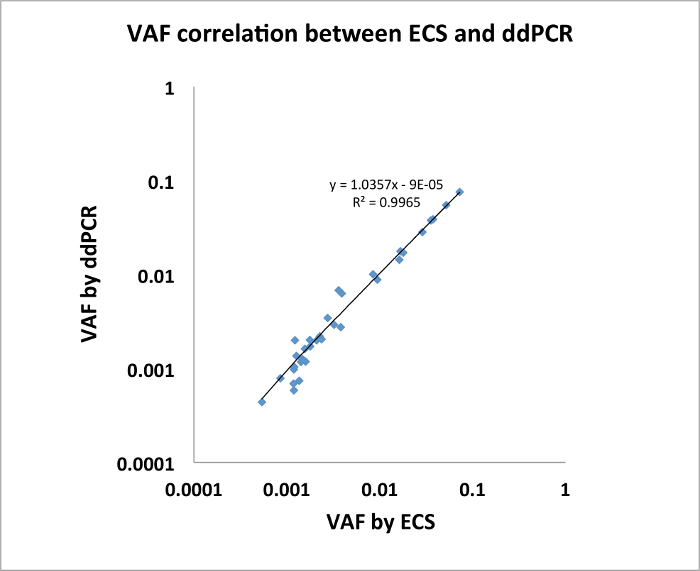
Conventional next-generation sequencing techniques (NGS) have allowed for immense genomic characterization for over a decade. Specifically, NGS has been used to analyze the spectrum of clonal mutations in malignancy. Though far more efficient than traditional Sanger methods, NGS struggles with identifying rare clonal and subclonal mutations due to its high error rate of ~0.5-2.0%. Thus, standard NGS has a limit of detection for mutations that are >0.02 variant allele fraction (VAF). While the clinical significance for mutations this rare in patients without known disease remains unclear, patients treated for leukemia have significantly improved outcomes when residual disease is <0.0001 by flow cytometry. In order to mitigate this artefactual background of NGS, numerous methods have been developed. Here we describe a method for Error-corrected DNA and RNA Sequencing (ECS), which involves tagging individual molecules with both a 16 bp random index for error-correction and an 8 bp patient-specific index for multiplexing. Our method can detect and track clonal mutations at variant allele fractions (VAFs) two orders of magnitude lower than the detection limit of NGS and as rare as 0.0001 VAF.
传统的下一代测序技术(NGS)已经实现了长达十多年的大规模基因组特征分析。具体而言,NGS已被用于分析恶性肿瘤中的克隆突变谱。尽管比传统的桑格方法效率高得多,但由于其约0.5-2.0%的高错误率,NGS在识别罕见的克隆和亚克隆突变方面存在困难。因此,标准NGS对变异等位基因频率(VAF)>0.02的突变的检测存在局限性。虽然在无已知疾病的患者中如此罕见的突变的临床意义尚不清楚,但通过流式细胞术检测残留疾病<0.0001时,接受白血病治疗的患者的预后有显著改善。为了减轻NGS的这种人为背景,已经开发了许多方法。在这里,我们描述了一种纠错DNA和RNA测序(ECS)方法,该方法涉及用一个用于纠错的16 bp随机索引和一个用于多重分析的8 bp患者特异性索引标记单个分子。我们的方法可以检测和追踪变异等位基因频率(VAF)比NGS检测限低两个数量级且低至0.0001 VAF的克隆突变。