Kim Jaejung, Lyu Xiao Mei, Lee Jaslyn Jie Lin, Zhao Guili, Chin Seow Fong, Yang Liang, Chen Wei Ning
School of Chemical and Biomedical Engineering, College of Engineering, Nanyang Technological University, 62 Nanyang Drive, Singapore, 637459, Singapore.
Singapore Centre for Environmental Life Sciences Engineering, Nanyang Technological University, 60 Nanyang Drive, Singapore, 637551, Singapore.
AMB Express. 2018 Aug 20;8(1):131. doi: 10.1186/s13568-018-0660-x.
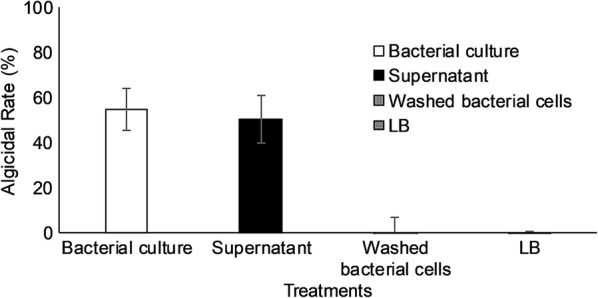
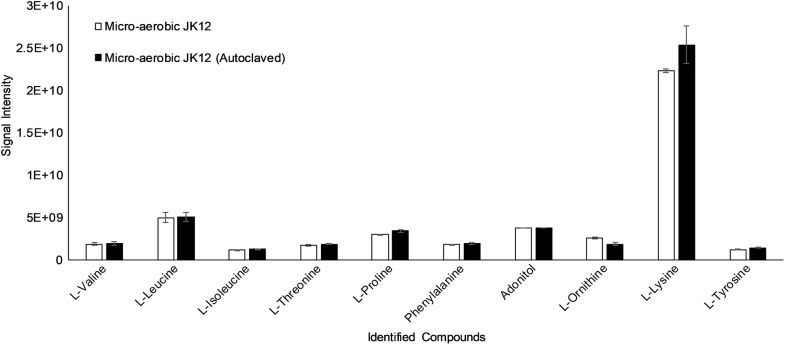
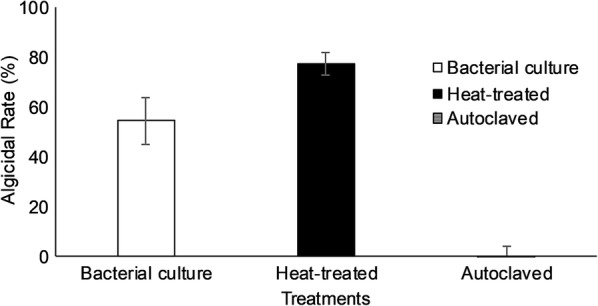
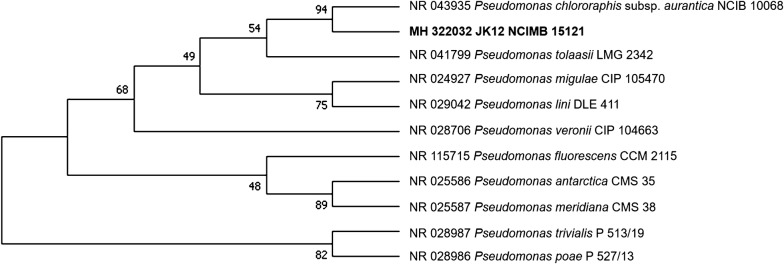
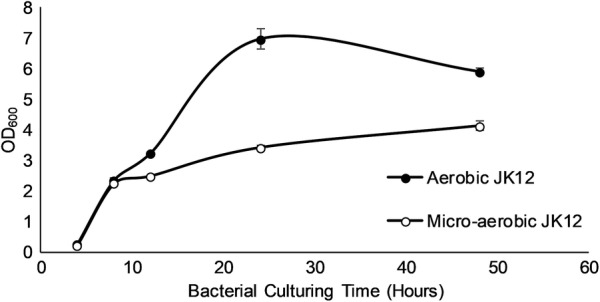
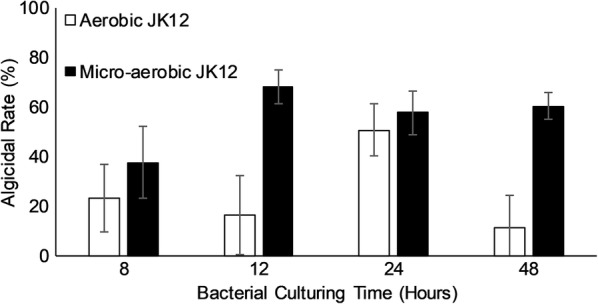
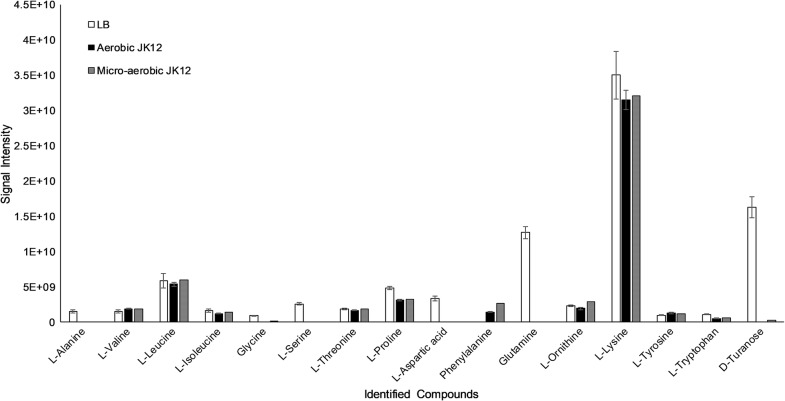
Utilization of algicidal bacteria as a biological agent have been receiving significant interest for controlling harmful algal blooms. While various algicidal bacterial strains have been identified, limited studies have explored the influence of bacterial culture conditions on its algicidal activity. Here, the effect of oxygen on the algicidal activity of a novel bacterium JK12, against a model diatom, Phaeodactylum tricornutum (P. tricornutum) was studied. Strain JK12 showed high algicidal activity against P. tricornutum and was identified as Pseudomonas chlororaphis (P. chlororaphis) by 16S ribosomal RNA gene analysis. JK12 culture supernatant exhibited strong algicidal activity while washed JK12 cells showed no obvious activity, indicating that JK12 indirectly attacks algae by secreting extracellular algicidal metabolites. Micro-aerobic culture condition dramatically enhanced the algicidal activity of JK12 by 50%, compared to that cultured under aerobic condition in 24 h. Extracellular metabolomic profiling of JK12 using gas chromatography-mass spectrometry and liquid chromatography-mass spectrometry analysis revealed significantly higher amounts of allantoic acid, urocanic acid, cytidine 2',3'-cyclic phosphate, uridine 2',3'-cyclic phosphate, and chlorinated tryptophan in the micro-aerobic culture. This is the first report to demonstrate the important role of oxygen on the algicidal activity of a non-pathogenic strain P. chlororaphis. In addition, the metabolomics analysis provided insights into the algicidal mechanism of P. chlororaphis.
利用杀藻细菌作为生物制剂来控制有害藻华已受到广泛关注。虽然已鉴定出多种杀藻细菌菌株,但对细菌培养条件对其杀藻活性影响的研究却很有限。在此,研究了氧气对一种新型细菌JK12对模式硅藻三角褐指藻(Phaeodactylum tricornutum,简称P. tricornutum)杀藻活性的影响。菌株JK12对三角褐指藻表现出较高的杀藻活性,并通过16S核糖体RNA基因分析鉴定为嗜麦芽窄食单胞菌(Pseudomonas chlororaphis,简称P. chlororaphis)。JK12培养上清液表现出较强的杀藻活性,而洗涤后的JK12细胞则无明显活性,这表明JK12通过分泌细胞外杀藻代谢物间接攻击藻类。与在有氧条件下培养24小时相比,微需氧培养条件使JK12的杀藻活性显著提高了50%。使用气相色谱-质谱联用和液相色谱-质谱联用分析对JK12进行细胞外代谢组学分析发现,在微需氧培养中,尿囊酸、尿刊酸、胞苷2',3'-环磷酸酯、尿苷2',3'-环磷酸酯和氯化色氨酸的含量显著更高。这是首次报道氧气对非致病菌株嗜麦芽窄食单胞菌杀藻活性的重要作用。此外,代谢组学分析为嗜麦芽窄食单胞菌的杀藻机制提供了见解。