Abate Rediat, Oon Yoong-Ling, Oon Yoong-Sin, Bi Yonghong, Mi Wujuan, Song Gaofei, Gao Yahui
Key Laboratory of Algal Biology, Institute of Hydrobiology, Chinese Academy of Sciences, Wuhan, 430072, China.
College of Natural and Computatinal Science, Arba Minch University, Ethiopia.
Heliyon. 2024 Aug 24;10(17):e36503. doi: 10.1016/j.heliyon.2024.e36503. eCollection 2024 Sep 15.
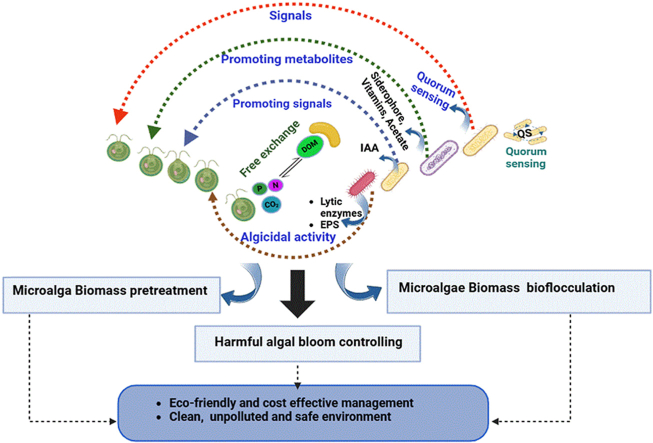
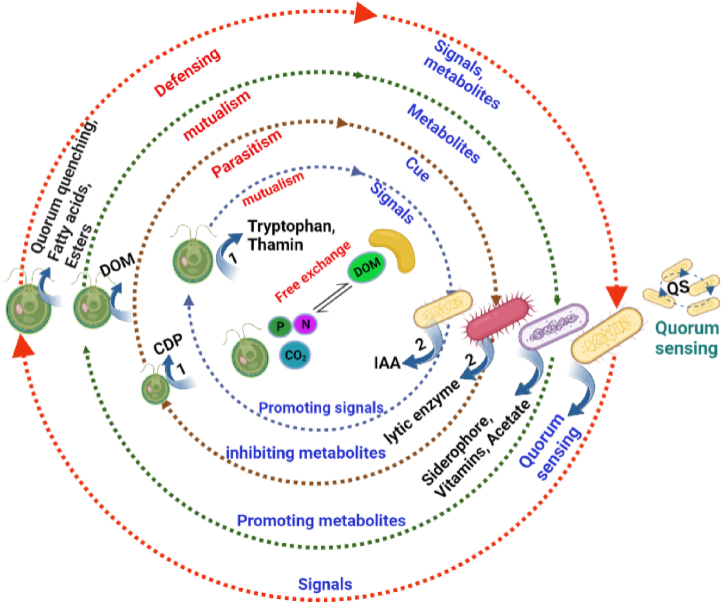
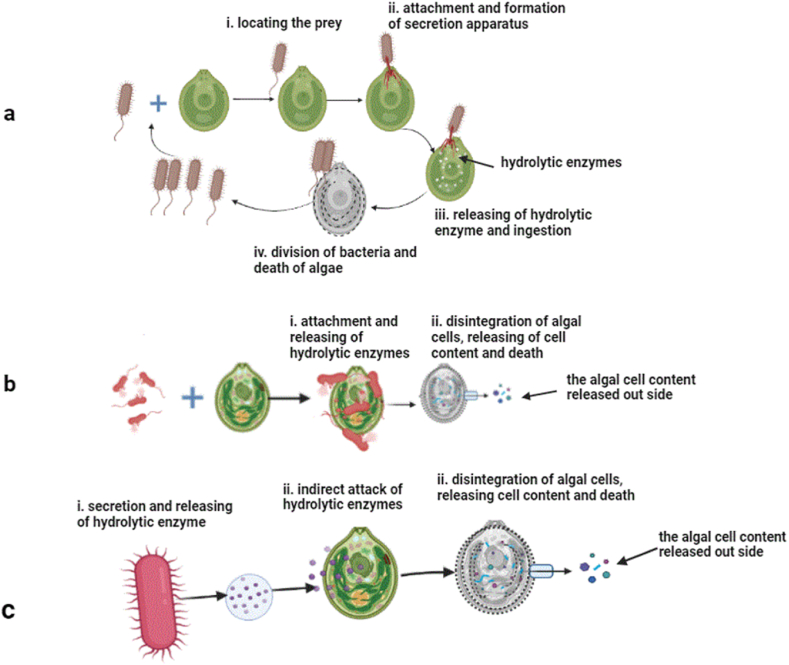
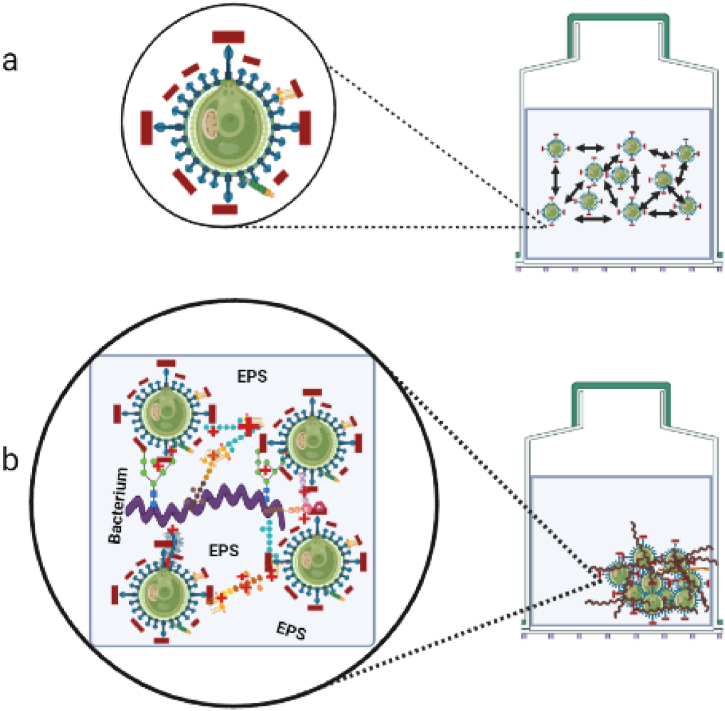
The interactions between bacteria and microalgae play pivotal roles in resource allocation, biomass accumulation, nutrient recycling, and species succession in aquatic systems, offering ample opportunities to solve several social problems. The escalating threat of harmful algal blooms (HABs) in the aquatic environment and the lack of cheap and eco-friendly algal-biomass processing methods have been among the main problems, demanding efficient and sustainable solutions. In light of this, the application of algicidal bacteria to control HABs and enhance algal biomass processing has been promoted in the past few decades as potentially suitable mechanisms to solve those problems. Hence, this comprehensive review aims to explore the diverse interaction modes between bacteria and microalgae, ranging from synergistic to antagonistic, and presents up-to-date information and in-depth analysis of their potential biotechnological applications, particularly in controlling HABs and enhancing microalgal biomass processing. For instance, several studies revealed that algicidal bacteria can effectively inhibit the growth of , a notorious freshwater HAB species, with an antialgal efficiency of 24.87 %-98.8 %. The review begins with an overview of the mechanisms behind algae-bacteria interactions, including the environmental factors influencing these dynamics and their broader implications for aquatic ecosystems. It then provides a detailed analysis of the role of algicidal bacteria in controlling harmful algal blooms, as well as their role in bioflocculation and the pretreatment of microalgal biomass. Additionally, the review identifies and discusses the constraints and challenges in the biotechnological application of these interactions. By exploring the strategic use of algicidal bacteria, this review not only underscores their importance in maintaining aquatic environmental health but also in enhancing biomass processing efficiency. It offers valuable insights into future research avenues and the potential scalability of these applications, both and at an industrial level.
细菌与微藻之间的相互作用在水生系统的资源分配、生物量积累、养分循环和物种演替中起着关键作用,为解决若干社会问题提供了大量机会。水生环境中有害藻华(HABs)威胁的不断升级以及缺乏廉价且环保的藻类生物质处理方法一直是主要问题,需要高效且可持续的解决方案。有鉴于此,在过去几十年中,作为解决这些问题的潜在合适机制,利用杀藻细菌来控制有害藻华和加强藻类生物质处理已得到推广。因此,本综述旨在探索细菌与微藻之间从协同到拮抗的多种相互作用模式,并介绍其潜在生物技术应用的最新信息和深入分析,特别是在控制有害藻华和加强微藻生物质处理方面。例如,多项研究表明,杀藻细菌能够有效抑制一种臭名昭著的淡水有害藻华物种的生长,杀藻效率为24.87% - 98.8%。本综述首先概述藻菌相互作用背后的机制,包括影响这些动态的环境因素及其对水生生态系统的更广泛影响。然后详细分析杀藻细菌在控制有害藻华方面的作用,以及它们在生物絮凝和微藻生物质预处理中的作用。此外,本综述还识别并讨论了这些相互作用在生物技术应用中的限制和挑战。通过探索杀藻细菌的策略性应用,本综述不仅强调了它们在维护水生环境健康方面的重要性,还强调了在提高生物质处理效率方面的重要性。它为未来的研究途径以及这些应用在实验室和工业层面的潜在可扩展性提供了有价值的见解。