Department of Endocrinology and Metabolism, Shanghai Jiao Tong University Affiliated Sixth People's Hospital, Shanghai Clinical Center for Metabolic Diseases, Shanghai Key Laboratory of Diabetes Mellitus, Shanghai Diabetes Institute, Shanghai, China.
J Cell Biochem. 2018 Dec;119(12):9910-9920. doi: 10.1002/jcb.27312. Epub 2018 Aug 21.
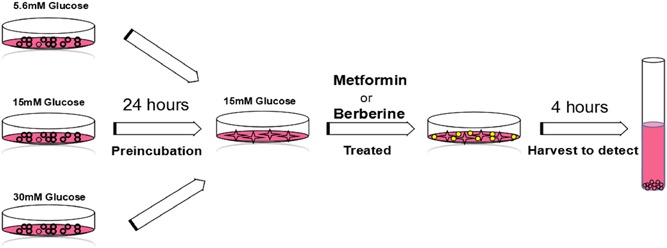
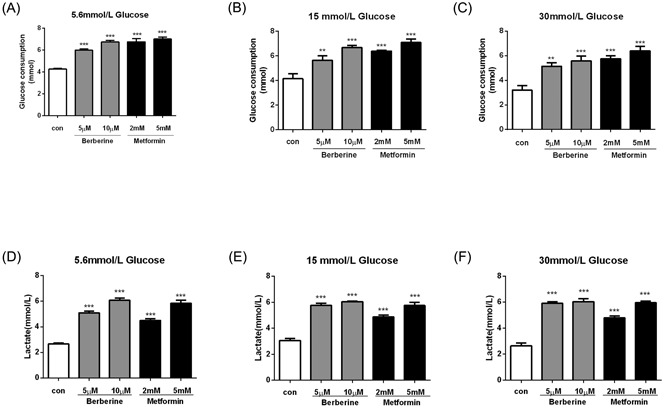
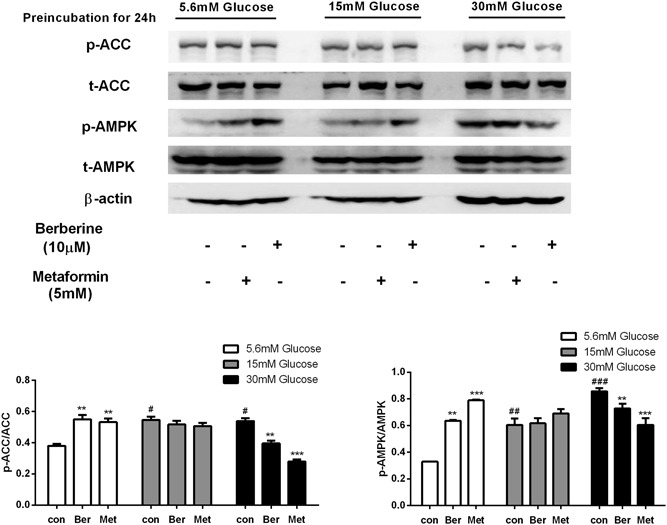
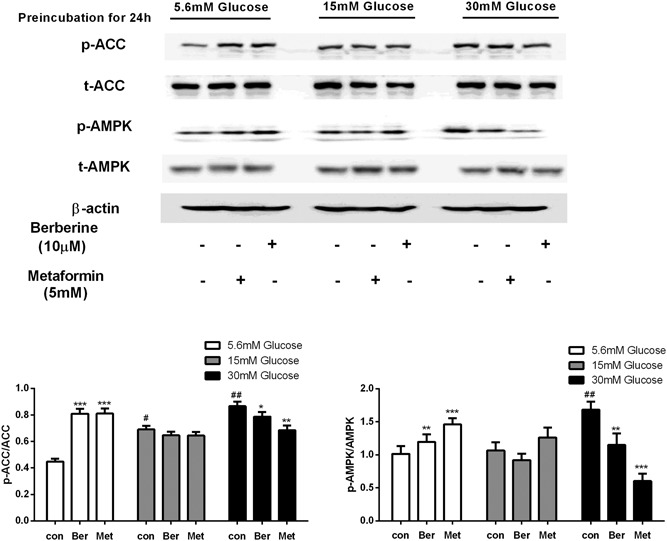
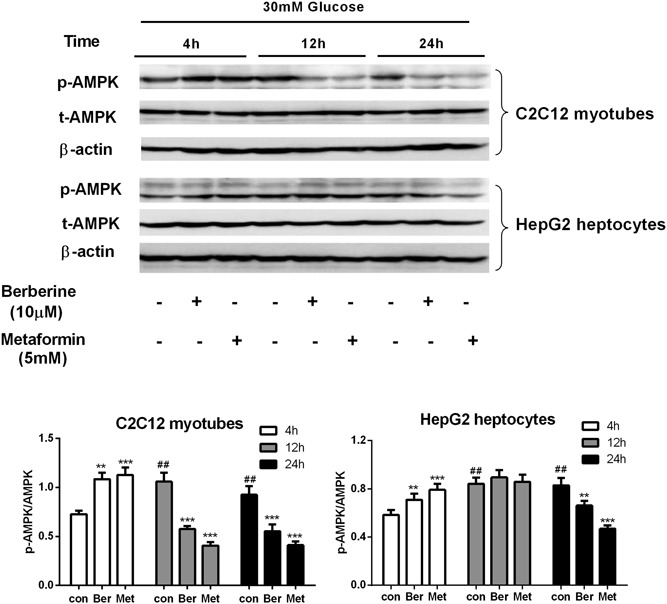
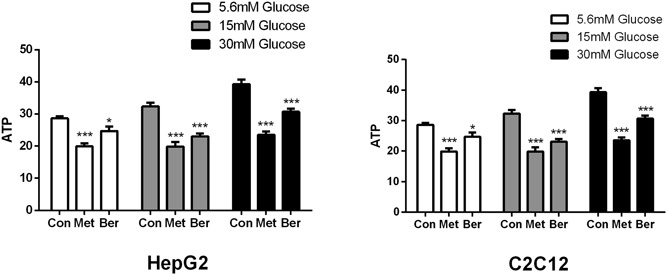
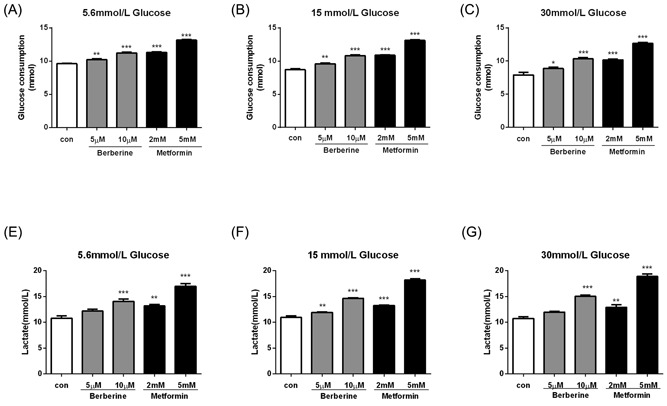
Both berberine and metformin are well-known antihyperglycemic agents for diabetes treatment. Adenosine monophosphate (AMP)-activated protein kinase (AMPK) activation is often considered as the most important molecular mechanism although the mechanism has been challenged recently. Up to now, when the ambient glucose level changes dynamically, the interaction between AMPK activity and the glucose-lowering effects of the agents remains largely unknown. To address this issue, HepG2 hepatocytes and C2C12 myotubes were preincubated at normal (5.6 mM), moderate (15 mM), or high (30 mM) glucose concentrations followed by moderate-glucose incubation plus berberine or metformin treatment. Preincubation at high glucose concentration followed by moderate-glucose incubation activated the AMPK pathway, but the activation was abolished with berberine or metformin treatment. In contrast, alteration from normal glucose to moderate glucose concentration in the medium suppressed AMPK activity, which was activated by berberine or metformin. Both metformin and berberine decreased the intercellular adenosine triphosphate content, enhanced glucose consumption, and lactate release under all three preincubation glucose concentrations regardless of AMPK activity. In conclusion, AMPK activated by glucose reduction is inhibited by berberine or metformin. The elevation of glucose level led to suppressed AMPK activity, which was activated with the addition of agents. The potent glucose-lowering effects with minimal hypoglycemia of berberine and metformin may be partially due to their bidirectional regulation of the AMPK signaling pathway. Berberine and metformin promote glucose metabolism via stimulation of glycolysis, which may not be related to AMPK activity.
小檗碱和二甲双胍均为治疗糖尿病的知名抗高血糖药物。尽管该机制最近受到质疑,但腺苷单磷酸(AMP)激活的蛋白激酶(AMPK)的激活通常被认为是最重要的分子机制。到目前为止,当环境葡萄糖水平动态变化时,AMPK 活性与药物降低血糖作用之间的相互作用在很大程度上仍不清楚。为解决这一问题,我们将 HepG2 肝细胞和 C2C12 肌管分别在正常(5.6mmol/L)、中等(15mmol/L)或高(30mmol/L)葡萄糖浓度下预孵育,然后进行中等葡萄糖孵育加小檗碱或二甲双胍处理。高葡萄糖浓度预孵育后进行中等葡萄糖孵育可激活 AMPK 途径,但小檗碱或二甲双胍处理可消除该激活作用。相反,培养基中葡萄糖浓度从正常转变为中等浓度会抑制 AMPK 活性,而小檗碱或二甲双胍可激活 AMPK 活性。无论 AMPK 活性如何,二甲双胍和小檗碱均可降低三种预孵育葡萄糖浓度下的细胞内三磷酸腺苷含量,增强葡萄糖消耗和乳酸释放。总之,由葡萄糖减少激活的 AMPK 被小檗碱或二甲双胍抑制。葡萄糖水平升高导致 AMPK 活性受抑制,而加入药物后 AMPK 活性被激活。小檗碱和二甲双胍具有强大的降血糖作用,且低血糖风险低,这可能部分归因于它们对 AMPK 信号通路的双向调节。小檗碱和二甲双胍通过刺激糖酵解促进葡萄糖代谢,而与 AMPK 活性无关。