CIBIO/InBIO Research Centre in Biodiversity and Genetic Resources, University of Porto, Campus de Vairão, Rua Padre Armando Quintas, N° 7.4485-661 Vairão, Vila do Conde, Portugal.
BMC Evol Biol. 2018 Aug 22;18(1):124. doi: 10.1186/s12862-018-1237-7.
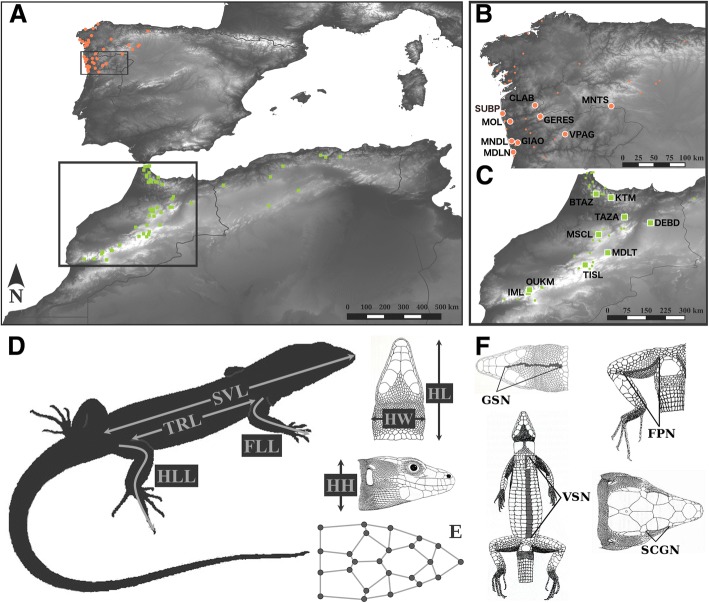
Understanding how phenotypic variation scales from individuals, through populations, up to species, and how it relates to genetic and environmental factors, is essential for deciphering the evolutionary mechanisms that drive biodiversity. We used two species of Podarcis wall lizards to test whether phenotypic diversity within and divergence across populations follow concordant patterns, and to examine how phenotypic variation responds to genetic and environmental variability across different hierarchical levels of biological organization, in an explicit geographic framework.
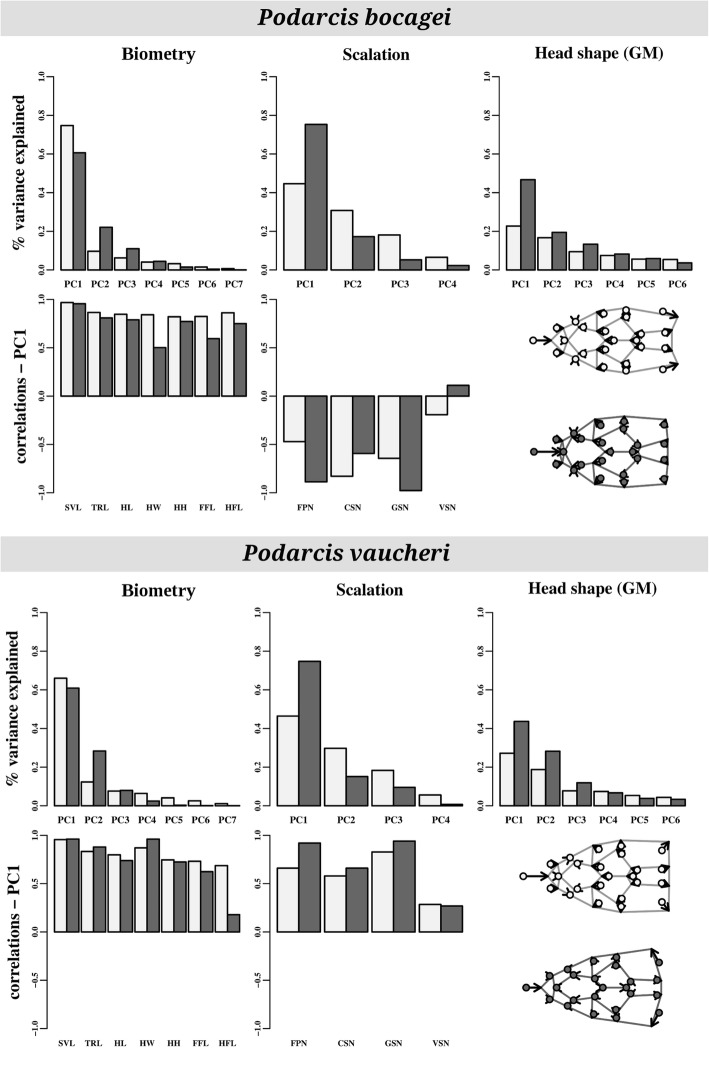
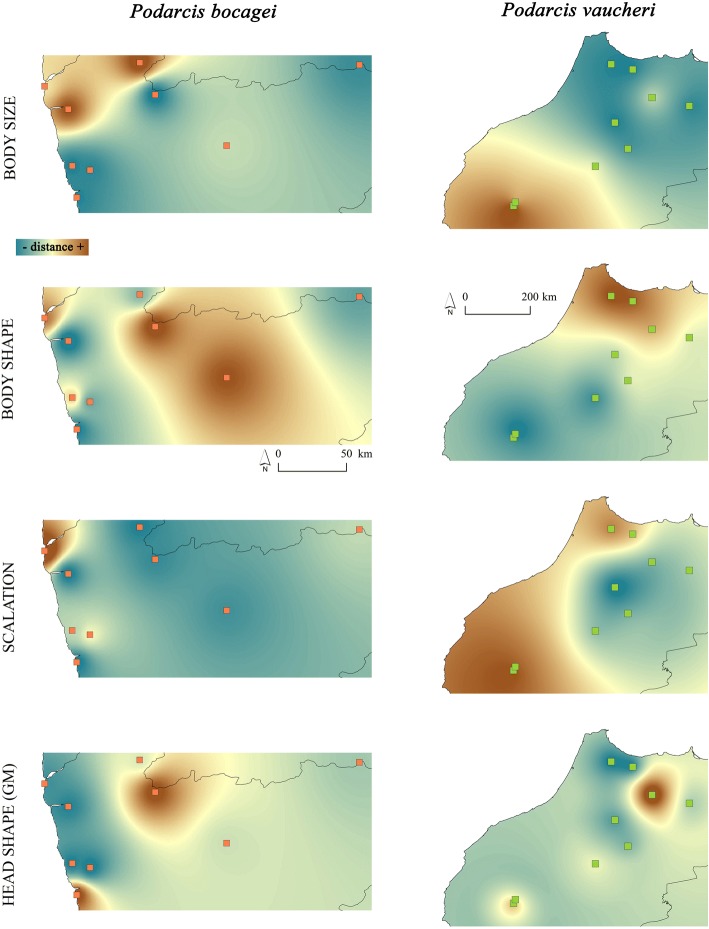
We found a general concordance of phenotypic variation across hierarchical levels (i.e. individuals and populations). However, we also found that within-population diversity does not exhibit a coherent geographic structure for most traits, while among-population divergence does, suggesting that different mechanisms may underlie the generation of diversity at these two levels. Furthermore, the association of phenotypic variation with genetic and environmental factors varied extensively between hierarchical levels and across traits, hampering the identification of simple rules to explain what yields diversity.
Our results in some cases comply with general ecological and evolutionary predictions, but in others they are difficult to explain in the geographic framework used, suggesting that habitat characteristics and other regulatory mechanisms may have a more substantial contribution in shaping phenotypic diversity.
了解表型变异如何从个体、种群到物种进行缩放,以及它如何与遗传和环境因素相关,对于破译驱动生物多样性的进化机制至关重要。我们使用两种壁蜥属(Podarcis)蜥蜴来检验表型多样性在种群内和种群间是否遵循一致的模式,并在明确的地理框架内研究表型变异如何响应不同层次的生物组织的遗传和环境变异性。
我们发现表型变异在不同层次(即个体和种群)之间具有普遍的一致性。然而,我们还发现,对于大多数特征,种群内的多样性并没有表现出一致的地理结构,而种群间的分化则有,这表明不同的机制可能是在这两个层次上产生多样性的基础。此外,表型变异与遗传和环境因素的关联在不同层次和特征之间广泛变化,这使得难以确定简单的规则来解释多样性的产生。
我们的结果在某些情况下符合一般的生态和进化预测,但在其他情况下,在使用的地理框架中难以解释,这表明栖息地特征和其他调节机制可能在塑造表型多样性方面有更实质性的贡献。