Department of Internal Medicine, School of Medicine, College of Medicine, Taipei Medical University, Taipei, Taiwan.
Division of Pulmonary Medicine, Department of Internal Medicine, Wan Fang Hospital, Taipei Medical University, Taipei, Taiwan.
J Exp Clin Cancer Res. 2018 Aug 22;37(1):199. doi: 10.1186/s13046-018-0869-1.
Metastasis rather than the primary cancer determines the survival of cancer patients. Activation of Akt plays a critical role in the epithelial-to-mesenchymal transition (EMT), the initial step in lung cancer metastasis. Apigenin (API), a flavonoid with a potent Akt-inhibitory effect, shows oncostatic activities in various cancers. However, the effects of API on metastasis of non-small cell lung cancer (NSCLC) remain unclear.
NSCLC cell lines with different epidermal growth factor receptor (EGFR) statuses and in vivo orthotopic bioluminescent xenograft model were employed to determine antitumor activity of API. Western blot and genetic knockdown by shRNA or genetic overexpression by DNA plasmids were performed to explore the underlying mechanisms. The Cancer Genome Atlas (TCGA) database was used to investigate the prognosis of API-targeted genes.
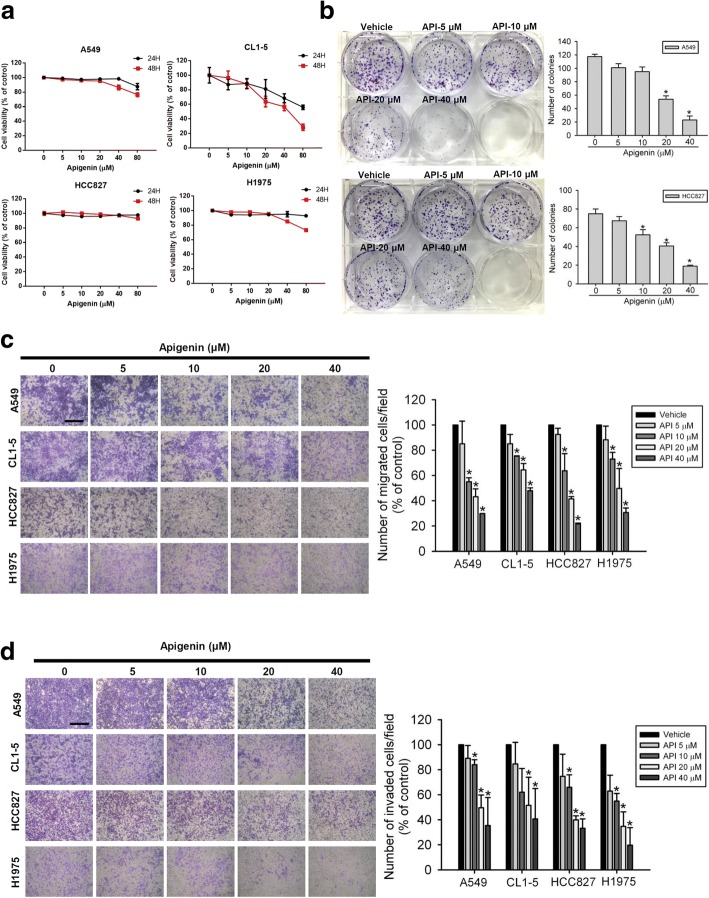
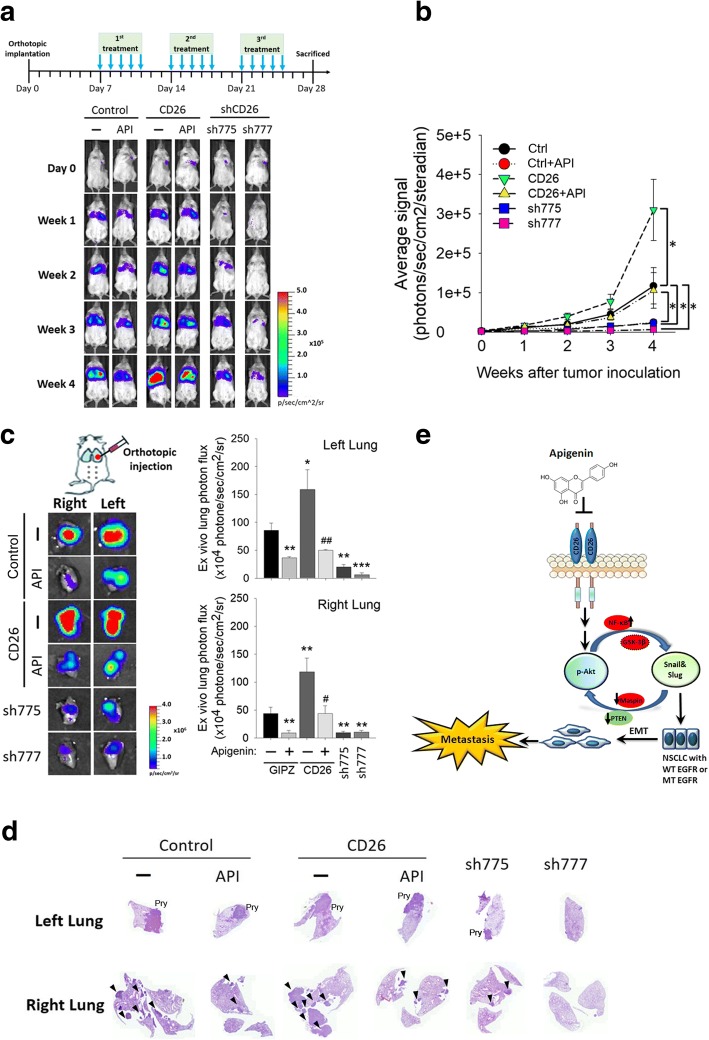
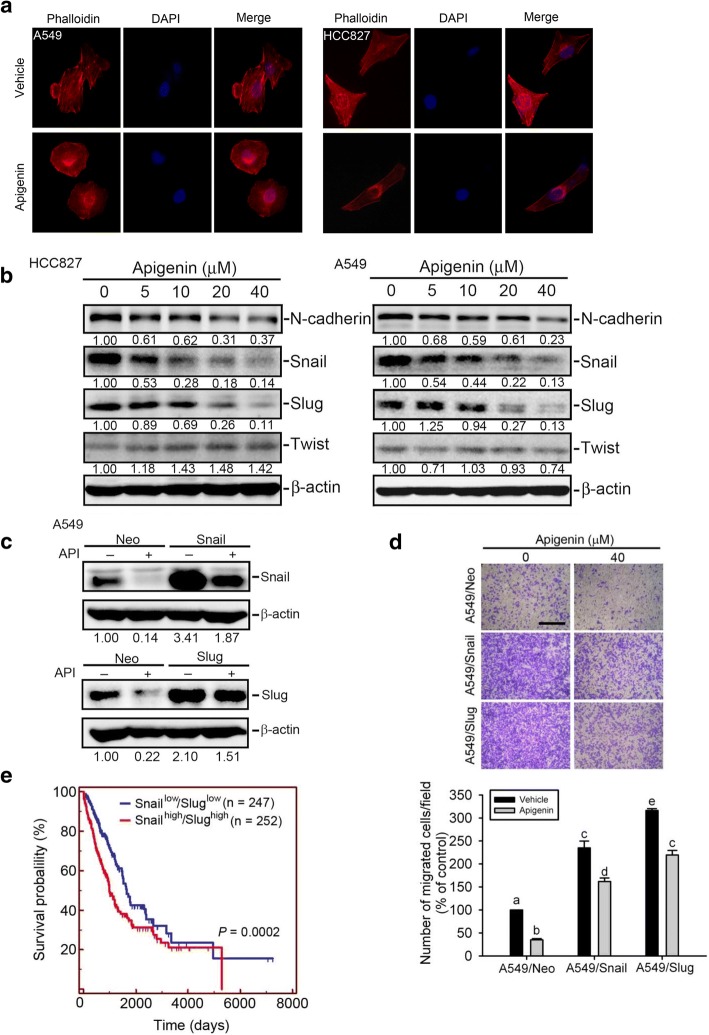
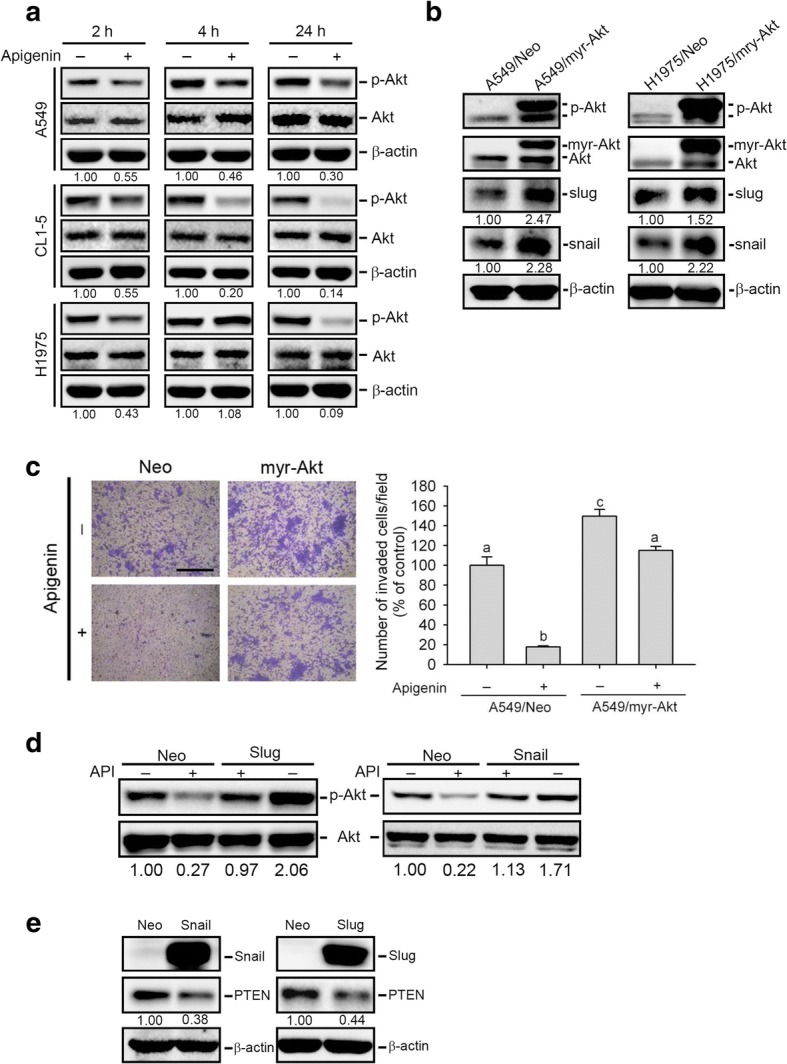
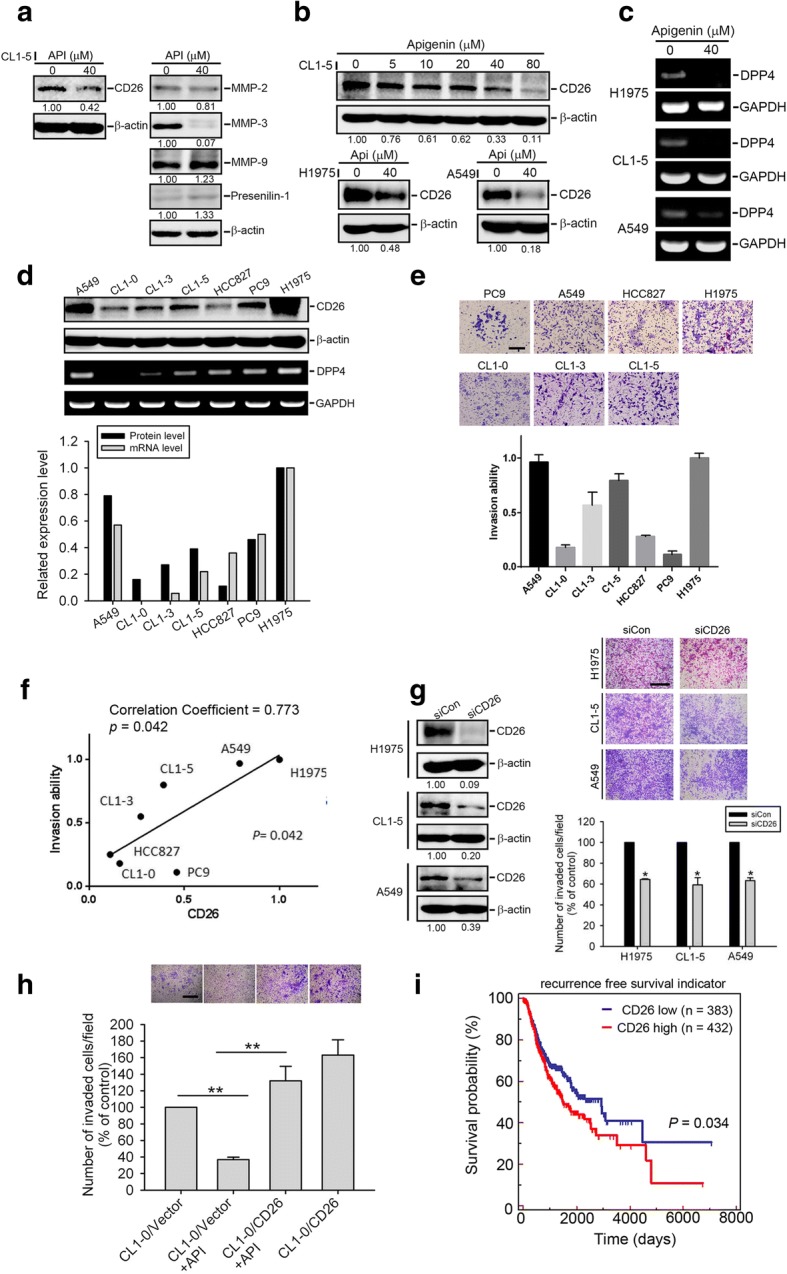
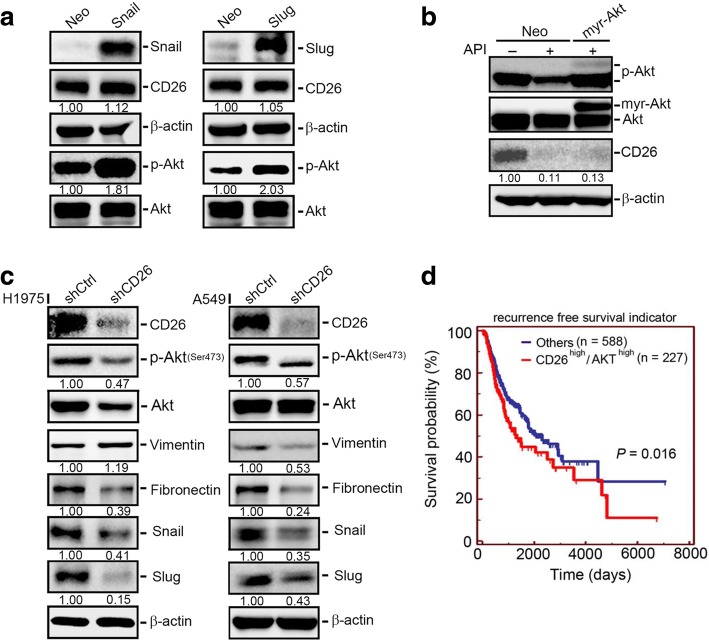
API was demonstrated to inhibit the migration/invasion of NSCLC cells harboring different EGFR statuses via suppressing the Snail/Slug-mediated EMT. Mechanistic investigations showed that CD26/dipeptidyl peptidase IV (DPPIV) was downregulated by API following suppressive interplay of Akt and Snail/Slug signaling to modulate the EMT and the invasive ability of NSCLC cells. CD26 expression was positively correlated with the invasive abilities of NSCLC cells and a worse prognosis of lung cancer patients. Furthermore, we observed that patients with CD26/Akt tumors had the shortest recurrence-free survival times. In vivo, API drastically reduced the growth and metastasis of A549 xenografts through targeting CD26.
CD26 may be a useful biomarker for predicting NSCLC progression. API effectively suppressed lung cancer progression by targeting the CD26-Akt-Snail/Slug signaling pathway.
转移而非原发性癌症决定癌症患者的生存。 Akt 的激活在肺癌转移的初始步骤上皮间质转化(EMT)中起着关键作用。芹菜素(API)是一种具有强大 Akt 抑制作用的黄酮类化合物,在各种癌症中表现出抗肿瘤活性。然而,API 对非小细胞肺癌(NSCLC)转移的影响尚不清楚。
使用具有不同表皮生长因子受体(EGFR)状态的 NSCLC 细胞系和体内原位生物发光异种移植模型来确定 API 的抗肿瘤活性。通过 shRNA 基因敲低或 DNA 质粒基因过表达进行 Western blot 分析和遗传研究,以探讨潜在机制。使用癌症基因组图谱(TCGA)数据库研究 API 靶向基因的预后。
API 通过抑制 Snail/Slug 介导的 EMT 来抑制具有不同 EGFR 状态的 NSCLC 细胞的迁移/侵袭。机制研究表明,API 下调 CD26/二肽基肽酶 IV(DPPIV),通过 Akt 和 Snail/Slug 信号的抑制性相互作用来调节 EMT 和 NSCLC 细胞的侵袭能力。CD26 表达与 NSCLC 细胞的侵袭能力呈正相关,与肺癌患者的预后较差相关。此外,我们观察到 CD26/Akt 肿瘤患者的无复发生存时间最短。在体内,API 通过靶向 CD26 极大地减少了 A549 异种移植物的生长和转移。
CD26 可能是预测 NSCLC 进展的有用生物标志物。API 通过靶向 CD26-Akt-Snail/Slug 信号通路有效抑制肺癌进展。