Department of Oncology and Hemato-Oncology, University of Milan, Milan, 20122, Italy.
Department of Oncology and Hematology, Fondazione IRCCS Istituto Nazionale dei Tumori, Milan, 20133, Italy.
Nat Commun. 2018 Aug 22;9(1):3363. doi: 10.1038/s41467-018-05058-y.
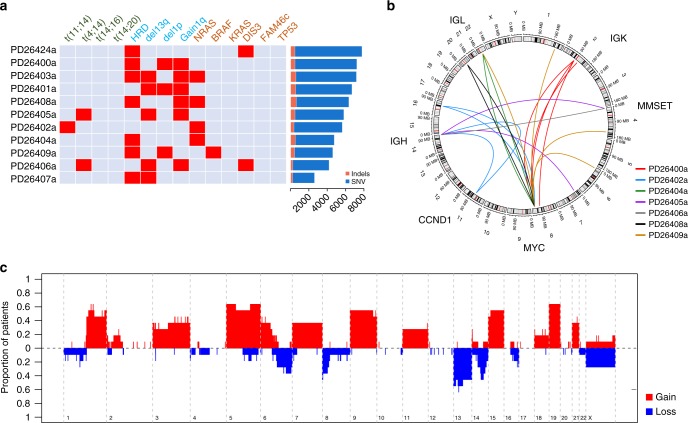
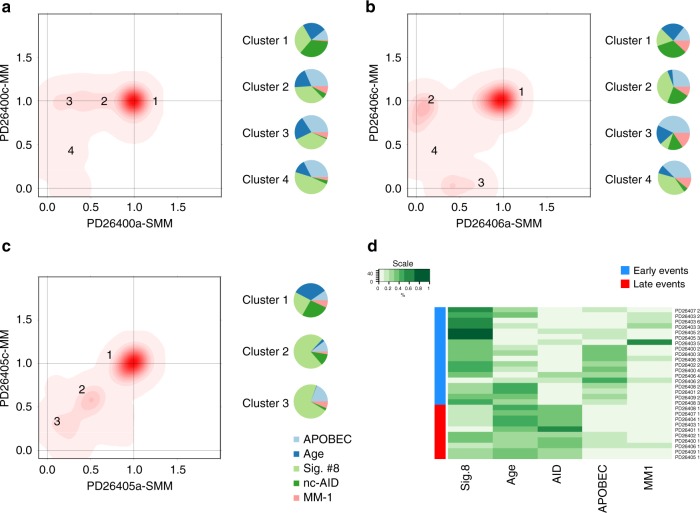
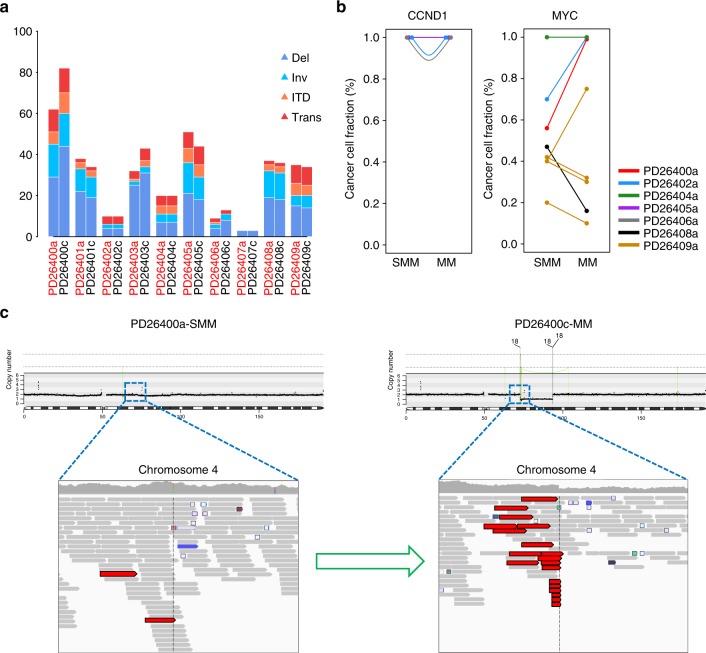
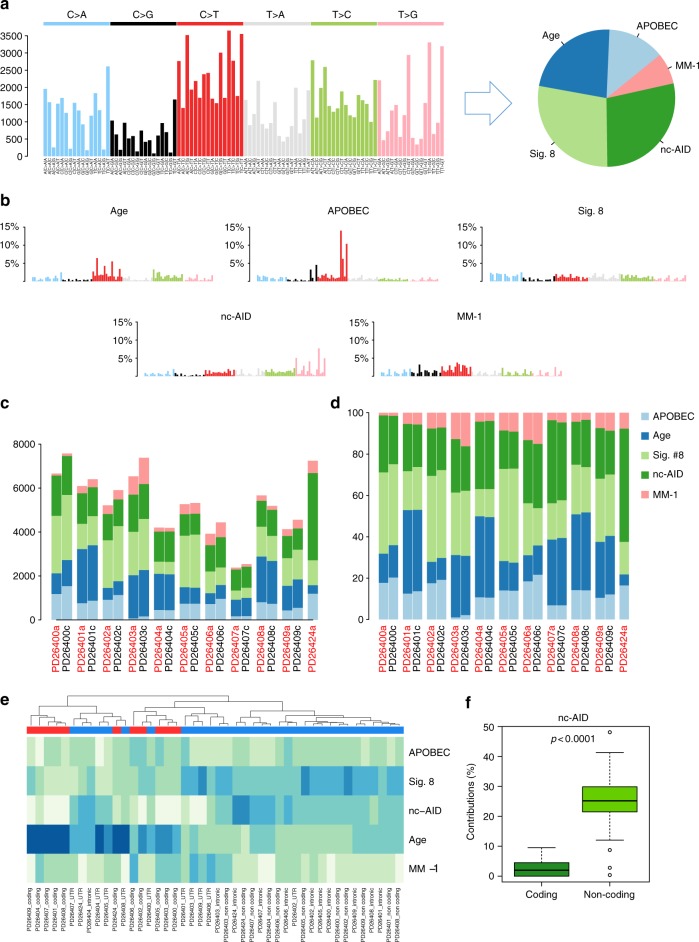
We analyzed whole genomes of unique paired samples from smoldering multiple myeloma (SMM) patients progressing to multiple myeloma (MM). We report that the genomic landscape, including mutational profile and structural rearrangements at the smoldering stage is very similar to MM. Paired sample analysis shows two different patterns of progression: a "static progression model", where the subclonal architecture is retained as the disease progressed to MM suggesting that progression solely reflects the time needed to accumulate a sufficient disease burden; and a "spontaneous evolution model", where a change in the subclonal composition is observed. We also observe that activation-induced cytidine deaminase plays a major role in shaping the mutational landscape of early subclinical phases, while progression is driven by APOBEC cytidine deaminases. These results provide a unique insight into myelomagenesis with potential implications for the definition of smoldering disease and timing of treatment initiation.
我们分析了进展为多发性骨髓瘤(MM)的冒烟型多发性骨髓瘤(SMM)患者独特配对样本的全基因组。我们报告称,在冒烟阶段的基因组景观,包括突变特征和结构重排,与 MM 非常相似。配对样本分析显示出两种不同的进展模式:“静态进展模型”,其中疾病进展为 MM 时保留了亚克隆结构,这表明进展仅反映了积累足够疾病负担所需的时间;和“自发进化模型”,观察到亚克隆组成的变化。我们还观察到激活诱导的胞嘧啶脱氨酶在塑造早期临床前阶段的突变景观中发挥主要作用,而进展则由 APOBEC 胞嘧啶脱氨酶驱动。这些结果为骨髓瘤发生提供了独特的见解,可能对冒烟病的定义和治疗开始时间具有重要意义。