Morrow Brenda M, Barnard Charlotte, Luhlaza Zimkhitha, Naidoo Kelisha, Pitt Sarah
Paediatrics and Child Health, University of Cape Town, South Africa.
Department of Health and Rehabilitation Sciences, University of Cape Town, South Africa.
S Afr J Physiother. 2017 Jul 31;73(1):384. doi: 10.4102/sajp.v73i1.384. eCollection 2017.
Palliative care encompasses holistic management of patients and families facing life-threatening and life-limiting conditions. There is currently little known about South African physiotherapists' palliative care knowledge, attitudes, beliefs, experience and training needs.
To describe the amount and adequacy of palliative care training received by South African physiotherapists, and their interest, knowledge, attitudes, beliefs and experiences of palliative care.
This was a cross-sectional descriptive survey study of a convenience sample of physiotherapists, using an adapted Physical Therapy in Palliative Care-Knowledge, Attitudes, Beliefs and Experiences Scale (PTiPC-KABE Scale). Likert scale scores were converted to continuous data for analysis, presented as median (IQR). Seven universities were contacted to determine undergraduate palliative care curriculum content.
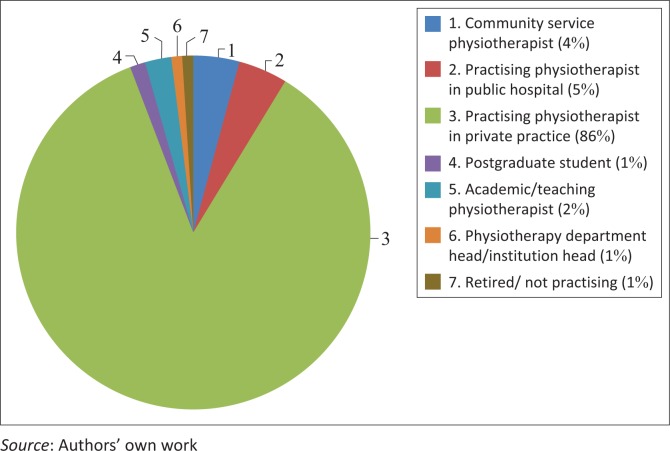
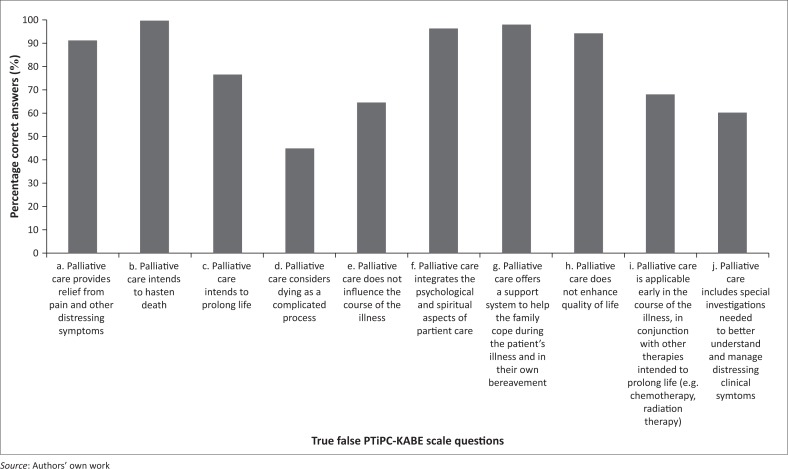
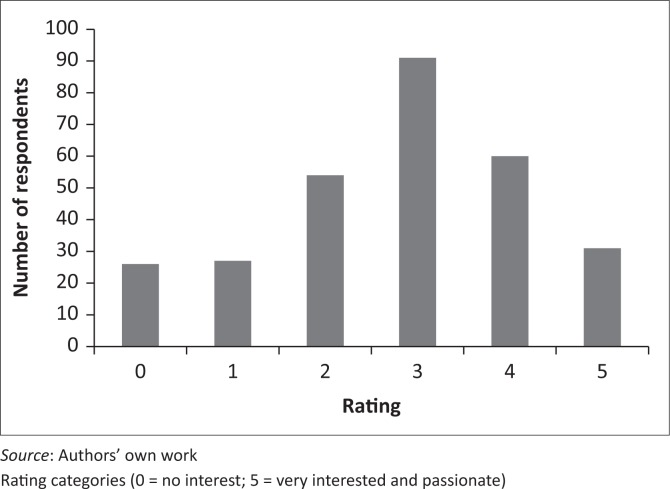
A total of 303 participants (8.4% response rate) completed the questionnaire, and 289 responses were included (5.35% margin of error with 95% CI). Participants had 16 (6-27) years of experience, with 85.5% in private practice. About 66.7% and 79% of participants reported not receiving any training at undergraduate and postgraduate levels, respectively, with more than 80% expressing that training was inadequate at both levels. Universities ( = 4/7; 57.1%) reported a maximum 3 hours undergraduate palliative care training. Seventy-nine percent of respondents had clinical experience in providing palliative care; however 'knowledge' was the lowest scoring domain (56.3% (43.8%-62.5%). The 'beliefs' domain scored highest at 82.6% (69.6%-91.3%).
Many South African physiotherapists manage patients requiring palliative care, despite inadequate training and limited knowledge in this field. More under- and postgraduate learning opportunities should be made available for physiotherapists in the area of palliative care.
姑息治疗涵盖了对面临危及生命和生命受限状况的患者及其家庭的整体管理。目前,对于南非物理治疗师的姑息治疗知识、态度、信念、经验和培训需求了解甚少。
描述南非物理治疗师接受的姑息治疗培训的数量和充分性,以及他们对姑息治疗的兴趣、知识、态度、信念和经验。
这是一项对物理治疗师便利样本进行的横断面描述性调查研究,使用了改编后的姑息治疗中的物理治疗 - 知识、态度、信念和经验量表(PTiPC - KABE量表)。李克特量表得分转换为连续数据进行分析,以中位数(四分位间距)呈现。联系了七所大学以确定本科姑息治疗课程内容。
共有303名参与者(回复率8.4%)完成了问卷,纳入了289份回复(95%置信区间的误差幅度为5.35%)。参与者有16(6 - 27)年的经验,85.5%在私人诊所工作。分别约66.7%和79%的参与者报告在本科和研究生阶段未接受任何培训,超过80%的人表示两个阶段的培训都不充分。大学( = 4/7;57.1%)报告本科姑息治疗培训最多3小时。79%的受访者有提供姑息治疗的临床经验;然而,“知识”领域得分最低(56.3%(43.8% - 62.5%))。“信念”领域得分最高,为82.6%(69.6% - 91.3%)。
尽管在该领域培训不足且知识有限,但许多南非物理治疗师仍在管理需要姑息治疗的患者。应在姑息治疗领域为物理治疗师提供更多的本科和研究生学习机会。