Department of Clinical Chemistry, Sahlgrenska University Hospital and Department of Clinical Chemistry and Transfusion Medicine, Institute of Biomedicine, Sahlgrenska Academy, University of Gothenburg, Gothenburg, Sweden.
Wallenberg Laboratory, Department of Molecular and Clinical Medicine, Institute of Medicine, Sahlgrenska Academy, University of Gothenburg, Gothenburg, Sweden.
PLoS One. 2018 Aug 23;13(8):e0202693. doi: 10.1371/journal.pone.0202693. eCollection 2018.
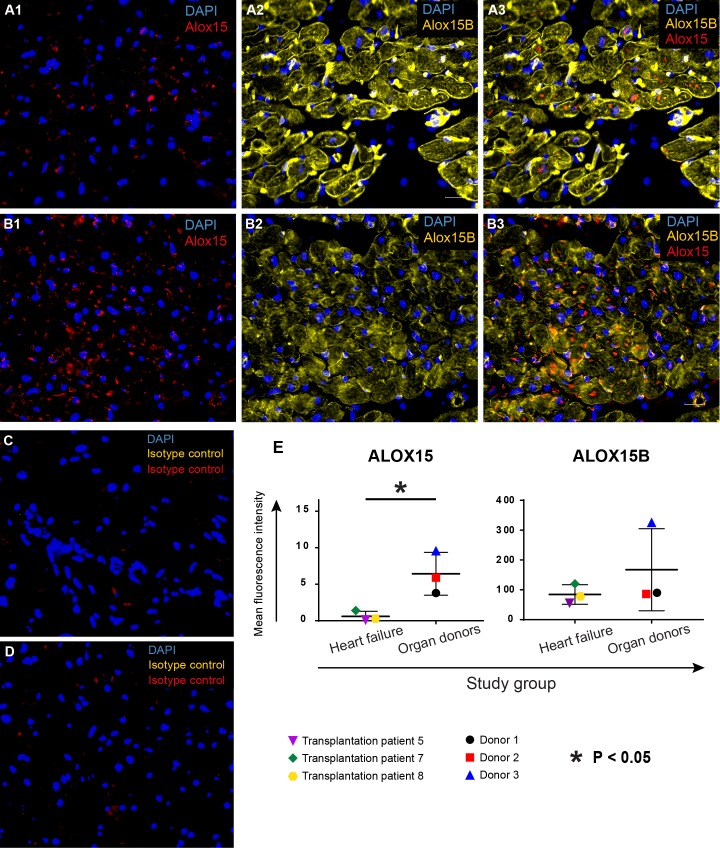
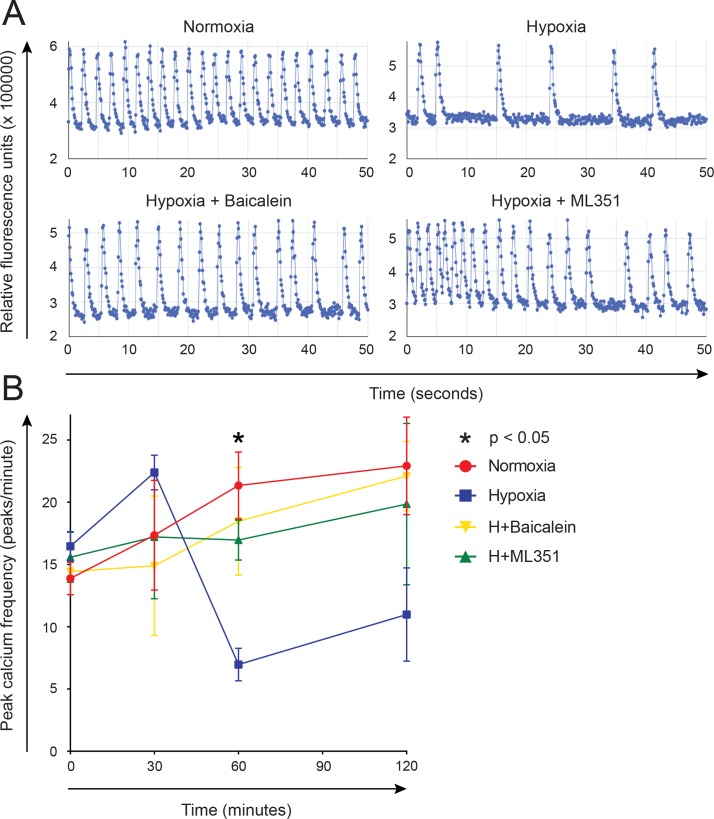
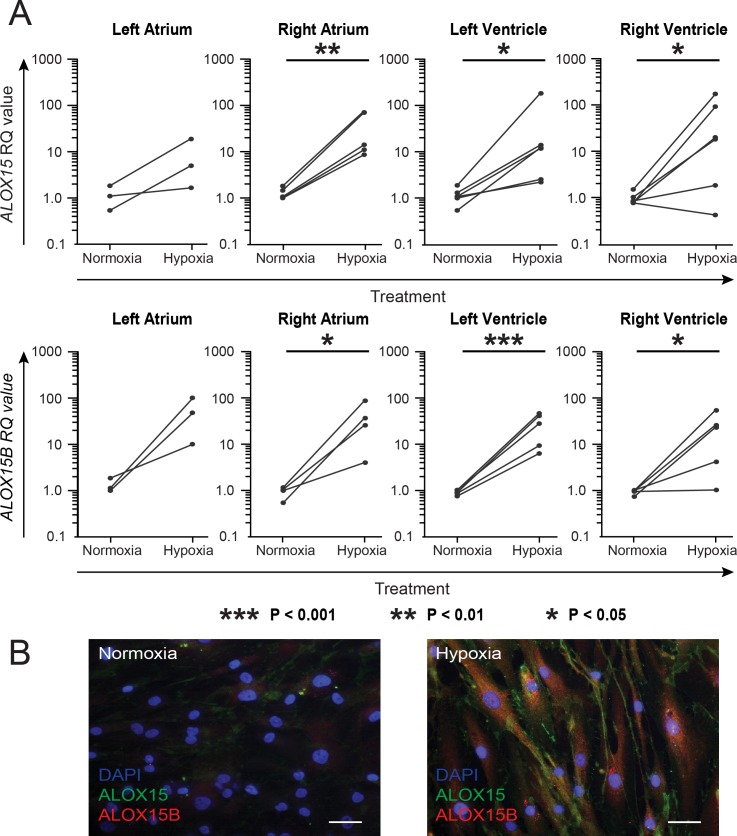
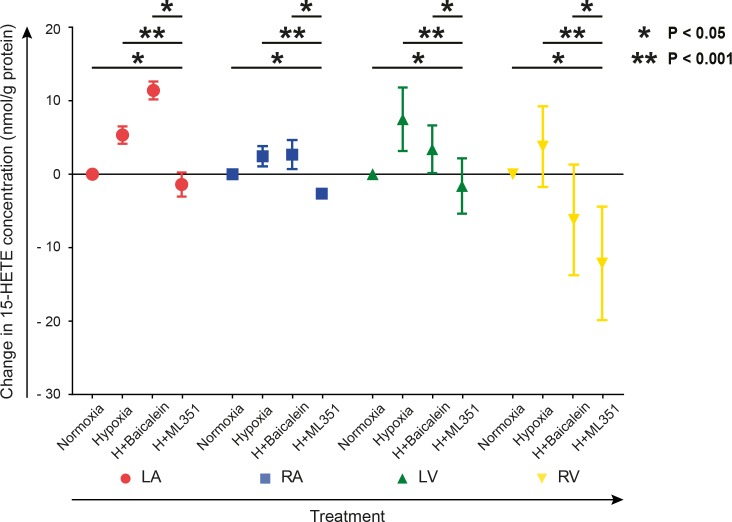
A common denominator for patients with heart failure is the correlation between elevated serum levels of proinflammatory cytokines and adverse clinical outcomes. Furthermore, lipoxygenase-induced inflammation is reportedly involved in the pathology of heart failure. Cardiac fibroblasts, which are abundant in cardiac tissue, are known to be activated by inflammation. We previously showed high expression of the lipoxygenase arachidonate 15 lipoxygenase (ALOX15), which catalyzes the conversion of arachidonic acid to 15-hydroxy eicosatetraenoic acid (15-HETE), in ischemic cardiac tissue. The exact roles of ALOX15 and 15-HETE in the pathogenesis of heart failure are however unknown. Biopsies were collected from all chambers of explanted failing human hearts from heart transplantation patients, as well as from the left ventricles from organ donors not suffering from chronic heart failure. Biopsies from the left ventricles underwent quantitative immunohistochemical analysis for ALOX15/B. Gene expression of ALOX enzymes, as well as 15-HETE levels, were examined in cardiac fibroblasts which had been cultured in either hypoxic or normoxic conditions after isolation from failing hearts. After the addition of fibroblast supernatants to human induced pluripotent stem cell-derived cardiomyocytes, intracellular calcium concentrations were measured to examine the effect of paracrine signaling on cardiomyocyte beating frequency. While ALOX15 and ALOX15B were expressed throughout failing hearts as well as in hearts from organ donors, ALOX15 was expressed at significantly higher levels in donor hearts. Hypoxia resulted in a significant increase in gene and protein expression of ALOX15 and ALOX15B in fibroblasts isolated from the different chambers of failing hearts. Finally, preconditioned medium from hypoxic fibroblasts decreased the beating frequency of human cardiomyocytes derived from induced pluripotent stem cells in an ALOX15-dependent manner. In summary, our results demonstrate that ALOX15/B signaling by hypoxic cardiac fibroblasts may play an important role in ischemic cardiomyopathy, by decreasing cardiomyocyte beating frequency.
心力衰竭患者的一个共同特征是促炎细胞因子血清水平升高与不良临床结局之间存在相关性。此外,据报道,脂氧合酶诱导的炎症与心力衰竭的病理学有关。心肌组织中丰富的心肌成纤维细胞已知会被炎症激活。我们之前的研究表明,在缺血性心肌组织中,催化花生四烯酸转化为 15-羟基二十碳四烯酸(15-HETE)的脂氧合酶花生四烯酸 15-脂氧合酶(ALOX15)表达水平较高。然而,ALOX15 和 15-HETE 在心力衰竭发病机制中的确切作用尚不清楚。从心脏移植患者的心脏移植中以及从没有慢性心力衰竭的器官供体的左心室采集标本。对取自左心室的标本进行了定量免疫组织化学分析,以研究 ALOX15/B 在心力衰竭发病机制中的作用。在从衰竭心脏分离后,在低氧或常氧条件下培养的心肌成纤维细胞中,检查了 ALOX 酶的基因表达以及 15-HETE 水平。将成纤维细胞上清液添加到人诱导多能干细胞衍生的心肌细胞中,测量细胞内钙浓度,以检查旁分泌信号对心肌细胞跳动频率的影响。虽然 ALOX15 和 ALOX15B 在衰竭心脏以及器官供体心脏中均有表达,但在供体心脏中 ALOX15 的表达水平显著更高。低氧导致从衰竭心脏不同腔室分离的成纤维细胞中 ALOX15 和 ALOX15B 的基因和蛋白表达显著增加。最后,低氧成纤维细胞的预处理培养基以 ALOX15 依赖的方式降低了人诱导多能干细胞衍生的心肌细胞的跳动频率。总之,我们的研究结果表明,低氧心肌成纤维细胞的 ALOX15/B 信号可能通过降低心肌细胞跳动频率在缺血性心肌病中发挥重要作用。