Zhao Xiao-Nan, Usdin Karen
Gene Structure and Disease Section, Laboratory of Cell and Molecular Biology, National Institute of Diabetes and Digestive and Kidney Diseases, National Institutes of Health, Bethesda, MD, United States.
Front Genet. 2018 Aug 10;9:314. doi: 10.3389/fgene.2018.00314. eCollection 2018.
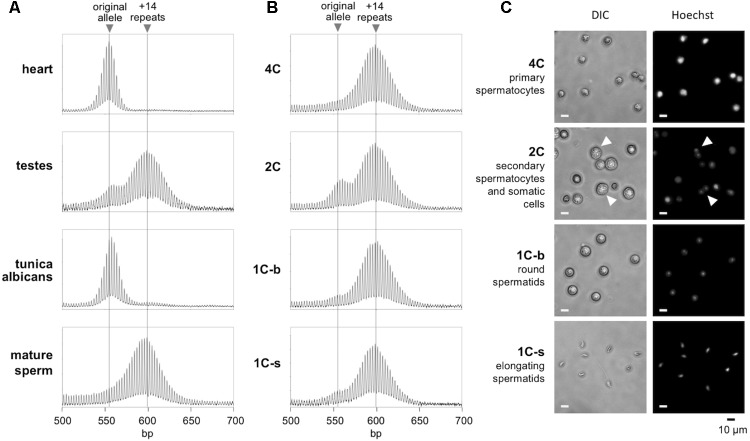
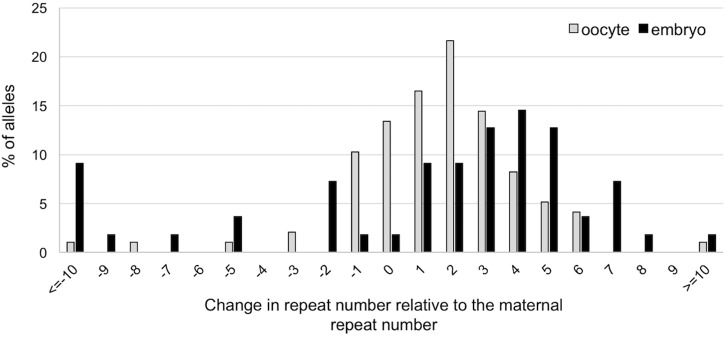
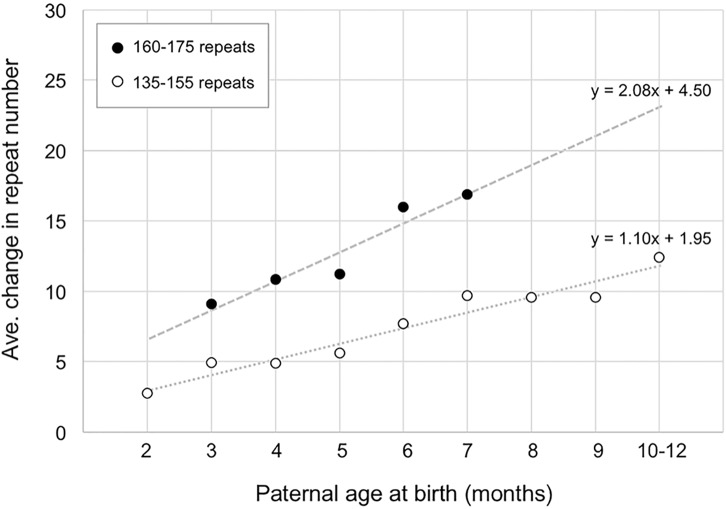
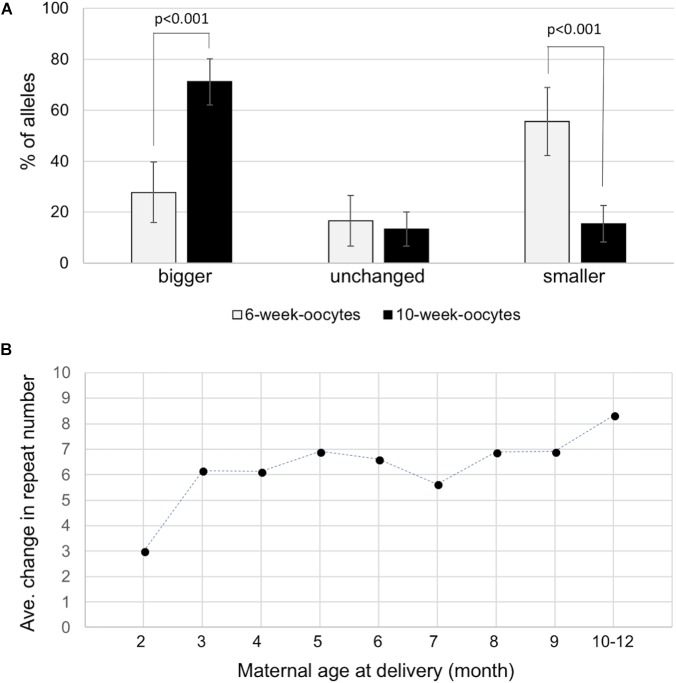
Fragile X syndrome (FXS) is caused by the maternal expansion of an unstable CGG-repeat tract located in the first exon of the gene. Further changes in repeat number occur during embryogenesis resulting in individuals sometimes being highly mosaic. Here we show in a mouse model that, in males, expansions are already present in primary spermatocytes with no additional expansions occurring in later stages of gametogenesis. We also show that, in females, expansion occurs in the post-natal oocyte. Additional expansions and a high frequency of large contractions are seen in two-cell stage embryos. Expansion in oocytes, which are non-dividing, would be consistent with a mechanism involving aberrant DNA repair or recombination rather than a problem with chromosomal replication. Given the difficulty of replicating large CGG-repeat tracts, we speculate that very large expanded alleles may be prone to contract in the mitotically proliferating spermatagonial stem cells in men. However, expanded alleles may not be under such pressure in the non-dividing oocyte. The high degree of both expansions and contractions seen in early embryos may contribute to the high frequency of somatic mosaicism that is observed in humans. Our data thus suggest an explanation for the fact that FXS is exclusively maternally transmitted and lend support to models for repeat expansion that are based on problems arising during DNA repair.
脆性X综合征(FXS)是由位于该基因第一外显子的不稳定CGG重复序列的母系扩增引起的。在胚胎发生过程中重复序列数量会进一步变化,导致个体有时具有高度嵌合性。我们在此小鼠模型中表明,在雄性中,初级精母细胞中已存在扩增,在配子发生后期不会发生额外的扩增。我们还表明,在雌性中,扩增发生在出生后的卵母细胞中。在二细胞期胚胎中可见额外的扩增和高频率的大收缩。在不分裂的卵母细胞中的扩增,与涉及异常DNA修复或重组的机制一致,而不是染色体复制问题。鉴于复制大的CGG重复序列存在困难,我们推测非常大的扩增等位基因可能易于在男性有丝分裂增殖的精原干细胞中收缩。然而,扩增的等位基因在不分裂的卵母细胞中可能不会受到这种压力。在早期胚胎中看到的高度扩增和收缩可能导致在人类中观察到的体细胞嵌合的高频率。因此,我们的数据为FXS仅通过母系遗传这一事实提供了解释,并支持基于DNA修复过程中出现的问题的重复序列扩增模型。