Department of Human Genetics, Emory University School of Medicine, Atlanta, GA, USA.
Division of Neuropharmacology and Neurologic Diseases, Emory National Primate Research Center, Emory University, Atlanta, GA, USA.
J Assist Reprod Genet. 2022 Oct;39(10):2413-2430. doi: 10.1007/s10815-022-02594-x. Epub 2022 Sep 6.
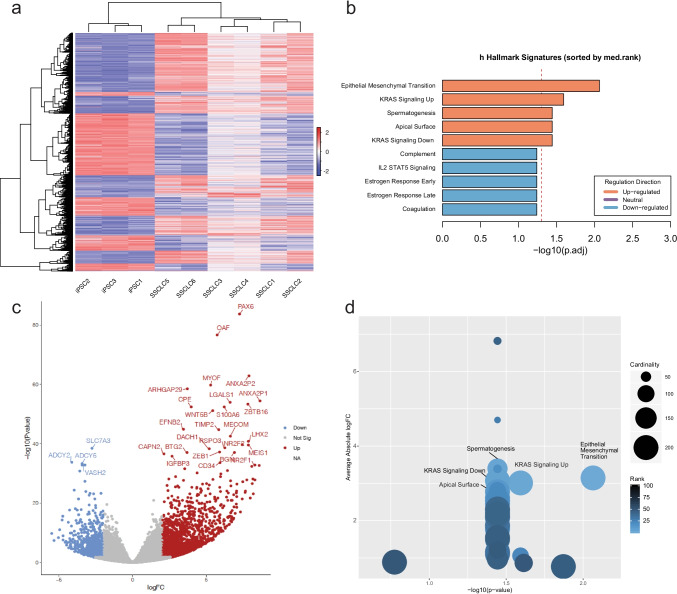
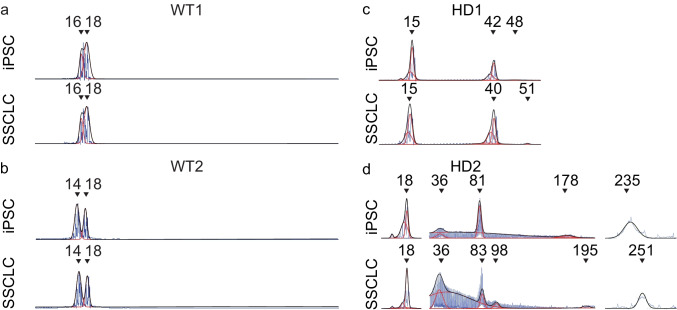
Trinucleotide repeats (TNRs) are dispersed throughout the human genome. About 20 loci are related to human diseases, such as Huntington's disease (HD). A larger TNR instability is predominantly observed in the paternal germ cells in some TNR disorders. Suppressing the expansion during spermatogenesis can provide a unique opportunity to end the vicious cycle of genetic anticipation. Here, using an in vitro differentiation method to derive advanced spermatogenic cells, we investigated the efficacy of two therapeutic agents, araC (cytarabine) and aspirin, on stabilizing TNRs in spermatogenic cells. Two WT patient-derived induced pluripotent stem cell (iPSC) lines and two HD hiPSC lines, with 44 Q and 180 Q, were differentiated into spermatogonial stem cell-like cells (SSCLCs). Both HD cell lines showed CAG tract expansion in SSCLC. When treated with araC and aspirin, HD1 showed moderate but not statistically significant stabilization of TNR. In HD2, 10 nM of aspirin and araC showed significant stabilization of TNR. All cell lines showed increased DNA damage response (DDR) gene expression in SSCLCs while more genes were significantly induced in HD SSCLC. In HD1, araC and aspirin treatment showed general suppression of DNA damage response genes. In HD2, only FAN1, OGG1, and PCNA showed significant suppression. When the methylation profile of HD cells was analyzed, FAN1 and OGG1 showed significant hypermethylation after the aspirin and araC treatment in SSCLC compared to the control. This study underscores the utility of our in vitro spermatogenesis model to study and develop therapies for TNR disorders such as HD.
三核苷酸重复(TNR)散布在人类基因组中。约 20 个位点与人类疾病有关,如亨廷顿病(HD)。在一些 TNR 疾病中,主要在父本生殖细胞中观察到较大的 TNR 不稳定性。在精子发生过程中抑制扩增可以为结束遗传预期的恶性循环提供独特的机会。在这里,我们使用体外分化方法衍生出高级精原细胞,研究了两种治疗剂阿糖胞苷(araC)和阿司匹林在稳定精原细胞 TNR 中的疗效。两种 WT 患者来源的诱导多能干细胞(iPSC)系和两种 HD hiPSC 系,分别带有 44Q 和 180Q,分化为精原干细胞样细胞(SSCLC)。两种 HD 细胞系在 SSCLC 中均显示 CAG 片段扩增。用 araC 和阿司匹林处理时,HD1 显示 TNR 中度但无统计学意义的稳定。在 HD2 中,10 nM 的阿司匹林和 araC 显示 TNR 显著稳定。所有细胞系在 SSCLC 中均显示 DNA 损伤反应(DDR)基因表达增加,而 HD SSCLC 中更多基因明显诱导。在 HD1 中,araC 和阿司匹林处理显示 DDR 基因的普遍抑制。在 HD2 中,仅 FAN1、OGG1 和 PCNA 显示出明显的抑制。当分析 HD 细胞的甲基化谱时,与对照相比,阿司匹林和 araC 处理后 SSCLC 中的 FAN1 和 OGG1 显示出明显的高甲基化。本研究强调了我们的体外精子发生模型在研究和开发治疗 TNR 疾病(如 HD)方面的效用。