Khan Muhammad F, Shamael Ibrahim, Zaman Qamar, Mahmood Asad, Siddiqui Maimoona
Neuroscience, Shifa International Hospital, Islamabad, PAK.
Neurology, Shifa International Hospital, Islamabad, PAK.
Cureus. 2018 Jun 23;10(6):e2870. doi: 10.7759/cureus.2870.
To investigate the association of anemia with stroke severity in acute ischemic stroke patients.
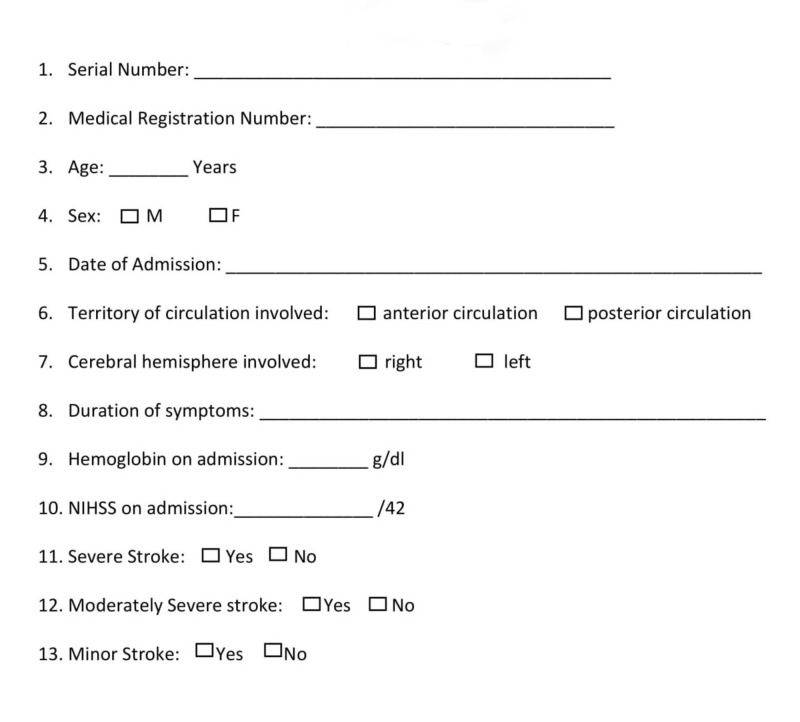
MATERIAL & METHODS: We enrolled 96 patients (mean age: 60.25 ± 11.92 years old) who were admitted to the stroke unit of Shifa International Hospital between 1st March 2015 and 31st August 2015. Each patient presented within 72 hours of onset of symptoms, underwent computed tomography (CT) of the head and blood tests, including hemoglobin concentration, on the first day of hospitalization. Stroke severity was assessed on admission using the National Institute of Health Stroke Scale. Anemia was evaluated according to the World Health Organization (WHO) criteria (men, <13 g/dL; women, <12 g/dL). We examined the frequency of anemia in patients with different severities of acute ischemic stroke.
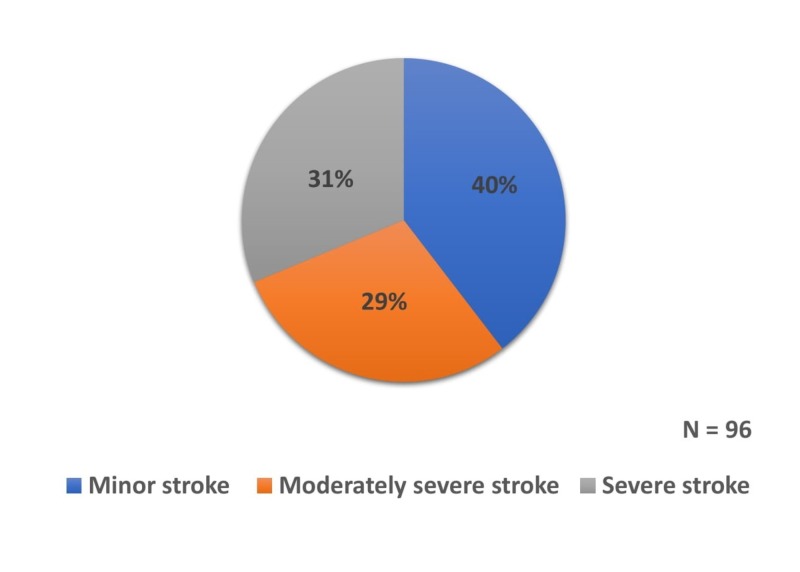
World Health Organization defined anemia was positive in 38 (39.6%) and negative in 58 (60.4%) patients. Among the patients who were positive for anemia, seven (18.4%) had a minor stroke, 10 (26.3%) had a moderately severe stroke, and 21 (55.3%) had a severe stroke. There was a significant association between anemia and stroke severity (P-value 0.000).
Our data indicated that anemia was a frequent finding in acute ischemic stroke patients, with increasing frequency corresponding to stroke severity.
探讨急性缺血性卒中患者贫血与卒中严重程度的相关性。
我们纳入了2015年3月1日至2015年8月31日期间入住世发国际医院卒中单元的96例患者(平均年龄:60.25±11.92岁)。每位患者在症状发作72小时内就诊,住院第一天接受了头颅计算机断层扫描(CT)和血液检查,包括血红蛋白浓度检测。入院时使用美国国立卫生研究院卒中量表评估卒中严重程度。根据世界卫生组织(WHO)标准(男性,<13 g/dL;女性,<12 g/dL)评估贫血情况。我们研究了不同严重程度急性缺血性卒中患者的贫血发生率。
根据世界卫生组织的定义,38例(39.6%)患者贫血呈阳性,58例(60.4%)患者贫血呈阴性。在贫血呈阳性的患者中,7例(18.4%)为轻度卒中,10例(26.3%)为中度严重卒中,21例(55.3%)为重度卒中。贫血与卒中严重程度之间存在显著相关性(P值0.000)。
我们的数据表明,贫血在急性缺血性卒中患者中很常见,且发生率随卒中严重程度增加而升高。