Joanna Briggs Institute, Faculty of Health and Medical Sciences, The University of Adelaide, South Australia.
Centre for Nanoscale BioPhotonics, Faculty of Science and Engineering, Macquarie University, Sydney, New South Wales.
J Alzheimers Dis. 2018;65(4):1225-1236. doi: 10.3233/JAD-180263.
Metformin, a first line antihyperglycemic medication, is an AMPK activator and has been hypothesized to act as a geroprotective agent. Studies on its association with various classifications of age-related cognitive decline have shown mixed results with positive and negative findings.
To synthesize the best available evidence on the association of metformin-use with risk, progression, and severity of dementia.
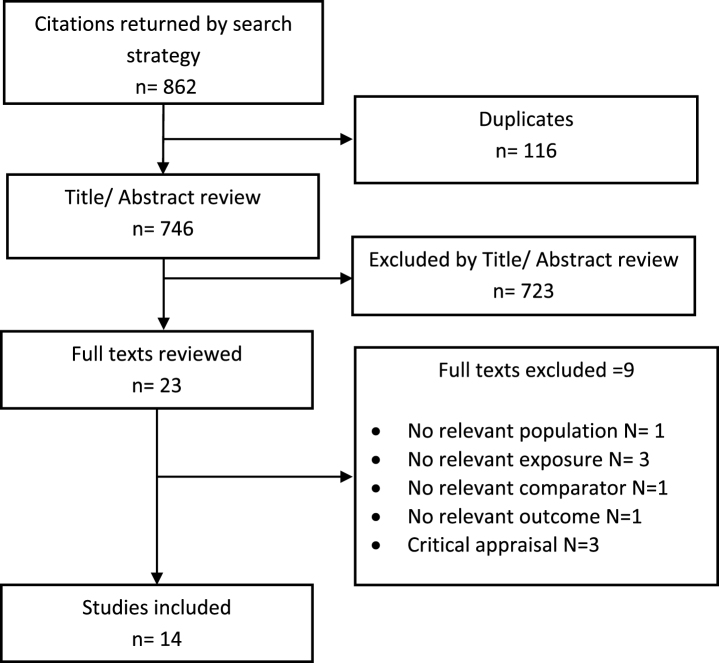
Eligible research investigated the effect of metformin on dementia, Alzheimer's disease, or any measure of cognitive impairment compared to any control group who were not receiving metformin. The initial search resulted in 862 citations from which 14 studies (seven cohort, four cross-sectional, two RCTs, and one case control) were included.
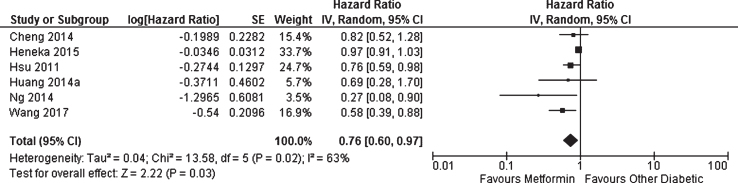
Meta-analysis of three studies showed that cognitive impairment was significantly less prevalent in diabetic metformin (Odds ratio = 0.55, 95% CI 0.38 to 0.78), while six studies showed that dementia incidence was also significantly reduced (Hazard ratio = 0.76, 95% CI 0.39 to 0.88). Mini-Mental State Examination scores were not significantly affected by metformin-use, although both RCTs showed that metformin had a neuroprotective effect compared to placebo. Some studies found negative or neutral effects for metformin use by people with diabetes; the potential mechanism of metformin-induced vitamin B12 deficiency is discussed.
Metformin should continue to be used as a first line therapy for diabetes in patients at risk of developing dementia or Alzheimer's disease. The use of metformin by individuals without diabetes for the prevention of dementia is not supported by the available evidence.
二甲双胍是一种一线抗高血糖药物,是 AMPK 的激活剂,据推测它具有抗衰老作用。关于其与各种与年龄相关的认知能力下降分类的关联的研究结果喜忧参半,既有阳性结果也有阴性结果。
综合现有关于二甲双胍使用与痴呆风险、进展和严重程度关联的最佳证据。
合格的研究调查了与任何对照组相比,二甲双胍对痴呆、阿尔茨海默病或任何认知障碍测量的影响,这些对照组未使用二甲双胍。最初的搜索产生了 862 条引文,其中包括 14 项研究(7 项队列研究、4 项横断面研究、2 项 RCT 和 1 项病例对照研究)。
三项研究的荟萃分析表明,糖尿病患者中认知障碍的发生率明显较低(优势比=0.55,95%置信区间 0.38 至 0.78),而六项研究表明痴呆发病率也显著降低(风险比=0.76,95%置信区间 0.39 至 0.88)。虽然两项 RCT 均表明与安慰剂相比,二甲双胍具有神经保护作用,但二甲双胍的使用并未显著影响简易精神状态检查评分。一些研究发现糖尿病患者使用二甲双胍的效果为阴性或中性;讨论了二甲双胍引起维生素 B12 缺乏的潜在机制。
二甲双胍应继续作为有痴呆或阿尔茨海默病风险的糖尿病患者的一线治疗药物。没有糖尿病的个体使用二甲双胍预防痴呆的证据并不支持。