Faculty of Science, University of Oradea, 410087 Oradea, Romania.
Cancer Research Institute and School of Health Sciences, University of South Australia, Adelaide, SA 5001, Australia.
Int J Mol Sci. 2018 Aug 24;19(9):2511. doi: 10.3390/ijms19092511.
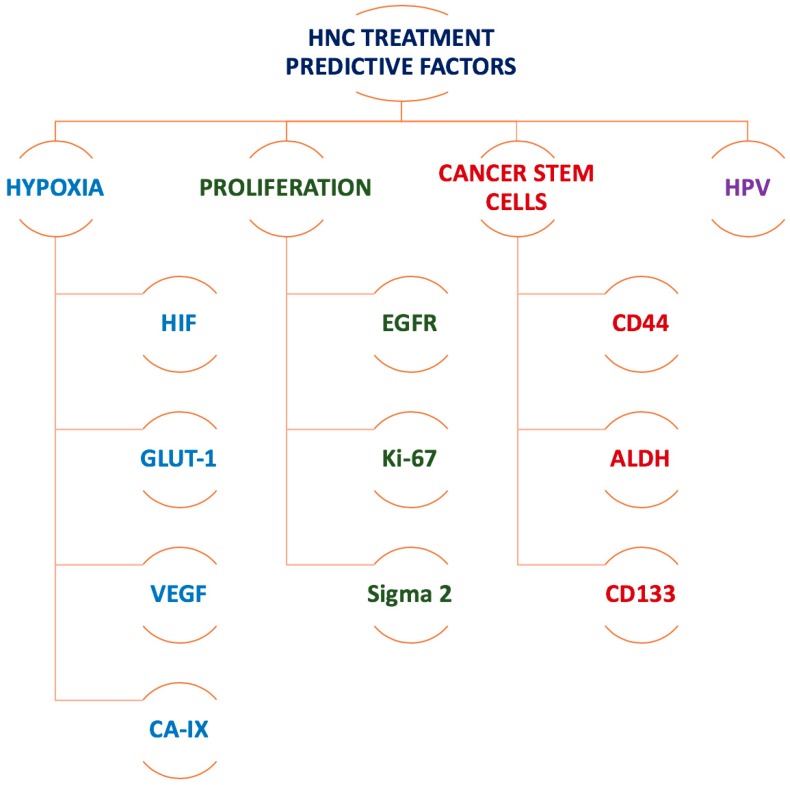
It is an agreed fact that overall survival among head and neck cancer patients has increased over the last decade. Several factors however, are still held responsible for treatment failure requiring more in-depth evaluation. Among these, hypoxia and proliferation-specific parameters are the main culprits, along with the more recently researched cancer stem cells. This paper aims to present the latest developments in the field of biomarkers for hypoxia, stemness and tumour proliferation, from an imaging perspective that includes both Positron Emission Tomography (PET) and Single Photon Emission Computed Tomography (SPECT) as well as functional magnetic resonance imaging (MRI). Quantitative imaging of biomarkers is a prerequisite for accurate treatment response assessment, bringing us closer to the highly needed personalised therapy.
人们普遍认为,在过去的十年中,头颈部癌症患者的总体存活率有所提高。然而,仍有一些因素被认为是导致治疗失败的原因,需要进行更深入的评估。其中,缺氧和增殖特异性参数是主要的罪魁祸首,此外还有最近研究的癌症干细胞。本文旨在从影像学的角度介绍缺氧、干性和肿瘤增殖的生物标志物的最新进展,包括正电子发射断层扫描(PET)和单光子发射计算机断层扫描(SPECT)以及功能磁共振成像(MRI)。生物标志物的定量成像,是准确评估治疗反应的前提,这使我们更接近人们高度需要的个体化治疗。