Department of Anesthesiology, National Taiwan University College of Medicine, Taipei 10051, Taiwan.
Department of Anesthesiology, National Taiwan University Hospital, Taipei 10048, Taiwan.
Sensors (Basel). 2018 Aug 28;18(9):2845. doi: 10.3390/s18092845.
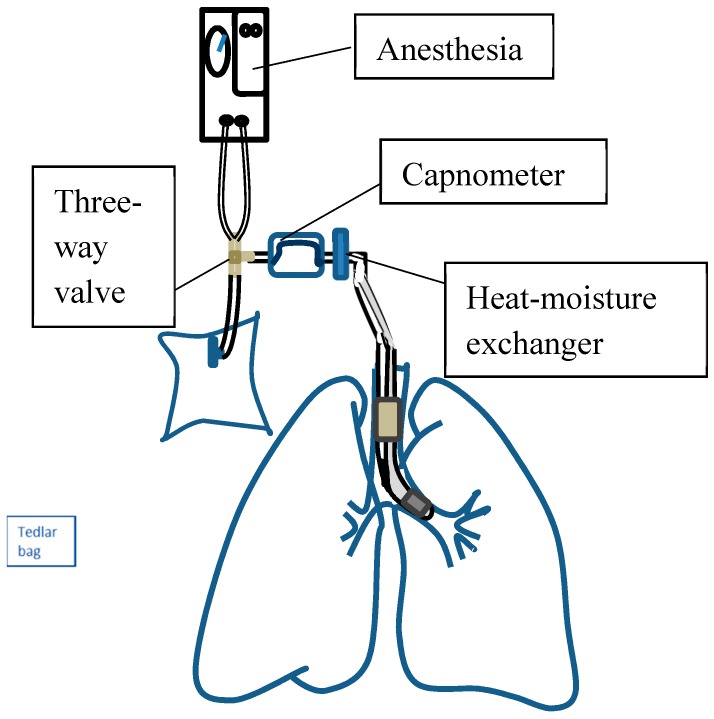
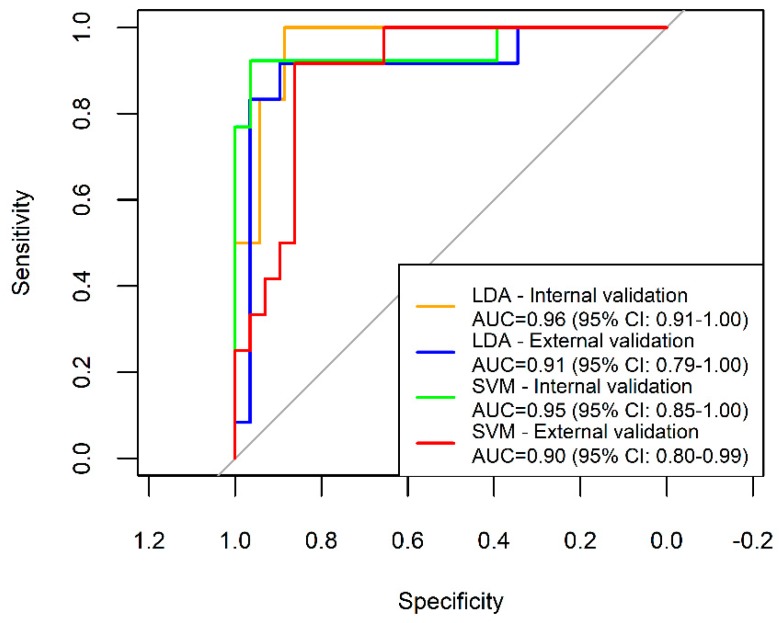
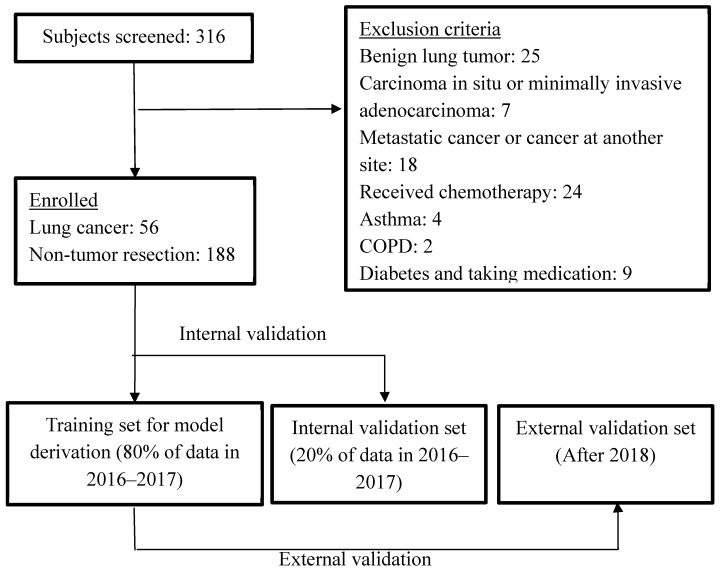
Lung cancer is the leading cause of cancer death around the world, and lung cancer screening remains challenging. This study aimed to develop a breath test for the detection of lung cancer using a chemical sensor array and a machine learning technique. We conducted a prospective study to enroll lung cancer cases and non-tumour controls between 2016 and 2018 and analysed alveolar air samples using carbon nanotube sensor arrays. A total of 117 cases and 199 controls were enrolled in the study of which 72 subjects were excluded due to having cancer at another site, benign lung tumours, metastatic lung cancer, carcinoma in situ, minimally invasive adenocarcinoma, received chemotherapy or other diseases. Subjects enrolled in 2016 and 2017 were used for the model derivation and internal validation. The model was externally validated in subjects recruited in 2018. The diagnostic accuracy was assessed using the pathological reports as the reference standard. In the external validation, the areas under the receiver operating characteristic curve (AUCs) were 0.91 (95% CI = 0.79⁻1.00) by linear discriminant analysis and 0.90 (95% CI = 0.80⁻0.99) by the supportive vector machine technique. The combination of the sensor array technique and machine learning can detect lung cancer with high accuracy.
肺癌是全球癌症死亡的主要原因,肺癌筛查仍然具有挑战性。本研究旨在开发一种使用化学传感器阵列和机器学习技术的肺癌呼吸检测测试。我们进行了一项前瞻性研究,在 2016 年至 2018 年间招募肺癌病例和非肿瘤对照,并使用碳纳米管传感器阵列分析肺泡空气样本。共有 117 例病例和 199 例对照纳入了本研究,其中 72 例由于其他部位癌症、良性肺肿瘤、转移性肺癌、原位癌、微浸润性腺癌、化疗或其他疾病而被排除。2016 年和 2017 年招募的受试者用于模型推导和内部验证。在 2018 年招募的受试者中对模型进行了外部验证。使用病理报告作为参考标准评估诊断准确性。在外部验证中,线性判别分析的受试者工作特征曲线下面积(AUCs)为 0.91(95%CI=0.79-1.00),支持向量机技术的 AUCs 为 0.90(95%CI=0.80-0.99)。传感器阵列技术和机器学习的结合可以准确地检测肺癌。