Chen Nicolas W G, Thareau Vincent, Ribeiro Tiago, Magdelenat Ghislaine, Ashfield Tom, Innes Roger W, Pedrosa-Harand Andrea, Geffroy Valérie
Institute of Plant Sciences Paris-Saclay (IPS2), UMR 9213/UMR1403, CNRS, INRA, Université Paris-Sud, Université d'Evry, Université Paris-Diderot Sorbonne Paris Cité, Orsay, France.
IRHS, INRA, AGROCAMPUS OUEST, Université d'Angers, SFR 4207 QUASAV, Beaucouzé, France.
Front Plant Sci. 2018 Aug 14;9:1185. doi: 10.3389/fpls.2018.01185. eCollection 2018.
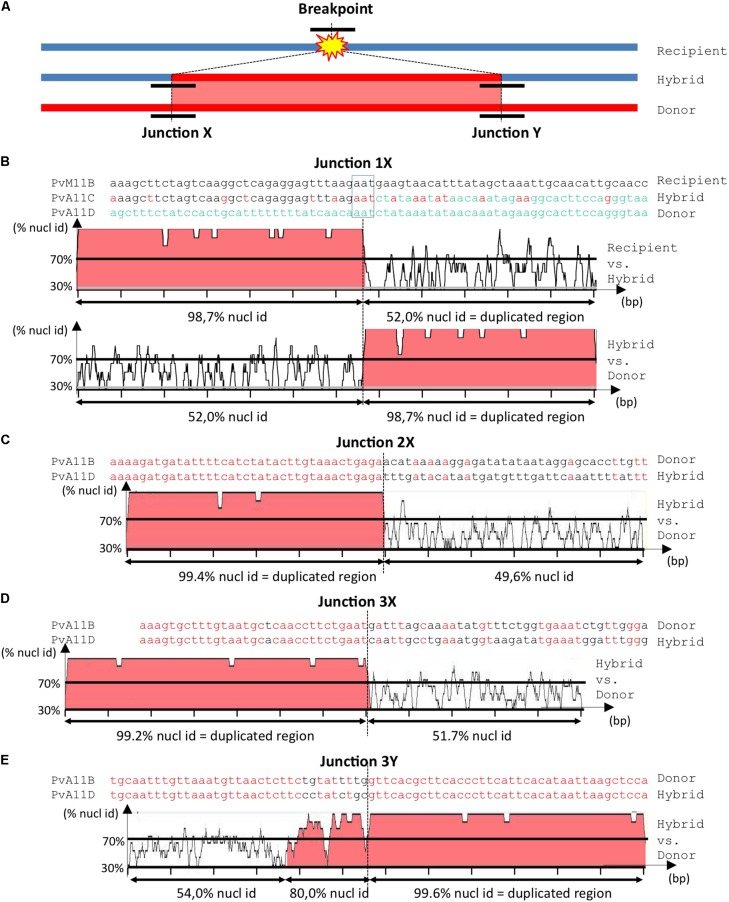
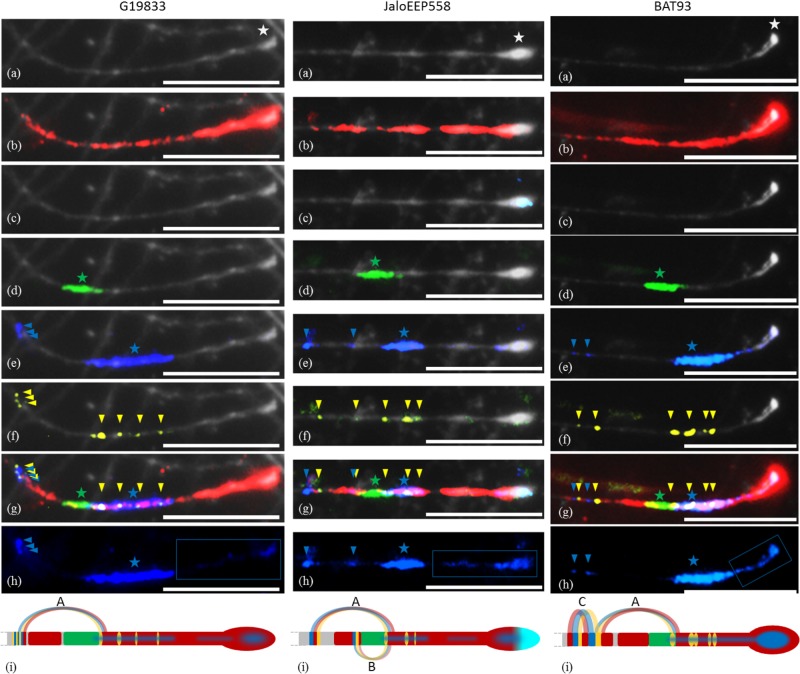
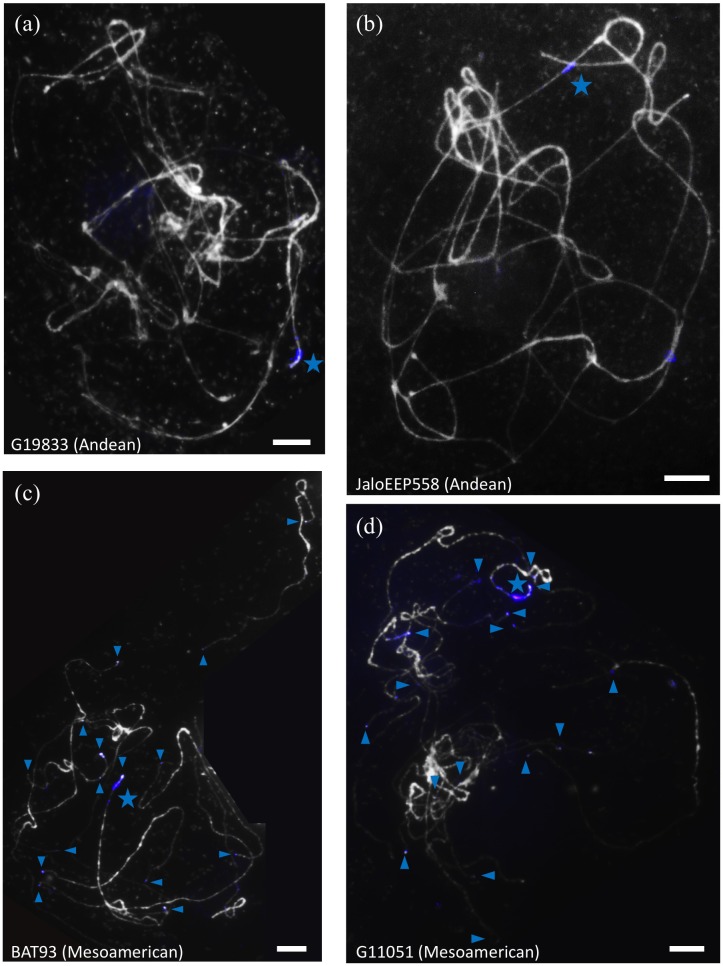
Subtelomeres of most eukaryotes contain fast-evolving genes usually involved in adaptive processes. In common bean (), the anthracnose resistance () locus corresponds to a cluster of nucleotide-binding-site leucine-rich-repeat (NL) encoding sequences, the prevalent class of plant genes. To study the recent evolution of this gene cluster, we used a combination of sequence, genetic and cytogenetic comparative analyses between common bean genotypes from two distinct gene pools (Andean and Mesoamerican) that diverged 0.165 million years ago. is a large subtelomeric cluster on chromosome 11 comprising from 32 (Mesoamerican) to 52 (Andean) NL sequences embedded within satellite repeats. Since the recent split between Andean and Mesoamerican gene pools, the cluster has experienced numerous gene-pool specific NL losses, leading to distinct NL repertoires. The high proportion of solo-LTR retrotransposons indicates that the cluster is located in a hot spot of unequal intra-strand homologous recombination. Furthermore, we observe large segmental duplications involving both Non-Homologous End Joining and Homologous Recombination double-strand break repair pathways. Finally, the identification of a Mesoamerican-specific subtelomeric sequence reveals frequent interchromosomal recombinations between common bean subtelomeres. Altogether, our results highlight that common bean subtelomeres are hot spots of recombination and favor the rapid evolution of genes. We propose that chromosome ends could act as gene incubators in many plant genomes.
大多数真核生物的亚端粒含有快速进化的基因,这些基因通常参与适应性过程。在菜豆中,炭疽病抗性()位点对应于一个核苷酸结合位点富含亮氨酸重复序列(NL)编码序列的簇,这是植物基因的主要类别。为了研究这个基因簇的近期进化,我们结合了来自两个不同基因库(安第斯和中美洲)、在16.5万年前分化的菜豆基因型之间的序列、遗传和细胞遗传学比较分析。是11号染色体上的一个大型亚端粒簇,包含32个(中美洲)到52个(安第斯)嵌入卫星重复序列中的NL序列。自从安第斯和中美洲基因库最近分裂以来,这个簇经历了许多基因库特异性的NL丢失,导致了不同的NL组成。单LTR反转录转座子的高比例表明这个簇位于不等同链内同源重组的热点区域。此外,我们观察到涉及非同源末端连接和同源重组双链断裂修复途径的大片段重复。最后,对一个中美洲特异性亚端粒序列的鉴定揭示了菜豆亚端粒之间频繁的染色体间重组。总之,我们的结果突出表明菜豆亚端粒是重组热点,有利于基因的快速进化。我们提出染色体末端在许多植物基因组中可能充当基因孵化器。