• 文献检索
  • 文档翻译
  • 深度研究
  • 学术资讯
  • Suppr Zotero 插件Zotero 插件
  • 邀请有礼
  • 套餐&价格
  • 历史记录
应用&插件
Suppr Zotero 插件Zotero 插件浏览器插件Mac 客户端Windows 客户端微信小程序
定价
高级版会员购买积分包购买API积分包
服务
文献检索文档翻译深度研究API 文档MCP 服务
关于我们
关于 Suppr公司介绍联系我们用户协议隐私条款
关注我们

Suppr 超能文献

核心技术专利:CN118964589B侵权必究
粤ICP备2023148730 号-1Suppr @ 2026

文献检索

告别复杂PubMed语法,用中文像聊天一样搜索,搜遍4000万医学文献。AI智能推荐,让科研检索更轻松。

立即免费搜索

文件翻译

保留排版,准确专业,支持PDF/Word/PPT等文件格式,支持 12+语言互译。

免费翻译文档

深度研究

AI帮你快速写综述,25分钟生成高质量综述,智能提取关键信息,辅助科研写作。

立即免费体验

心肺复苏反馈设备的使用是否能提高医生进行胸外按压的质量?一项前瞻性、随机、交叉模拟研究。

Does the use of cardiopulmonary resuscitation feedback devices improve the quality of chest compressions performed by doctors? A prospective, randomized, cross-over simulation study.

机构信息

Polish Society of Disaster Medicine, Warsaw, Poland.

I Department of Cardiology, Medical University of Gdansk, Poland.

出版信息

Cardiol J. 2019;26(5):529-535. doi: 10.5603/CJ.a2018.0091. Epub 2018 Aug 29.

DOI:10.5603/CJ.a2018.0091
PMID:30155865
原文链接:https://pmc.ncbi.nlm.nih.gov/articles/PMC8084395/
Abstract

BACKGROUND

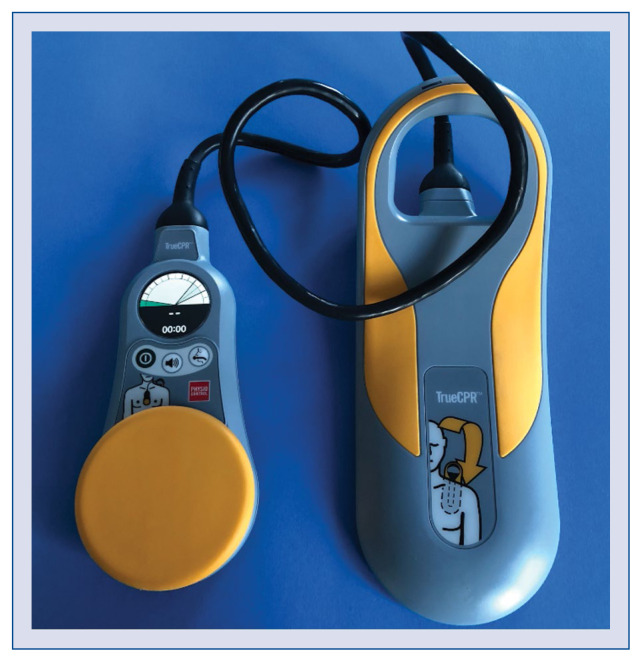
The aim of the study was to compare the quality of chest compressions (CCs) carried out with and without the use of the TrueCPR device during simulated cardiopulmonary resuscitations conducted by trainee doctors.

METHODS

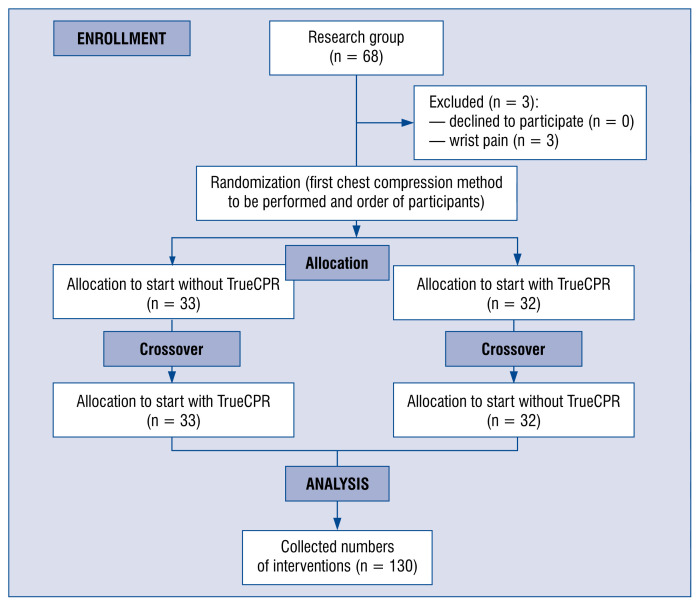
The study was a prospective, randomized, cross-over simulation study. The study involved 65 trainee doctors who were tasked with performing a 2-min cycle of uninterrupted CCs under conditions of a simulated cardiopulmonary resuscitation of adults. CC were carried out in two scenarios: with and without TrueCPR chest compression support. Participants did not have experience in the use of CCs prior to this study.

RESULTS

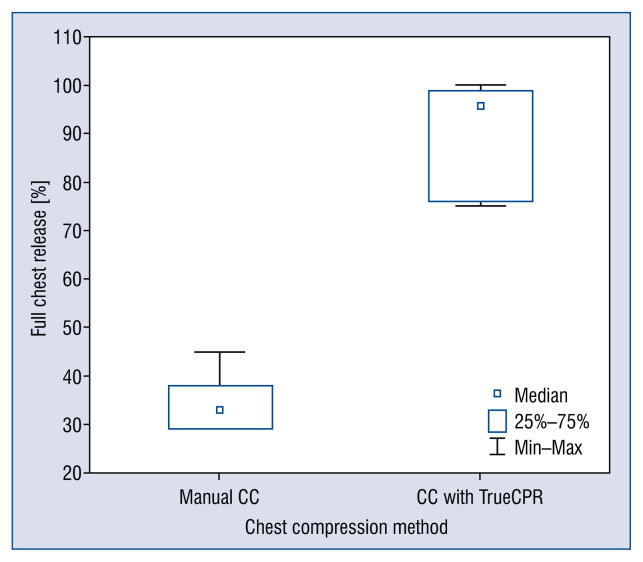
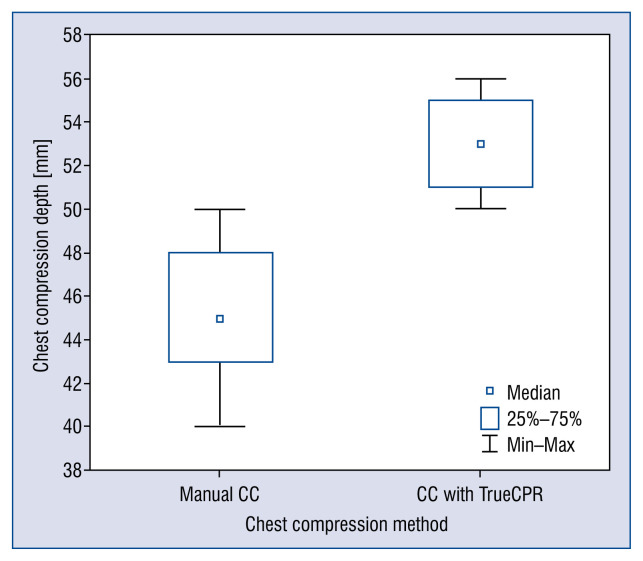
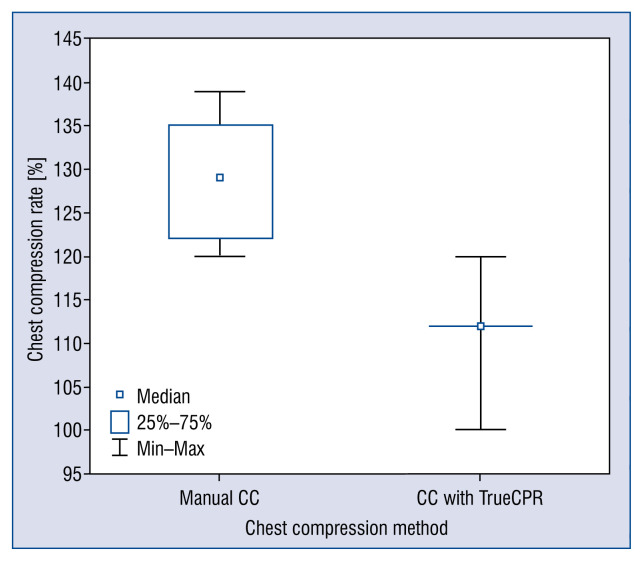
The depth of compressions in regard to CC techniques were varied by 45 mm (IQR 43-48) for manual CC and 53 mm (IQR 51-55) for the TrueCPR device (p < 0.001). The incidence of CCs with and without TrueCPR was: 112 (IQR 103-113) vs. 129 (IQR 122-135) compressions (p = 0.002). The degree of complete chest relaxation with the TrueCPR device was 95% (IQR 76-99) and without the device, 33% (IQR 29-38) (p < 0.001).

CONCLUSIONS

In the simulation study performed, the use of the TrueCPR device resulted in a significant improvement in the quality of CCs in relation to frequency and depth of CCs and correctness of chest relaxation.

摘要

背景

本研究旨在比较在模拟心肺复苏过程中,受训医生使用和不使用 TrueCPR 设备进行的胸外按压(CCs)的质量。

方法

本研究为前瞻性、随机、交叉模拟研究。研究纳入 65 名受训医生,要求其在模拟成人心肺复苏的条件下进行 2 分钟不间断 CCs 循环。CCs 在两种情况下进行:使用和不使用 TrueCPR 胸部按压支持。参与者在此项研究之前没有 CCs 使用经验。

结果

CC 技术的按压深度,手动 CC 为 45mm(IQR 43-48),TrueCPR 设备为 53mm(IQR 51-55)(p<0.001)。有和没有使用 TrueCPR 设备的 CC 发生率分别为:112(IQR 103-113)次与 129(IQR 122-135)次(p=0.002)。使用 TrueCPR 设备时,完全胸部放松的程度为 95%(IQR 76-99),而不使用设备时为 33%(IQR 29-38)(p<0.001)。

结论

在进行的模拟研究中,使用 TrueCPR 设备可显著改善 CCs 的质量,提高 CCs 的频率和深度以及胸部放松的正确性。
https://cdn.ncbi.nlm.nih.gov/pmc/blobs/4461/8084395/0193de35b932/cardj-26-5-529f5.jpg
https://cdn.ncbi.nlm.nih.gov/pmc/blobs/4461/8084395/8049aa580616/cardj-26-5-529f1.jpg
https://cdn.ncbi.nlm.nih.gov/pmc/blobs/4461/8084395/9fb58cc3956e/cardj-26-5-529f2.jpg
https://cdn.ncbi.nlm.nih.gov/pmc/blobs/4461/8084395/3a31ea5d9568/cardj-26-5-529f3.jpg
https://cdn.ncbi.nlm.nih.gov/pmc/blobs/4461/8084395/c13fe28c1b0c/cardj-26-5-529f4.jpg
https://cdn.ncbi.nlm.nih.gov/pmc/blobs/4461/8084395/0193de35b932/cardj-26-5-529f5.jpg
https://cdn.ncbi.nlm.nih.gov/pmc/blobs/4461/8084395/8049aa580616/cardj-26-5-529f1.jpg
https://cdn.ncbi.nlm.nih.gov/pmc/blobs/4461/8084395/9fb58cc3956e/cardj-26-5-529f2.jpg
https://cdn.ncbi.nlm.nih.gov/pmc/blobs/4461/8084395/3a31ea5d9568/cardj-26-5-529f3.jpg
https://cdn.ncbi.nlm.nih.gov/pmc/blobs/4461/8084395/c13fe28c1b0c/cardj-26-5-529f4.jpg
https://cdn.ncbi.nlm.nih.gov/pmc/blobs/4461/8084395/0193de35b932/cardj-26-5-529f5.jpg

相似文献

1
Does the use of cardiopulmonary resuscitation feedback devices improve the quality of chest compressions performed by doctors? A prospective, randomized, cross-over simulation study.心肺复苏反馈设备的使用是否能提高医生进行胸外按压的质量?一项前瞻性、随机、交叉模拟研究。
Cardiol J. 2019;26(5):529-535. doi: 10.5603/CJ.a2018.0091. Epub 2018 Aug 29.
2
An optimal chest compression technique using personal protective equipment during resuscitation in the COVID-19 pandemic: a randomized crossover simulation study.在 COVID-19 大流行期间使用个人防护设备进行复苏时的最佳胸部按压技术:一项随机交叉模拟研究。
Kardiol Pol. 2020 Dec 23;78(12):1254-1261. doi: 10.33963/KP.15643. Epub 2020 Oct 12.
3
The TrueCPR device in the process of teaching cardiopulmonary resuscitation: A randomized simulation trial.教学心肺复苏过程中的TrueCPR设备:一项随机模拟试验。
Medicine (Baltimore). 2019 Jul;98(27):e15995. doi: 10.1097/MD.0000000000015995.
4
A Randomized Control Trial of Cardiopulmonary Feedback Devices and Their Impact on Infant Chest Compression Quality: A Simulation Study.心肺反馈设备的随机对照试验及其对婴儿胸部按压质量的影响:一项模拟研究。
Pediatr Emerg Care. 2020 Feb;36(2):e79-e84. doi: 10.1097/PEC.0000000000001312.
5
Comparison of the effectiveness of cardiopulmonary resuscitation with standard manual chest compressions and the use of TrueCPR and PocketCPR feedback devices.标准手动胸外按压心肺复苏与使用TrueCPR和PocketCPR反馈设备的心肺复苏效果比较。
Kardiol Pol. 2015;73(10):924-30. doi: 10.5603/KP.a2015.0084. Epub 2015 May 19.
6
Effectiveness of chest compression feedback during cardiopulmonary resuscitation in lateral tilted and semirecumbent positions: a randomised controlled simulation study.心肺复苏期间侧卧位和半卧位时胸部按压反馈的效果:一项随机对照模拟研究。
Anaesthesia. 2015 Nov;70(11):1235-41. doi: 10.1111/anae.13222. Epub 2015 Sep 8.
7
Comparison of the effects of using feedback devices for training or simulated cardiopulmonary arrest.比较使用反馈设备进行培训或模拟心肺骤停的效果。
J Cardiothorac Surg. 2024 Mar 27;19(1):159. doi: 10.1186/s13019-024-02669-z.
8
The effect of chest compression frequency on the quality of resuscitation by lifeguards. A prospective randomized crossover multicenter simulation trial.救生员胸外按压频率对复苏质量的影响。一项前瞻性随机交叉多中心模拟试验。
Cardiol J. 2019;26(6):769-776. doi: 10.5603/CJ.a2018.0121. Epub 2018 Oct 19.
9
The quality of a newly developed infant chest compression method applied by paramedics: a randomised crossover manikin trial.护理人员应用的一种新开发的婴儿胸外按压方法的质量:一项随机交叉模拟人试验。
Kardiol Pol. 2017;75(6):589-595. doi: 10.5603/KP.a2017.0015. Epub 2017 Feb 2.
10
Accurate feedback of chest compression depth on a manikin on a soft surface with correction for total body displacement.在柔软表面上的人体模型上对胸部按压深度进行准确反馈,并对全身位移进行校正。
Resuscitation. 2014 Nov;85(11):1439-43. doi: 10.1016/j.resuscitation.2014.08.005. Epub 2014 Aug 19.

引用本文的文献

1
Real-time feedback on chest compression efficacy by hands-free carotid Doppler in a porcine model.在猪模型中通过免提颈动脉多普勒对胸外按压效果进行实时反馈。
Resusc Plus. 2024 Feb 20;18:100583. doi: 10.1016/j.resplu.2024.100583. eCollection 2024 Jun.
2
Pediatric Chest Compression Improvement Via Augmented Reality Cardiopulmonary Resuscitation Feedback in Community General Emergency Departments: A Mixed-Methods Simulation-Based Pilot Study.基于混合方法的模拟研究:社区综合急救部门中通过增强现实心肺复苏反馈改善儿科胸部按压
J Emerg Med. 2023 Jun;64(6):696-708. doi: 10.1016/j.jemermed.2023.03.058. Epub 2023 Mar 22.
3

本文引用的文献

1
The impact of the use of a CPRMeter monitor on quality of chest compressions: a prospective randomised trial, cross-simulation.CPRMeter 监护对胸外按压质量影响的前瞻性随机对照试验:交叉模拟研究。
Kardiol Pol. 2018;76(3):574-579. doi: 10.5603/KP.a2017.0255. Epub 2018 Jan 3.
2
The impact of a CPRezy™ feedback device on the quality of chest compressions performed by nurses.CPRezy™反馈设备对护士进行胸外按压质量的影响。
Am J Emerg Med. 2018 Jul;36(7):1318-1319. doi: 10.1016/j.ajem.2017.11.061. Epub 2017 Nov 27.
3
A randomized comparison of three chest compression techniques and associated hemodynamic effect during infant CPR: A randomized manikin study.
Adequacy of compression positioning using the feedback device during chest compressions by medical staff in a simulation study.
在模拟研究中,使用反馈装置评估医护人员进行胸外按压时的按压位置准确性。
BMC Emerg Med. 2022 May 6;22(1):76. doi: 10.1186/s12873-022-00640-6.
4
Efficacy of virtual reality techniques in cardiopulmonary resuscitation training: protocol for a meta-analysis of randomised controlled trials and trial sequential analysis.虚拟现实技术在心肺复苏培训中的效果:一项随机对照试验的荟萃分析和试验序贯分析方案。
BMJ Open. 2022 Feb 11;12(2):e058827. doi: 10.1136/bmjopen-2021-058827.
5
Can a Glove-Coach Technology Significantly Increase the Efficacy of Cardiopulmonary Resuscitation on Non-healthcare Professionals? A Controlled Trial.手套式教练技术能否显著提高非医疗专业人员心肺复苏的效果?一项对照试验。
Front Cardiovasc Med. 2021 Dec 9;8:685988. doi: 10.3389/fcvm.2021.685988. eCollection 2021.
6
Meta-analysis of chest compression-only versus conventional cardiopulmonary resuscitation by bystanders for adult with out-of-hospital cardiac arrest.成人心搏骤停院外旁观者单纯胸外按压与传统心肺复苏的荟萃分析。
Cardiol J. 2023;30(4):606-613. doi: 10.5603/CJ.a2021.0115. Epub 2021 Oct 8.
7
Diagnostic performance of point-of-use ultrasound of resuscitation outcomes: A systematic review and meta-analysis of 3265 patients.即时超声评估复苏结局的诊断性能:一项包含 3265 例患者的系统评价和荟萃分析。
Cardiol J. 2023;30(2):237-246. doi: 10.5603/CJ.a2021.0044. Epub 2021 May 4.
8
Impact of COVID-19 on bystander cardiopulmonary resuscitation in out-of-hospital cardiac arrest: Is it as bad as we think?新型冠状病毒肺炎对院外心脏骤停旁观者心肺复苏的影响:是否如我们所想的那么严重?
Cardiol J. 2020;27(6):884-885. doi: 10.5603/CJ.a2020.0179. Epub 2020 Dec 21.
9
Chest compressions quality during sudden cardiac arrest scenario performed in virtual reality: A crossover study in a training environment.虚拟现实环境下模拟心脏骤停场景时的胸外按压质量:训练环境中的交叉研究
Medicine (Baltimore). 2020 Nov 25;99(48):e23374. doi: 10.1097/MD.0000000000023374.
10
Systematic review and meta-analysis appraising efficacy and safety of adrenaline for adult cardiopulmonary resuscitation.系统评价和荟萃分析评估肾上腺素在成人心肺复苏中的疗效和安全性。
Cardiol J. 2021;28(2):279-292. doi: 10.5603/CJ.a2020.0133. Epub 2020 Nov 3.
婴儿心肺复苏期间三种胸外按压技术及其相关血流动力学效应的随机比较:一项随机人体模型研究。
Am J Emerg Med. 2017 Oct;35(10):1420-1425. doi: 10.1016/j.ajem.2017.04.024. Epub 2017 Apr 14.
4
A review of the utility of a hypothermia protocol in cardiac arrests due to non-shockable rhythms.低温治疗方案在非可电击心律导致的心脏骤停中的效用综述。
Cardiol J. 2017;24(3):324-333. doi: 10.5603/CJ.a2017.0016. Epub 2017 Feb 2.
5
The quality of a newly developed infant chest compression method applied by paramedics: a randomised crossover manikin trial.护理人员应用的一种新开发的婴儿胸外按压方法的质量:一项随机交叉模拟人试验。
Kardiol Pol. 2017;75(6):589-595. doi: 10.5603/KP.a2017.0015. Epub 2017 Feb 2.
6
Evaluation of new two-thumb chest compression technique for infant CPR performed by novice physicians. A randomized, crossover, manikin trial.新手医生实施的婴儿心肺复苏新双拇指胸外按压技术评估:一项随机、交叉、模拟人试验。
Am J Emerg Med. 2017 Apr;35(4):604-609. doi: 10.1016/j.ajem.2016.12.045. Epub 2016 Dec 19.
7
Angiographic detection of fatal acute aortic dissection Stanford type A under resuscitation.复苏状态下A型急性主动脉夹层致死的血管造影检测
Cardiol J. 2016;23(6):620-622. doi: 10.5603/CJ.2016.0103.
8
The effect of strength training on quality of prolonged basic cardiopulmonary resuscitation.力量训练对延长基础心肺复苏质量的影响。
Kardiol Pol. 2017;75(1):21-27. doi: 10.5603/KP.a2016.0165. Epub 2016 Nov 23.
9
Should nurses use mechanical chest compression devices during CPR?护士在心肺复苏期间应使用机械胸外按压设备吗?
Am J Emerg Med. 2016 Oct;34(10):2044-2045. doi: 10.1016/j.ajem.2016.07.057. Epub 2016 Jul 28.
10
Does the use of a chest compression system in children improve the effectiveness of chest compressions? A randomised crossover simulation pilot study.在儿童中使用胸部按压系统是否能提高胸外按压的效果?一项随机交叉模拟试验研究。
Kardiol Pol. 2016;74(12):1499-1504. doi: 10.5603/KP.a2016.0107. Epub 2016 Jul 8.