• 文献检索
  • 文档翻译
  • 深度研究
  • 学术资讯
  • Suppr Zotero 插件Zotero 插件
  • 邀请有礼
  • 套餐&价格
  • 历史记录
应用&插件
Suppr Zotero 插件Zotero 插件浏览器插件Mac 客户端Windows 客户端微信小程序
定价
高级版会员购买积分包购买API积分包
服务
文献检索文档翻译深度研究API 文档MCP 服务
关于我们
关于 Suppr公司介绍联系我们用户协议隐私条款
关注我们

Suppr 超能文献

核心技术专利:CN118964589B侵权必究
粤ICP备2023148730 号-1Suppr @ 2026

文献检索

告别复杂PubMed语法,用中文像聊天一样搜索,搜遍4000万医学文献。AI智能推荐,让科研检索更轻松。

立即免费搜索

文件翻译

保留排版,准确专业,支持PDF/Word/PPT等文件格式,支持 12+语言互译。

免费翻译文档

深度研究

AI帮你快速写综述,25分钟生成高质量综述,智能提取关键信息,辅助科研写作。

立即免费体验

《中国植物志》

Flora of China.

作者信息

Huang Hongwen, Liao Jingping, Zhang Zheng, Zhan Qingqing

机构信息

South China Botanical Garden, Chinese Academy of Sciences, International Association of Botanic Gardens, China.

出版信息

Plant Divers. 2017 Dec 18;39(6):357-364. doi: 10.1016/j.pld.2017.12.001. eCollection 2017 Dec.

DOI:10.1016/j.pld.2017.12.001
PMID:30159529
原文链接:https://pmc.ncbi.nlm.nih.gov/articles/PMC6112327/
Abstract

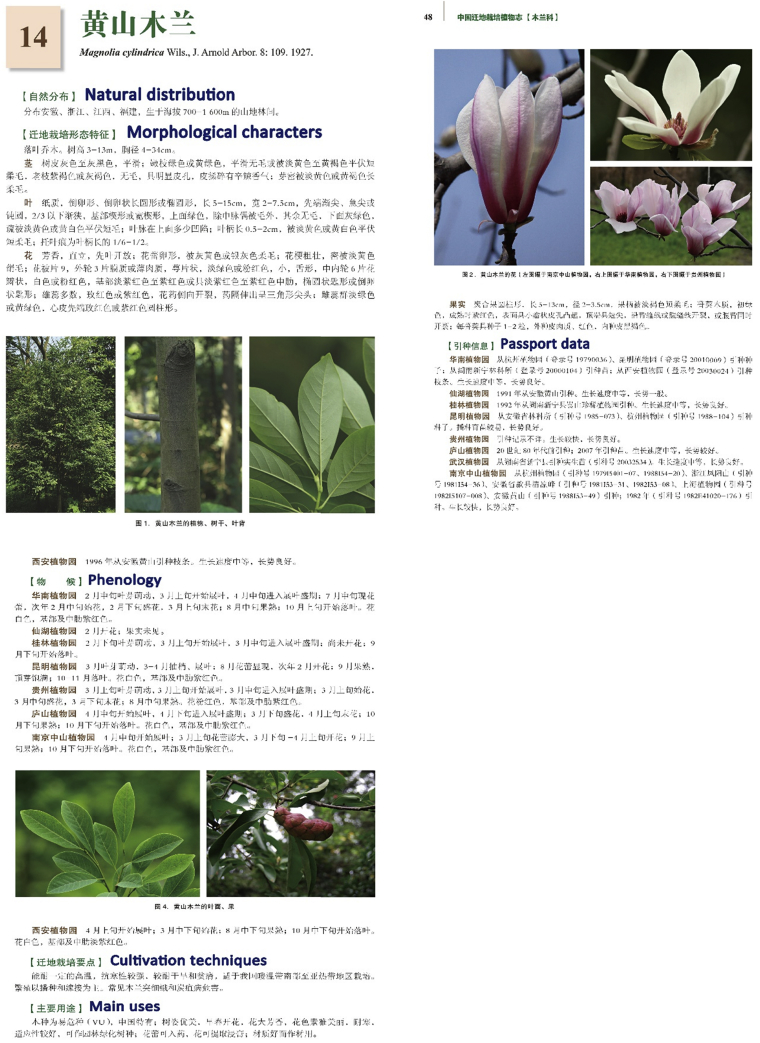
The role of living collections-based research and discovery has been a prominent feature throughout the history of evolution and advance of botanical science: such research is the core and soul of the botanical gardens. Currently, there are c. 162 Chinese botanical gardens, harboring c. 20,000 species in China. As an example of initiatives to utilize the garden cultivated flora to address plant diversity conservation and germplasm discovery for sustainable agriculture and the bio-industries, the Flora of China project aims to catalog and document this mega-diversity of plants that are cultivated in the Chinese botanical gardens. The concept of Flora of China is a complete new formulation of species, based on garden cultivated individuals and populations, to obtain better morphological descriptions, provide multi-purpose applicability and a fundamental data service that will support national bio-strategies and bio-industries. It emphasises integrative information, accurately collected from living collections across different Chinese botanical gardens, on biology, phenology, cultivation requirements and uses of plant resources, which are normally not available from traditional Floras based on herbarium specimens. The flora should provide better information coverage for taxonomy, biological and introduction and collection data and color photos of stems, leaves, flowers, fruits and seed, as well as useful information of cultivation key points and main use of each plant. In general, the Flora of China provides more useful information than the traditional Flora Reipublicae Popularis Sinicae. The project of Flora of China is planned to be one of the most important initiatives of the plant diversity research platform for sustainable economic and social development in China.

摘要

基于活植物收集的研究与发现的作用,一直是植物科学发展与进步历史中的一个显著特征:此类研究是植物园的核心与灵魂。目前,中国约有162个植物园,共保存约2万种植物。作为利用植物园栽培植物群来促进植物多样性保护以及为可持续农业和生物产业发现种质资源的举措之一,《中国植物志》项目旨在对中国植物园中栽培的这类植物的巨大多样性进行编目和记录。《中国植物志》的概念是基于植物园栽培的个体和种群对物种进行全新的分类,以获得更完善的形态描述,提供多用途的适用性以及支持国家生物战略和生物产业的基础数据服务。它强调从中国不同植物园的活植物收集中准确收集的关于植物资源的生物学、物候学、栽培要求及用途的综合信息,而这些信息通常无法从基于标本馆标本的传统植物志中获取。该植物志应为分类学、生物学以及引种和收集数据提供更全面的信息覆盖,并配有茎、叶、花、果实和种子的彩色照片,以及每种植物栽培要点和主要用途的有用信息。总体而言,《中国植物志》比传统的《中国植物志》提供了更多有用信息。《中国植物志》项目计划成为中国可持续经济和社会发展的植物多样性研究平台最重要的举措之一。
https://cdn.ncbi.nlm.nih.gov/pmc/blobs/9e6f/6112327/afd123d4ed45/gr2.jpg
https://cdn.ncbi.nlm.nih.gov/pmc/blobs/9e6f/6112327/e3dfe83119d8/gr1.jpg
https://cdn.ncbi.nlm.nih.gov/pmc/blobs/9e6f/6112327/afd123d4ed45/gr2.jpg
https://cdn.ncbi.nlm.nih.gov/pmc/blobs/9e6f/6112327/e3dfe83119d8/gr1.jpg
https://cdn.ncbi.nlm.nih.gov/pmc/blobs/9e6f/6112327/afd123d4ed45/gr2.jpg

相似文献

1
Flora of China.《中国植物志》
Plant Divers. 2017 Dec 18;39(6):357-364. doi: 10.1016/j.pld.2017.12.001. eCollection 2017 Dec.
2
The role of botanical gardens in scientific research, conservation, and citizen science.植物园在科学研究、保护和公民科学中的作用。
Plant Divers. 2018 Jul 25;40(4):181-188. doi: 10.1016/j.pld.2018.07.006. eCollection 2018 Aug.
3
Plant diversity and conservation in China: planning a strategic bioresource for a sustainable future.中国的植物多样性与保护:规划战略性生物资源以实现可持续未来。
Bot J Linn Soc. 2011;166(3):282-300. doi: 10.1111/j.1095-8339.2011.01157.x.
4
[Species diversity of ex-situ cultivated Chinese medicinal plants].[迁地栽培中药材的物种多样性]
Zhongguo Zhong Yao Za Zhi. 2018 Mar;43(5):1071-1076. doi: 10.19540/j.cnki.cjcmm.20180109.003.
5
Natural and Historical Heritage of the Lisbon Botanical Gardens: An Integrative Approach with Tree Collections.里斯本植物园的自然与历史遗产:树木收集的综合方法
Plants (Basel). 2021 Jul 4;10(7):1367. doi: 10.3390/plants10071367.
6
Ex situ collections and their potential for the restoration of extinct plants.原地收集及其在灭绝植物恢复中的潜力。
Conserv Biol. 2020 Apr;34(2):303-313. doi: 10.1111/cobi.13391. Epub 2019 Sep 19.
7
Ex situ cultivation affects genetic structure and diversity in arable plants.离体培养会影响农作物的遗传结构和多样性。
Plant Biol (Stuttg). 2013 May;15(3):505-13. doi: 10.1111/j.1438-8677.2012.00655.x. Epub 2012 Aug 8.
8
Virtual Herbarium ALTB: collection of vascular plants of the Altai Mountain Country.虚拟植物标本馆ALTB:阿尔泰山地区维管植物的收藏
Biodivers Data J. 2021 Jul 13;9:e67616. doi: 10.3897/BDJ.9.e67616. eCollection 2021.
9
The growing and vital role of botanical gardens in climate change research.植物园在气候变化研究中的不断发展和重要作用。
New Phytol. 2021 Aug;231(3):917-932. doi: 10.1111/nph.17410. Epub 2021 May 30.
10
Botanic gardens should lead the way to create a "Garden Earth" in the Anthropocene.植物园应引领潮流,在人类世创造一个“花园地球”。
Plant Divers. 2017 Nov 24;39(6):331-337. doi: 10.1016/j.pld.2017.11.003. eCollection 2017 Dec.

引用本文的文献

1
China: The role of botanical gardens in conservation.中国:植物园在保护中的作用。
Innovation (Camb). 2023 Apr 27;4(3):100433. doi: 10.1016/j.xinn.2023.100433. eCollection 2023 May 15.
2
Genomic divergence between two sister species through linked selection and recombination.两个姐妹物种之间通过连锁选择和重组产生的基因组差异。
Ecol Evol. 2022 Dec 15;12(12):e9611. doi: 10.1002/ece3.9611. eCollection 2022 Dec.
3
Discovery and Domestication of New Fruit Trees in the 21st Century.21世纪新果树的发现与驯化

本文引用的文献

1
Plant diversity and conservation in China: planning a strategic bioresource for a sustainable future.中国的植物多样性与保护:规划战略性生物资源以实现可持续未来。
Bot J Linn Soc. 2011;166(3):282-300. doi: 10.1111/j.1095-8339.2011.01157.x.
Plants (Basel). 2022 Aug 12;11(16):2107. doi: 10.3390/plants11162107.