Sackler Institute for Comparative Genomics, American Museum of Natural History, Central Park West at 79th Street, New York, NY, 10024, USA.
Richard Gilder Graduate School, American Museum of Natural History, Central Park West at 79th Street, New York, NY, 10024, USA.
BMC Evol Biol. 2018 Aug 30;18(1):128. doi: 10.1186/s12862-018-1242-x.
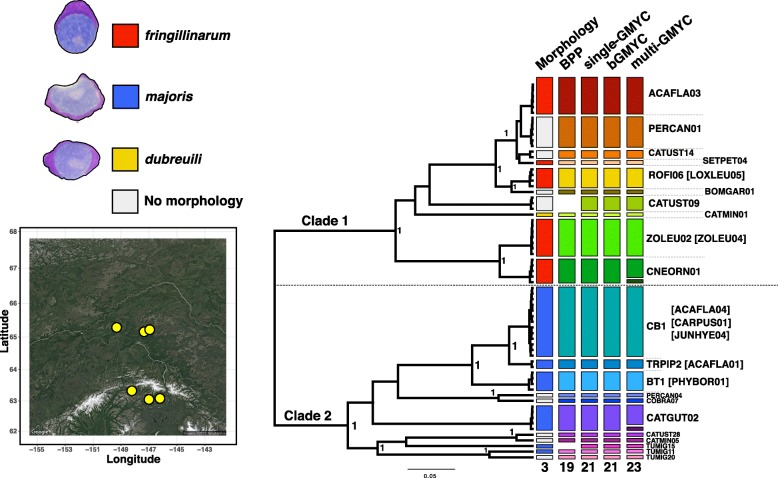
Coalescent methods that use multi-locus sequence data are powerful tools for identifying putatively reproductively isolated lineages, though this approach has rarely been used for the study of microbial groups that are likely to harbor many unrecognized species. Among microbial symbionts, integrating genetic species delimitation methods with trait data that could indicate reproductive isolation, such as host specificity data, has rarely been used despite its potential to inform species limits. Here we test the ability of an integrative approach combining genetic and host specificity data to delimit species within the avian malaria parasite genus Leucocytozoon in central Alaska.
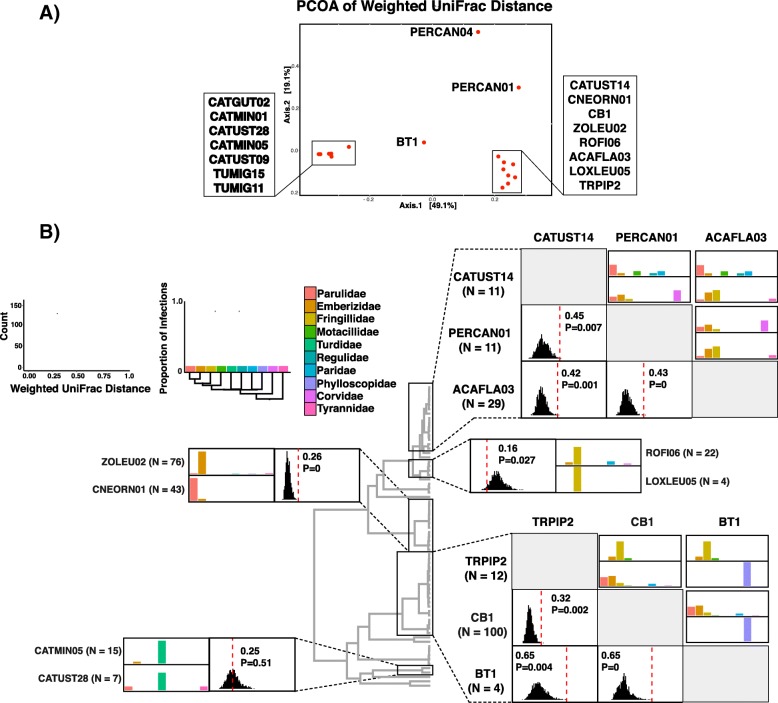
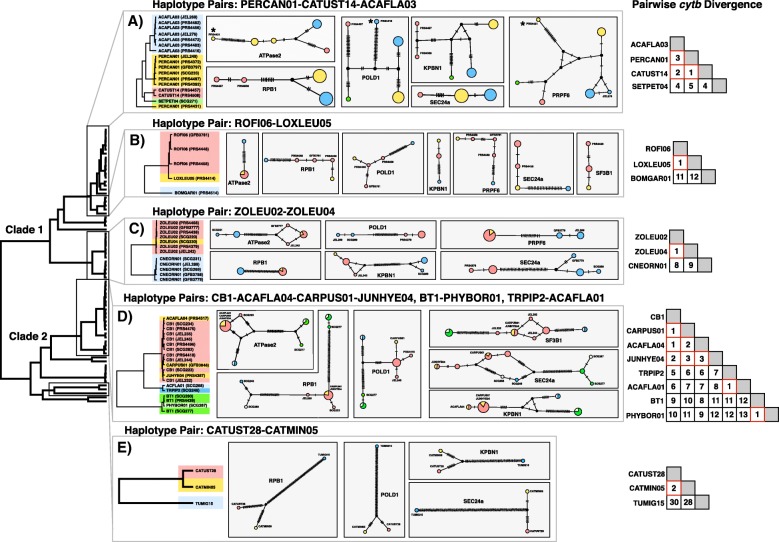
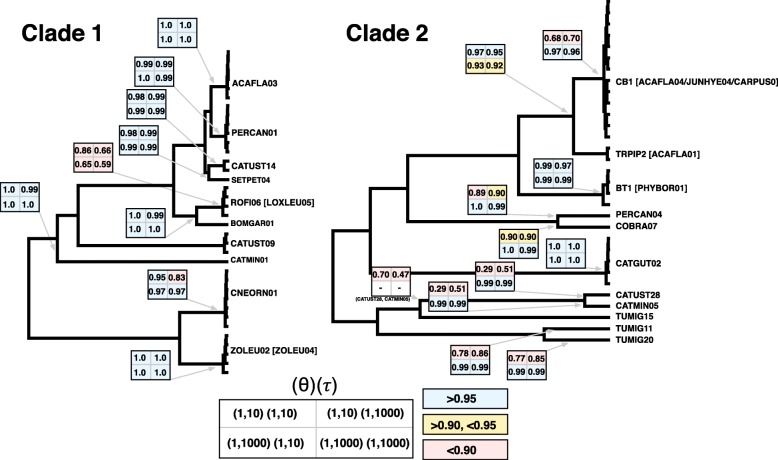
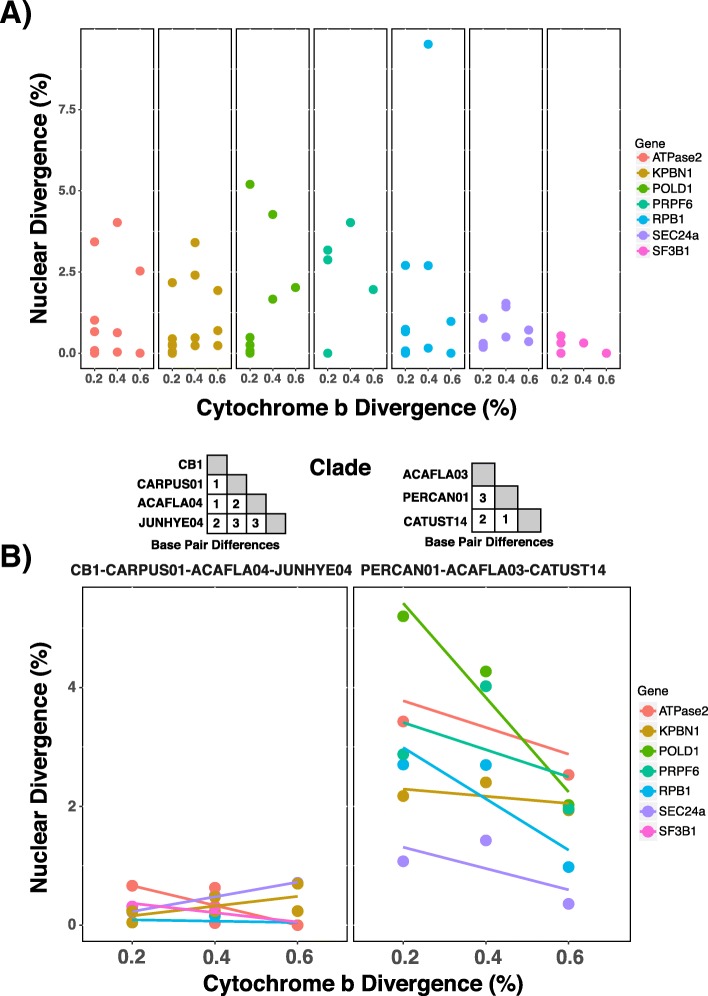
We sequenced seven nuclear loci for 69 Leucocytozoon samples and used multiple species delimitation methods (GMYC and BPP models), tested for differences in host infection patterns among putative species based on 406 individual infections, and characterized parasite morphology. We found that cryptic morphology has masked a highly diverse Leucocytozoon assemblage, with most species delimitation methods recovering support for at least 21 separate species that occur sympatrically and have divergent host infection patterns. Reproductive isolation among putative species appears to have evolved despite low mtDNA divergence, and in one instance two Leucocytozoon cytb haplotypes that differed by a single base pair (~ 0.2% divergence) were supported as separate species. However, there was no consistent association between mtDNA divergence and species limits. Among cytb haplotypes that differed by one to three base pairs we observed idiosyncratic patterns of nuclear and ecological divergence, with cytb haplotype pairs found to be either conspecific, reproductively isolated with no divergence in host specificity, or reproductively isolated with divergent patterns of host specialization.
Integrating multi-locus genetic species delimitation methods and non-traditional ecological data types such as host specificity provide a novel view of the diversity of avian malaria parasites that has been missed previously using morphology and mtDNA barcodes. Species delimitation methods show that Leucocytozoon is highly species-rich in Alaska, and the genus is likely to harbor extraordinary species-level diversity worldwide. Integrating genetic and ecological data will be an important approach for understanding the diversity and evolutionary history of microbial symbionts moving forward.
使用多基因序列数据的合并方法是识别可能具有生殖隔离的谱系的强大工具,尽管这种方法很少用于研究可能存在许多未被识别物种的微生物群。在微生物共生体中,尽管整合遗传物种界限方法和可以指示生殖隔离的特征数据(例如宿主特异性数据)具有潜在的信息,但很少用于指示物种界限。在这里,我们测试了一种综合方法的能力,该方法结合了遗传和宿主特异性数据,以确定阿拉斯加中部鸟类疟原虫属 Leucocytozoon 内的物种界限。
我们对 69 个 Leucocytozoon 样本进行了七个核基因座的测序,并使用了多种物种界限方法(GMYC 和 BPP 模型),根据 406 个个体感染情况测试了假定物种之间宿主感染模式的差异,并描述了寄生虫形态。我们发现,隐生形态掩盖了高度多样化的 Leucocytozoon 组合,大多数物种界限方法都支持至少 21 个单独的物种,这些物种同时存在并具有不同的宿主感染模式。尽管 mtDNA 分化程度较低,但假定物种之间的生殖隔离似乎已经进化,在一个例子中,两个 Leucocytozoon cytb 单倍型之间相差一个碱基(约 0.2%的分化),被支持为不同的物种。然而,mtDNA 分化与物种界限之间没有一致的关联。在 cytb 单倍型差异为一到三个碱基的情况下,我们观察到核和生态分化的特殊模式,发现 cytb 单倍型对要么是同一种,要么是生殖隔离且宿主特异性没有分化,要么是生殖隔离且宿主特化模式不同。
整合多基因遗传物种界限方法和非传统生态数据类型(如宿主特异性)为以前使用形态学和 mtDNA 条码错过的鸟类疟原虫多样性提供了新的视角。物种界限方法表明,Leucocytozoon 在阿拉斯加的物种丰富度很高,该属在全球范围内可能具有非凡的种级多样性。整合遗传和生态数据将是理解微生物共生体多样性和进化历史的重要方法。