Univ. Grenoble Alpes, Inserm, CEA, BIG-Biologie du Cancer et de l'Infection, 38000, Grenoble, France.
Inserm, U1033, Lyon, France.
J Exp Clin Cancer Res. 2018 Aug 30;37(1):209. doi: 10.1186/s13046-018-0885-1.
Angiogenesis has become an attractive target for cancer therapy. However, despite the initial success of anti-VEGF (Vascular endothelial growth factor) therapies, the overall survival appears only modestly improved and resistance to therapy often develops. Other anti-angiogenic targets are thus urgently needed. The predominant expression of the type I BMP (bone morphogenetic protein) receptor ALK1 (activin receptor-like kinase 1) in endothelial cells makes it an attractive target, and phase I/II trials are currently being conducted. ALK1 binds with strong affinity to two ligands that belong to the TGF-ß family, BMP9 and BMP10. In the present work, we addressed their specific roles in tumor angiogenesis, cancer development and metastasis in a mammary cancer model.
For this, we used knockout (KO) mice for BMP9 (constitutive Gdf2-deficient), for BMP10 (inducible Bmp10-deficient) and double KO mice (Gdf2 and Bmp10) in a syngeneic immunocompetent orthotopic mouse model of spontaneous metastatic breast cancer (E0771).
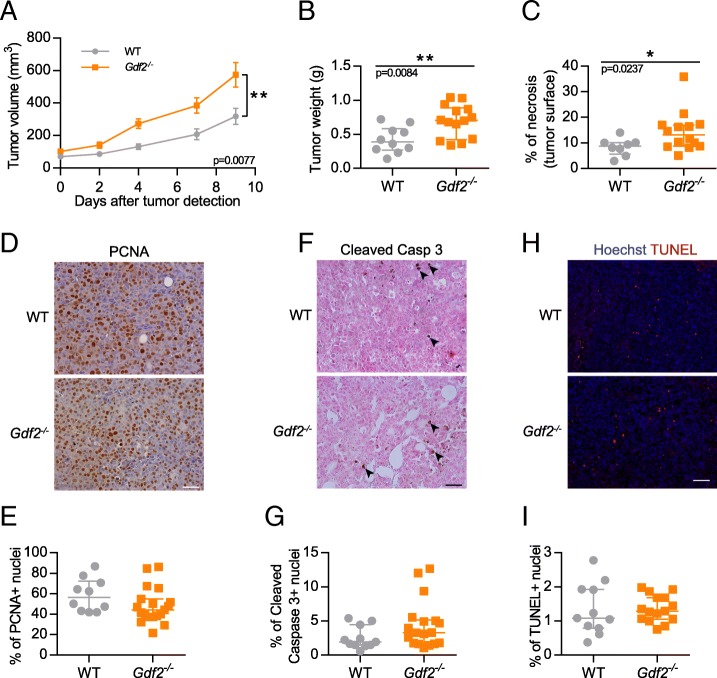
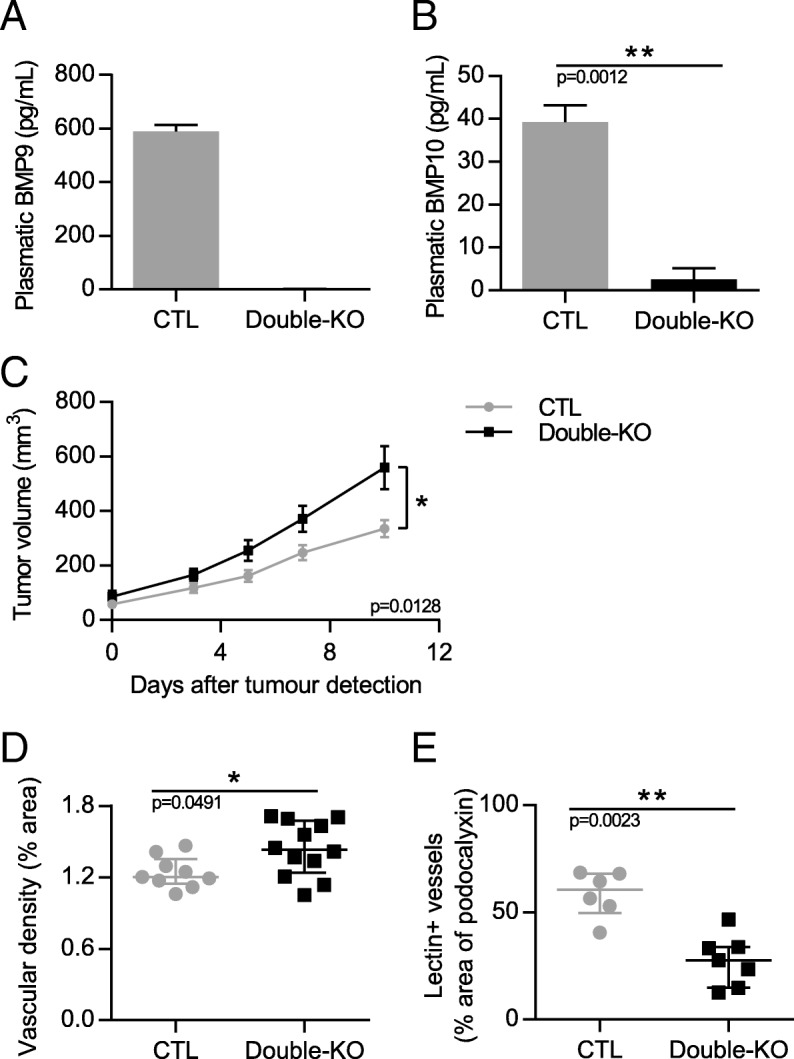
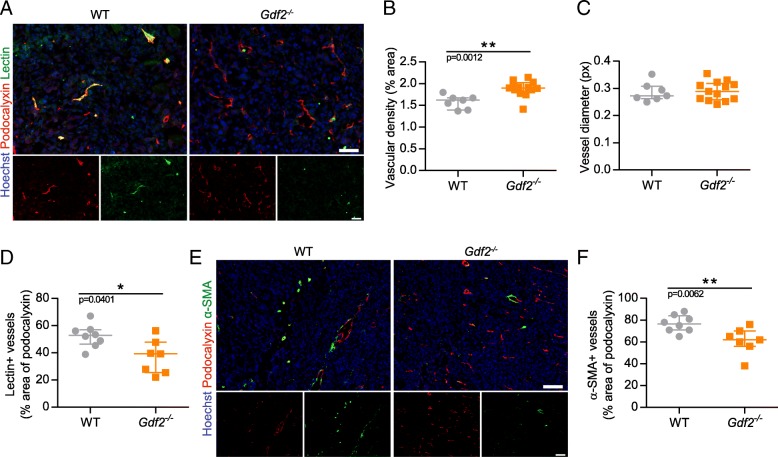
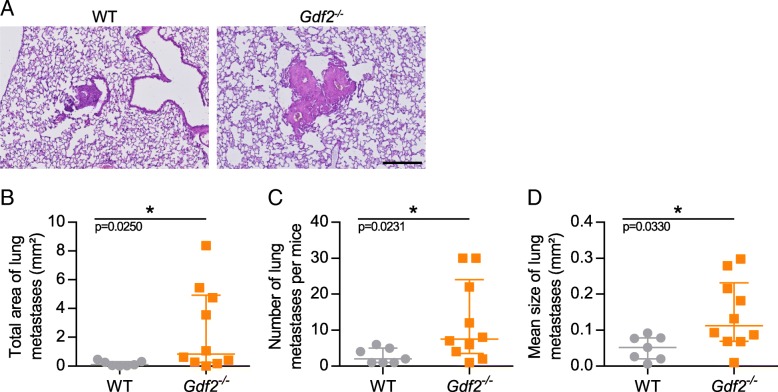
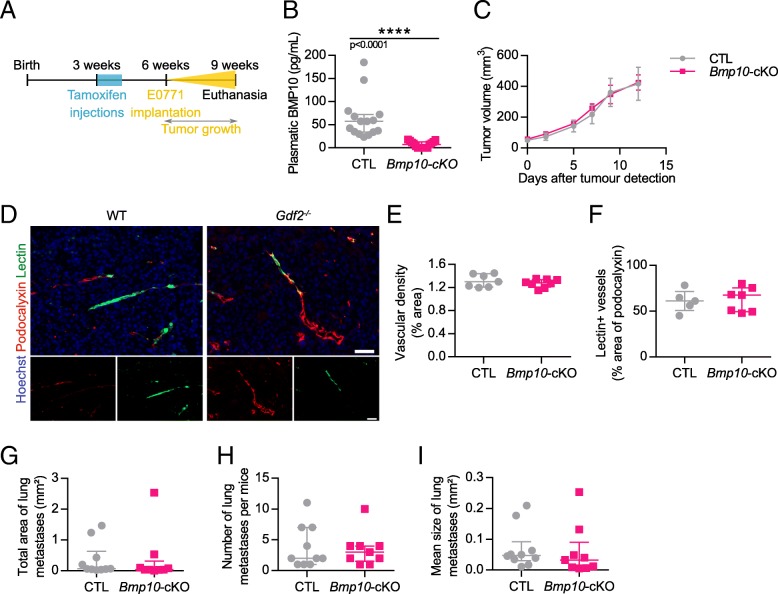
Our studies demonstrate a specific role for BMP9 in the E0771 mammary carcinoma model. Gdf2 deletion increased tumor growth while inhibiting vessel maturation and tumor perfusion. Gdf2 deletion also increased the number and the mean size of lung metastases. On the other hand, Bmp10 deletion did not significantly affect the E0771 mammary model and the double deletion (Gdf2 and Bmp10) did not lead to a stronger phenotype than the single Gdf2 deletion.
Altogether, our data show that in a tumor environment BMP9 and BMP10 play different roles and thus blocking their shared receptor ALK1 is maybe not appropriate. Indeed, BMP9, but not BMP10, acts as a quiescence factor on tumor growth, lung metastasis and vessel normalization. Our results also support that activating rather than blocking the BMP9 pathway could be a new strategy for tumor vessel normalization in order to treat breast cancer.
血管生成已成为癌症治疗的一个有吸引力的靶点。然而,尽管抗血管内皮生长因子(VEGF)治疗最初取得了成功,但总体生存率似乎只是略有提高,而且往往会产生耐药性。因此,迫切需要其他抗血管生成靶点。I 型 BMP(骨形态发生蛋白)受体 ALK1(激活素受体样激酶 1)在血管内皮细胞中的优势表达使其成为一个有吸引力的靶点,目前正在进行 I/II 期临床试验。ALK1 与属于 TGF-β家族的两种配体 BMP9 和 BMP10 具有很强的亲和力。在本工作中,我们在乳腺肿瘤模型中研究了它们在肿瘤血管生成、癌症发展和转移中的特定作用。
为此,我们使用 BMP9(组成型 Gdf2 缺陷)、BMP10(诱导型 Bmp10 缺陷)和双 KO 小鼠(Gdf2 和 Bmp10)在同源免疫活性的自发性转移性乳腺癌(E0771)的原位小鼠模型中进行了研究。
我们的研究表明 BMP9 在 E0771 乳腺肿瘤模型中具有特定的作用。Gdf2 缺失增加了肿瘤生长,同时抑制了血管成熟和肿瘤灌注。Gdf2 缺失还增加了肺转移的数量和平均大小。另一方面,Bmp10 缺失对 E0771 乳腺模型没有显著影响,双缺失(Gdf2 和 Bmp10)没有导致比单一 Gdf2 缺失更强的表型。
总的来说,我们的数据表明,在肿瘤环境中,BMP9 和 BMP10 发挥不同的作用,因此阻断它们的共同受体 ALK1 可能不合适。事实上,BMP9 而不是 BMP10 作为肿瘤生长、肺转移和血管正常化的静止因子发挥作用。我们的结果还支持激活而不是阻断 BMP9 途径可能是治疗乳腺癌的肿瘤血管正常化的新策略。