Galinski Henning, Favraud Gael, Dong Hao, Gongora Juan S Totero, Favaro Grégory, Döbeli Max, Spolenak Ralph, Fratalocchi Andrea, Capasso Federico
John A. Paulson School of Engineering and Applied Sciences, Harvard University, Cambridge 02138, USA.
Laboratory for Nanometallurgy, ETH Zurich, Vladimir-Prelog-Weg 1-5/10, Zurich 8093, Switzerland.
Light Sci Appl. 2017 May 5;6(5):e16233. doi: 10.1038/lsa.2016.233. eCollection 2017 May.
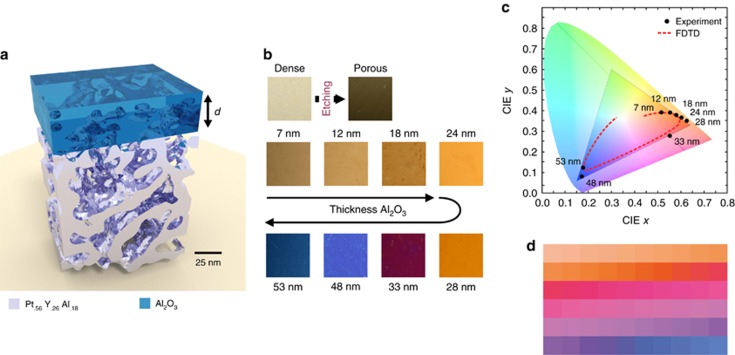
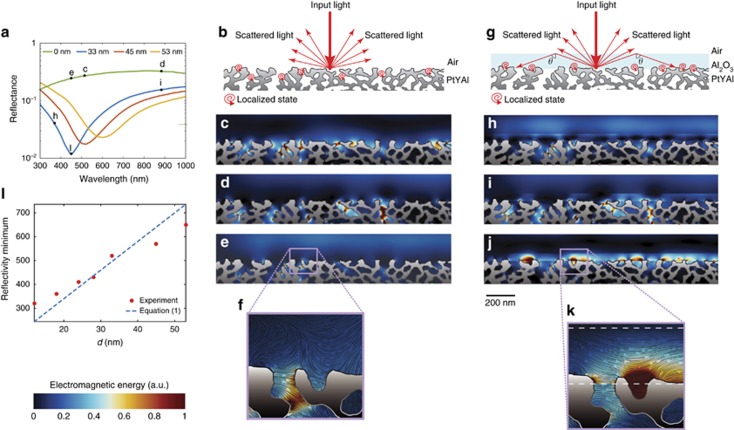
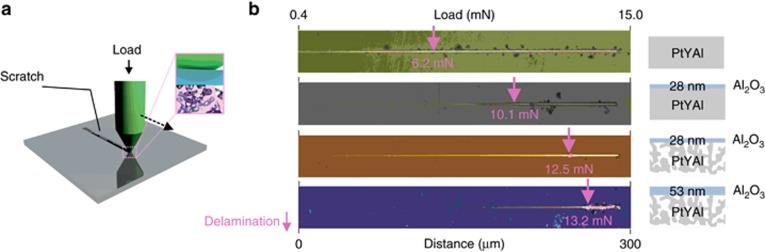
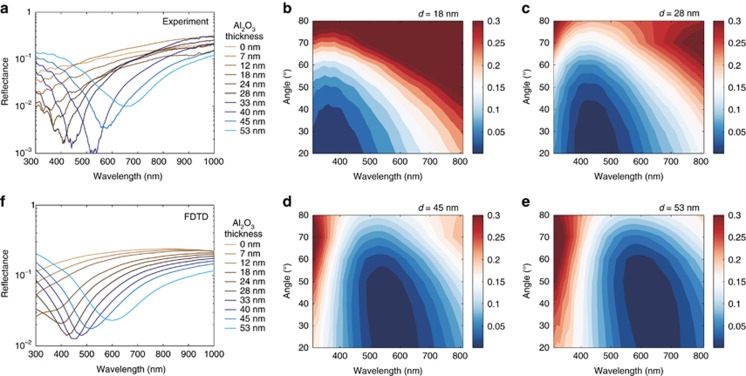
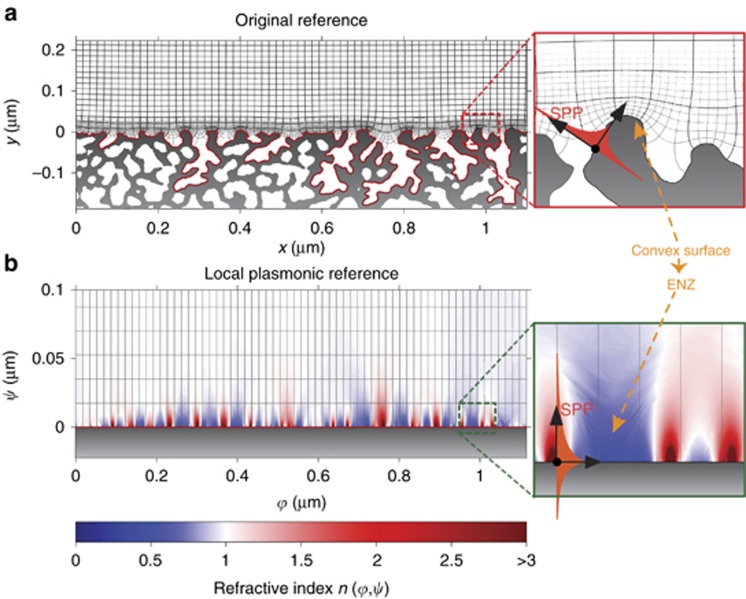
Structural colors have drawn wide attention for their potential as a future printing technology for various applications, ranging from biomimetic tissues to adaptive camouflage materials. However, an efficient approach to realize robust colors with a scalable fabrication technique is still lacking, hampering the realization of practical applications with this platform. Here, we develop a new approach based on large-scale network metamaterials that combine dealloyed subwavelength structures at the nanoscale with lossless, ultra-thin dielectric coatings. By using theory and experiments, we show how subwavelength dielectric coatings control a mechanism of resonant light coupling with epsilon-near-zero regions generated in the metallic network, generating the formation of saturated structural colors that cover a wide portion of the spectrum. Ellipsometry measurements support the efficient observation of these colors, even at angles of 70°. The network-like architecture of these nanomaterials allows for high mechanical resistance, which is quantified in a series of nano-scratch tests. With such remarkable properties, these metastructures represent a robust design technology for real-world, large-scale commercial applications.
结构色因其作为一种未来用于各种应用的印刷技术的潜力而备受关注,这些应用涵盖从仿生组织到自适应伪装材料等多个领域。然而,目前仍缺乏一种通过可扩展制造技术来实现稳健颜色的有效方法,这阻碍了该平台实际应用的实现。在此,我们开发了一种基于大规模网络超材料的新方法,该方法将纳米级的脱合金亚波长结构与无损超薄介电涂层相结合。通过理论和实验,我们展示了亚波长介电涂层如何控制与金属网络中产生的近零介电常数区域的共振光耦合机制,从而产生覆盖光谱大部分区域的饱和结构色。椭圆偏振测量表明,即使在70°角下也能有效观察到这些颜色。这些纳米材料的网络状结构具有高机械抗性,这在一系列纳米划痕测试中得到了量化。凭借这些卓越的特性,这些亚结构代表了一种适用于现实世界大规模商业应用的稳健设计技术。