Batista Cassiano Martin, Kessler Rafael Luis, Eger Iriane, Soares Maurilio José
Laboratory of Cell Biology, Carlos Chagas Institute/Fiocruz-PR, 81310-020 Curitiba, Paraná, Brazil.
Laboratory of Functional Genomics, Carlos Chagas Institute/Fiocruz-PR, 81310-020 Curitiba, Paraná, Brazil.
BMC Cell Biol. 2018 Aug 31;19(1):19. doi: 10.1186/s12860-018-0170-3.
The palmitate analogue 2-bromopalmitate (2-BP) is a non-selective membrane tethered cysteine alkylator of many membrane-associated enzymes that in the last years emerged as a general inhibitor of protein S-palmitoylation. Palmitoylation is a post-translational protein modification that adds palmitic acid to a cysteine residue through a thioester linkage, promoting membrane localization, protein stability, regulation of enzymatic activity, and the epigenetic regulation of gene expression. Little is known on such important process in the pathogenic protozoan Trypanosoma cruzi, the etiological agent of Chagas disease.
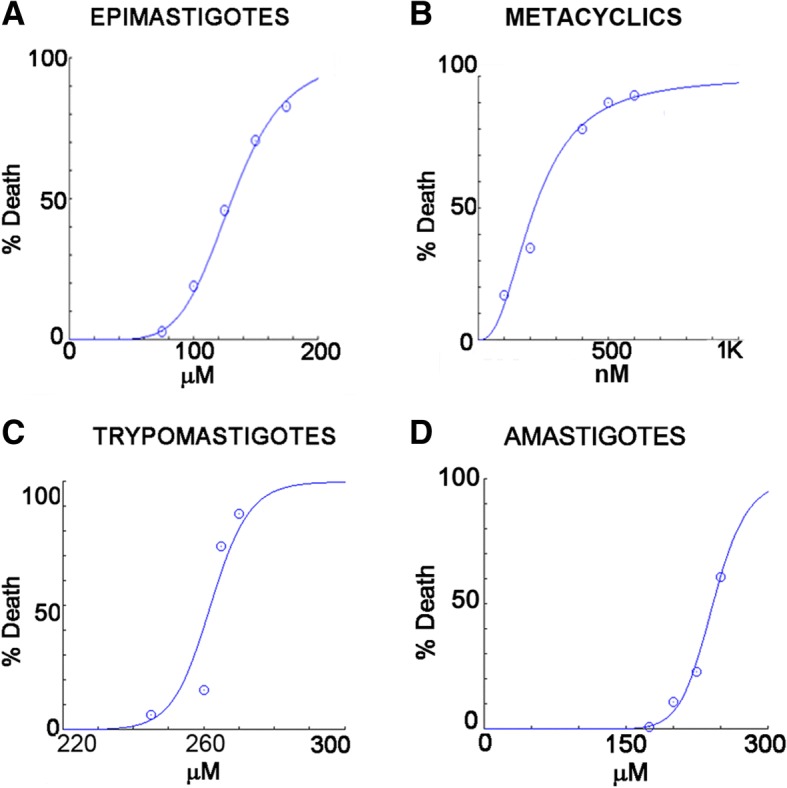
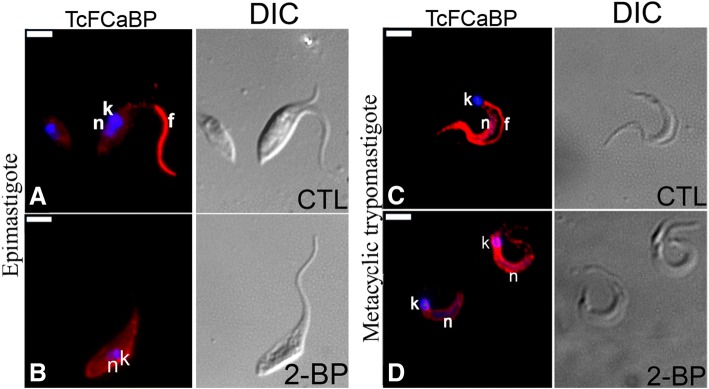
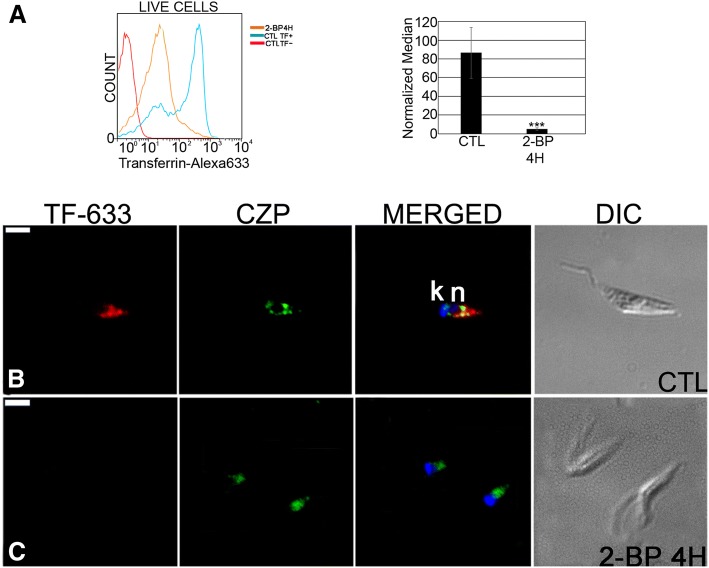
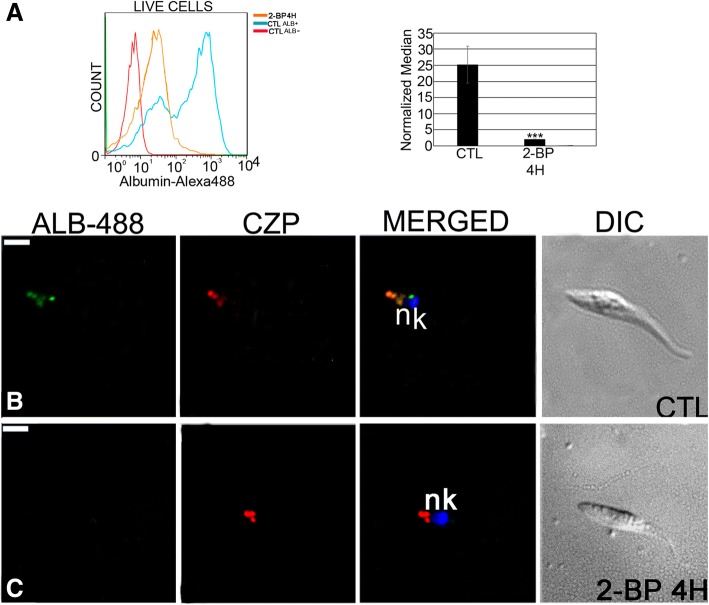
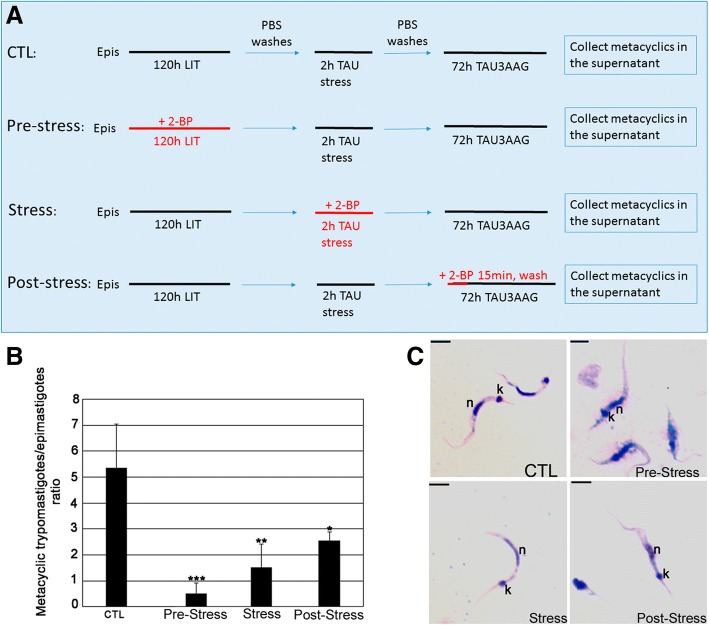
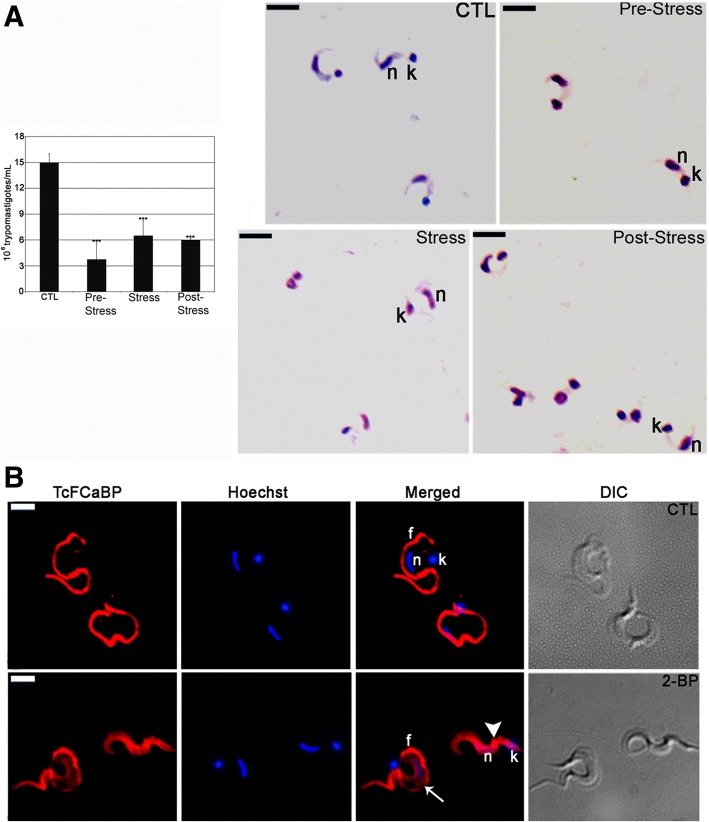
The effect of 2-BP was analyzed on different developmental forms of Trypanosoma cruzi. The IC/48 h value for culture epimastigotes was estimated as 130 μM. The IC/24 h value for metacyclic trypomastigotes was 216 nM, while for intracellular amastigotes it was 242 μM and for cell derived trypomasigotes was 262 μM (IC/24 h). Our data showed that 2-BP altered T. cruzi: 1) morphology, as assessed by bright field, scanning and transmission electron microscopy; 2) mitochondrial membrane potential, as shown by flow cytometry after incubation with rhodamine-123; 3) endocytosis, as seen after incubation with transferrin or albumin and analysis by flow cytometry/fluorescence microscopy; 4) in vitro metacyclogenesis; and 5) infectivity, as shown by host cell infection assays. On the other hand, lipid stress by incubation with palmitate did not alter epimastigote growth, metacyclic trypomastigotes viability or trypomastigote infectivity.
Our results indicate that 2-BP inhibits key cellular processes of T. cruzi that may be regulated by palmitoylation of vital proteins and suggest a metacyclic trypomastigote unique target dependency during the parasite development.
棕榈酸类似物2-溴棕榈酸(2-BP)是一种非选择性的膜结合半胱氨酸烷基化剂,可作用于许多膜相关酶,近年来已成为蛋白质S-棕榈酰化的通用抑制剂。棕榈酰化是一种翻译后蛋白质修饰,通过硫酯键将棕榈酸添加到半胱氨酸残基上,促进膜定位、蛋白质稳定性、酶活性调节以及基因表达的表观遗传调控。对于恰加斯病的病原体——致病原生动物克氏锥虫中这一重要过程,我们了解甚少。
分析了2-BP对克氏锥虫不同发育形式的影响。培养的无鞭毛体的48小时半数抑制浓度(IC/48 h)估计为130μM。循环后期锥鞭毛体的24小时半数抑制浓度(IC/24 h)为216 nM,而细胞内无鞭毛体的该值为242μM,细胞来源的锥鞭毛体的该值为262μM(IC/24 h)。我们的数据表明,2-BP改变了克氏锥虫:1)形态,通过明场、扫描和透射电子显微镜评估;2)线粒体膜电位,与罗丹明-123孵育后通过流式细胞术显示;3)内吞作用,与转铁蛋白或白蛋白孵育后通过流式细胞术/荧光显微镜分析可见;4)体外循环后期发育;以及5)感染性,通过宿主细胞感染试验显示。另一方面,与棕榈酸孵育引起的脂质应激并未改变无鞭毛体的生长、循环后期锥鞭毛体的活力或锥鞭毛体的感染性。
我们的结果表明,2-BP抑制了克氏锥虫的关键细胞过程,这些过程可能受重要蛋白质的棕榈酰化调节,并提示在寄生虫发育过程中循环后期锥鞭毛体存在独特的靶点依赖性。