Department of Anesthesiology, The First Affiliated Hospital of Nanjing Medical University, Nanjing, 210029, Jiangsu, People's Republic of China.
J Neuroinflammation. 2018 Aug 31;15(1):248. doi: 10.1186/s12974-018-1287-1.
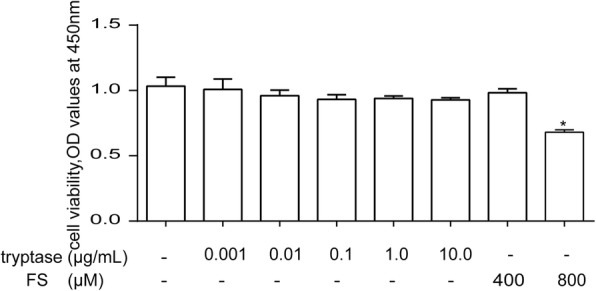
Mast cells (MCs), the 'first responders' in brain injury, are able to disrupt the blood-brain barrier (BBB), but the underlying mechanism is not well understood. Tryptase is the most abundant MC secretory product. Protease-activated receptor 2 (PAR-2) has been identified as a specific receptor for tryptase, which is abundantly expressed in brain microvascular endothelial cells. The BBB comprises brain microvascular endothelial cells that display specialised molecular properties essential for BBB function and integrity. Therefore, the purpose of the present study was to investigate the effects of tryptase on mouse brain microvascular endothelial cell line bEnd3 and its potential mechanisms of action.
Induction of mouse brain microvascular endothelial cell activation by tryptase was examined. Then, mouse brain microvascular endothelial cells were pretreated with a PAR-2 antagonist and stimulated with tryptase. Cellular activation, proinflammatory cytokine production, expression of PAR-2, Toll-like receptors (TLRs) and mitogen-activated protein kinases (MAPK), nuclear factor kappa B (NF-kappa B) phosphorylation were assessed.
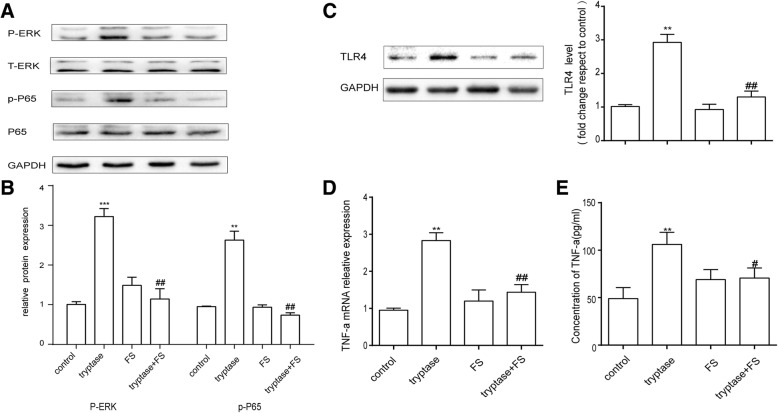
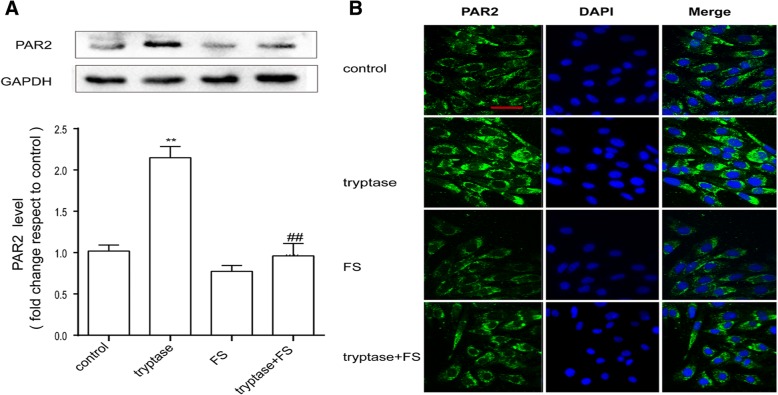
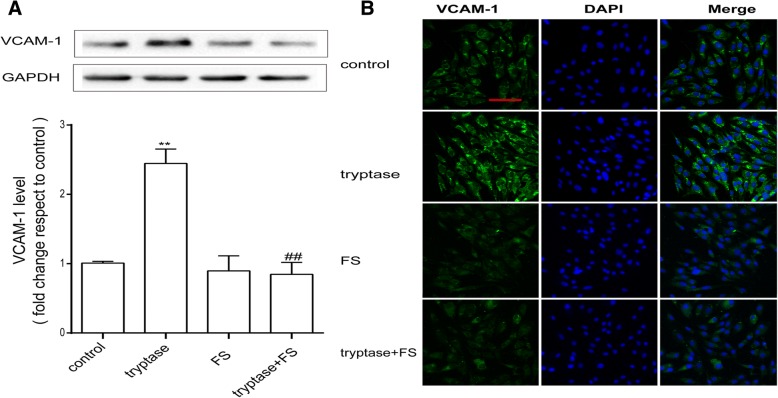
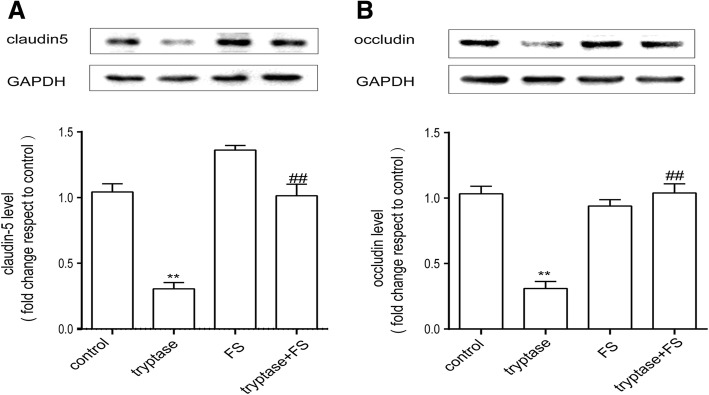
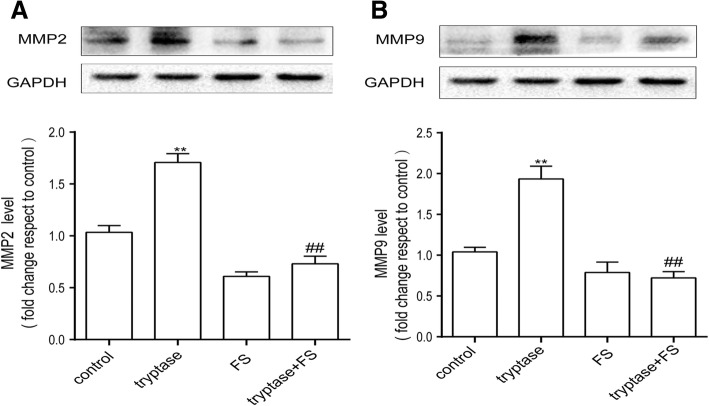
Tryptase upregulated the production of VCAM-1, MMPs (MMP9 and MMP2), TLR4 and TNF-α and downregulated the expression of the tight junction proteins occludin and claudin-5 in mouse brain microvascular endothelial cell. Among the MAPK and NF-kappa B pathway, ERK and NF-kappa B were activated by tryptase. All of these effects could be eliminated by the PAR-2 inhibitor.
Based on our findings, we conclude that tryptase can trigger brain microvascular endothelial cell activation and proinflammatory mediator release. These findings may further clarify the involvement and mechanism of tryptase in BBB disruption.
肥大细胞(MCs)是脑损伤中的“第一反应者”,能够破坏血脑屏障(BBB),但潜在机制尚不清楚。胰蛋白酶是 MC 分泌的最丰富的产物。蛋白酶激活受体 2(PAR-2)已被鉴定为胰蛋白酶的特异性受体,其在脑微血管内皮细胞中大量表达。BBB 由脑微血管内皮细胞组成,这些细胞具有维持 BBB 功能和完整性所必需的特殊分子特性。因此,本研究的目的是研究胰蛋白酶对小鼠脑微血管内皮细胞系 bEnd3 的影响及其潜在的作用机制。
检测胰蛋白酶诱导小鼠脑微血管内皮细胞激活的情况。然后,用 PAR-2 拮抗剂预处理小鼠脑微血管内皮细胞,并用胰蛋白酶刺激。评估细胞激活、促炎细胞因子产生、PAR-2、Toll 样受体(TLRs)和丝裂原活化蛋白激酶(MAPK)、核因子 kappa B(NF-kappa B)磷酸化的表达。
胰蛋白酶上调了 VCAM-1、MMPs(MMP9 和 MMP2)、TLR4 和 TNF-α的产生,并下调了小鼠脑微血管内皮细胞中紧密连接蛋白 occludin 和 claudin-5 的表达。在 MAPK 和 NF-kappa B 通路中,ERK 和 NF-kappa B 被胰蛋白酶激活。所有这些作用都可以通过 PAR-2 抑制剂消除。
基于我们的发现,我们得出结论,胰蛋白酶可以触发脑微血管内皮细胞激活和促炎介质释放。这些发现可能进一步阐明胰蛋白酶在 BBB 破坏中的作用和机制。