Lung and Allergy Research Centre, Diamantina Institute, University of Queensland, Woolloongabba, QLD, Australia.
Department of Respiratory Medicine, Princess Alexandra Hospital, Brisbane, QLD, Australia.
Front Immunol. 2018 Aug 16;9:1895. doi: 10.3389/fimmu.2018.01895. eCollection 2018.
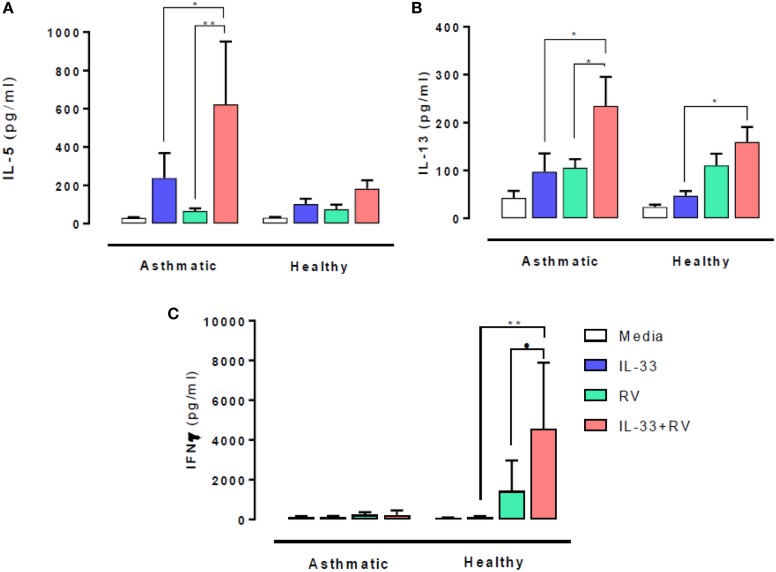
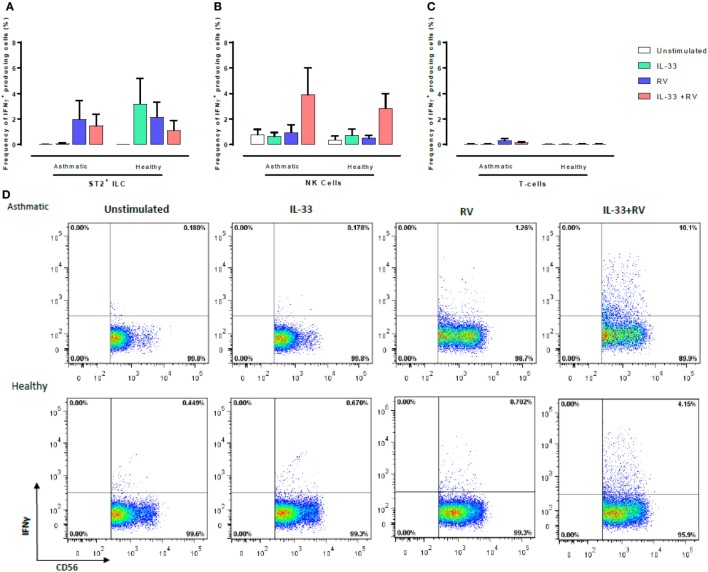
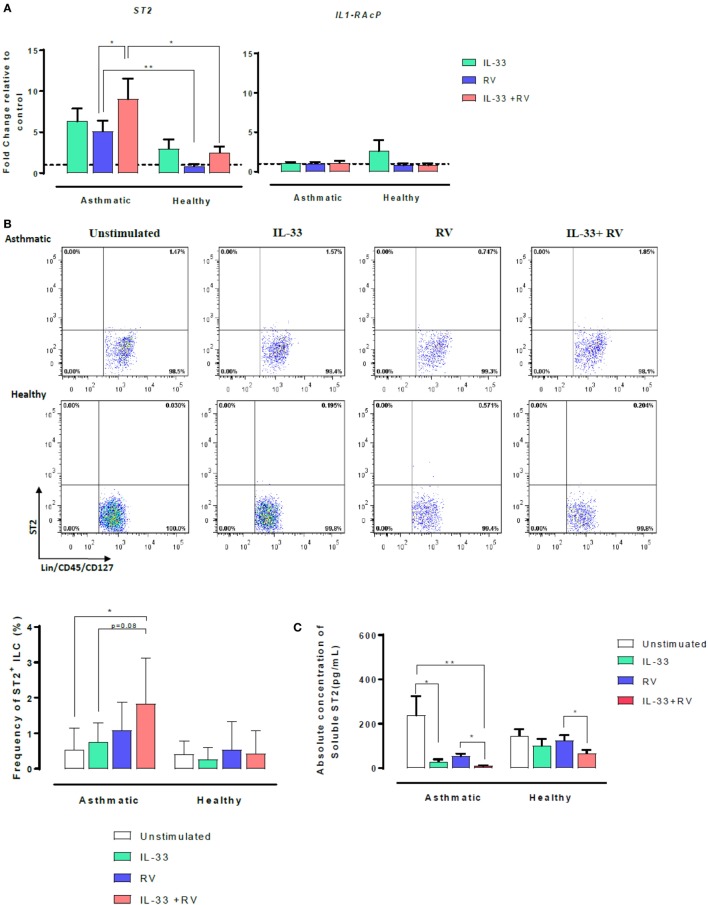
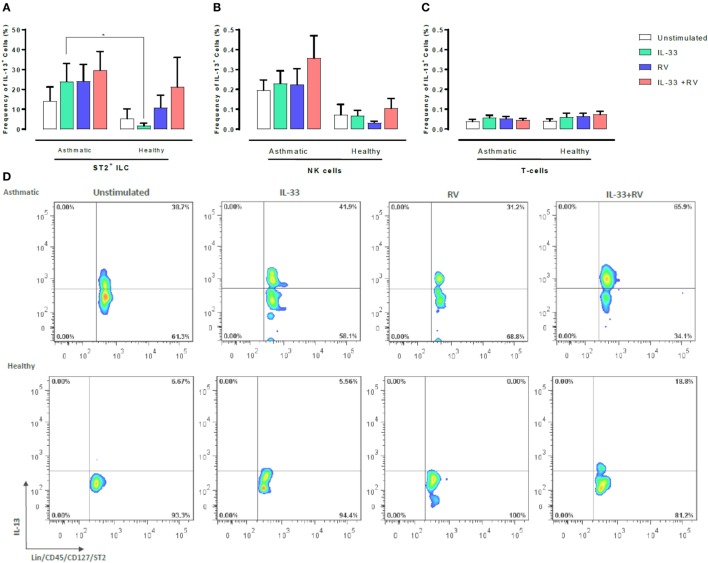
Interleukin- 33 (IL-33) is an epithelial-derived cytokine that initiates type 2 immune responses to allergens, though whether IL-33 has the ability to modify responses to respiratory viral infections remains unclear. This study aimed to investigate the effects of IL-33 on rhinovirus (RV)-induced immune responses by circulating leukocytes from people with allergic asthma, and how this response may differ from non-allergic controls. Our experimental approach involved co-exposing peripheral blood mononuclear cells to IL-33 and RV in order to model how the functions of virus-responsive lymphocytes could be modified after recruitment to an airway environment enriched in IL-33. In the current study, IL-33 enhanced RV-induced IL-5 and IL-13 release by cells from people with allergic asthma, but had no effect on IL-5 and IL-13 production by cells from healthy donors. In asthmatic individuals, IL-33 also enhanced mRNA and surface protein expression of ST2 (the IL-33 receptor IL1RL1), while soluble ST2 concentrations were low. In contrast, IL-33 had no effect on mRNA and surface expression of ST2 in healthy individuals. In people with allergic asthma, RV-activated ST2 innate lymphoid cells (ST2ILC) were the predominant source of IL-33 augmented IL-13 release. In contrast, RV-activated natural killer cells (NK cells) were the predominant source of IL-33 augmented IFNγ release in healthy individuals. This suggests that the effects of IL-33 on the cellular immune response to RV differ between asthmatic and healthy individuals. These findings provide a mechanism by which RV infections and IL-33 might interact in asthmatic individuals to exacerbate type 2 immune responses and allergic airway inflammation.
白细胞介素-33(IL-33)是一种上皮细胞衍生的细胞因子,它可以引发对过敏原的 2 型免疫反应,尽管 IL-33 是否有能力改变对呼吸道病毒感染的反应尚不清楚。本研究旨在通过过敏性哮喘患者的循环白细胞,研究 IL-33 对鼻病毒(RV)诱导的免疫反应的影响,以及这种反应如何与非过敏性对照不同。我们的实验方法涉及将外周血单核细胞与 IL-33 和 RV 共同暴露,以模拟病毒反应性淋巴细胞的功能在富含 IL-33 的气道环境中募集后如何被改变。在本研究中,IL-33 增强了来自过敏性哮喘患者的细胞对 RV 诱导的 IL-5 和 IL-13 的释放,但对来自健康供体的细胞的 IL-5 和 IL-13 产生没有影响。在哮喘患者中,IL-33 还增强了 IL-33 受体 IL1RL1(即 ST2)的 mRNA 和表面蛋白表达,而可溶性 ST2 浓度较低。相比之下,IL-33 对健康个体的 ST2 mRNA 和表面表达没有影响。在过敏性哮喘患者中,RV 激活的 ST2 固有淋巴细胞(ST2ILC)是 IL-33 增强的 IL-13 释放的主要来源。相比之下,RV 激活的自然杀伤细胞(NK 细胞)是健康个体中 IL-33 增强 IFNγ释放的主要来源。这表明 IL-33 对 RV 激活的细胞免疫反应的影响在哮喘患者和健康个体之间存在差异。这些发现提供了一种机制,说明 RV 感染和 IL-33 可能在哮喘患者中相互作用,从而加剧 2 型免疫反应和过敏性气道炎症。