Department of Ultrasound, The First Affiliated Hospital, Medical College, Zhejiang University, Hangzhou, China.
Key Laboratory of Precision Diagnosis and Treatment for Hepatobiliary and Pancreatic Tumor of Zhejiang Province, Hangzhou 310003, China.
Biomed Res Int. 2018 Aug 2;2018:8632069. doi: 10.1155/2018/8632069. eCollection 2018.
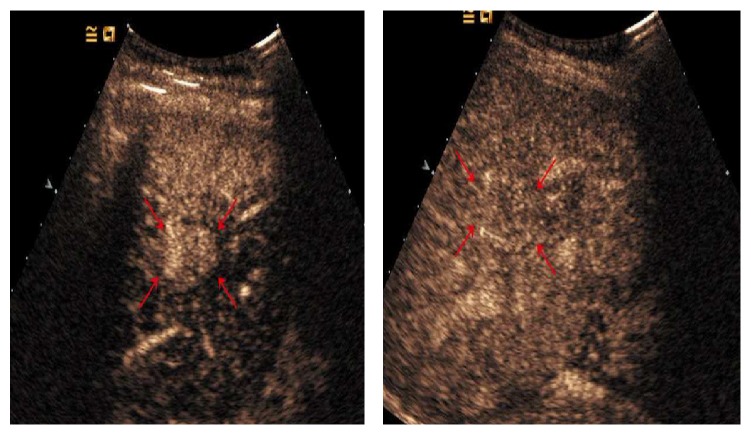
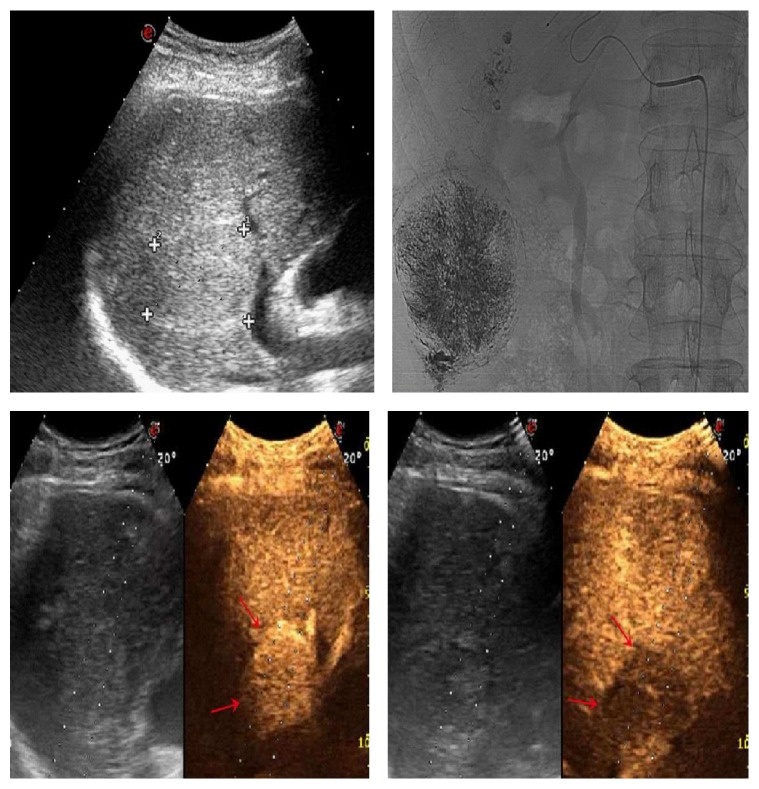
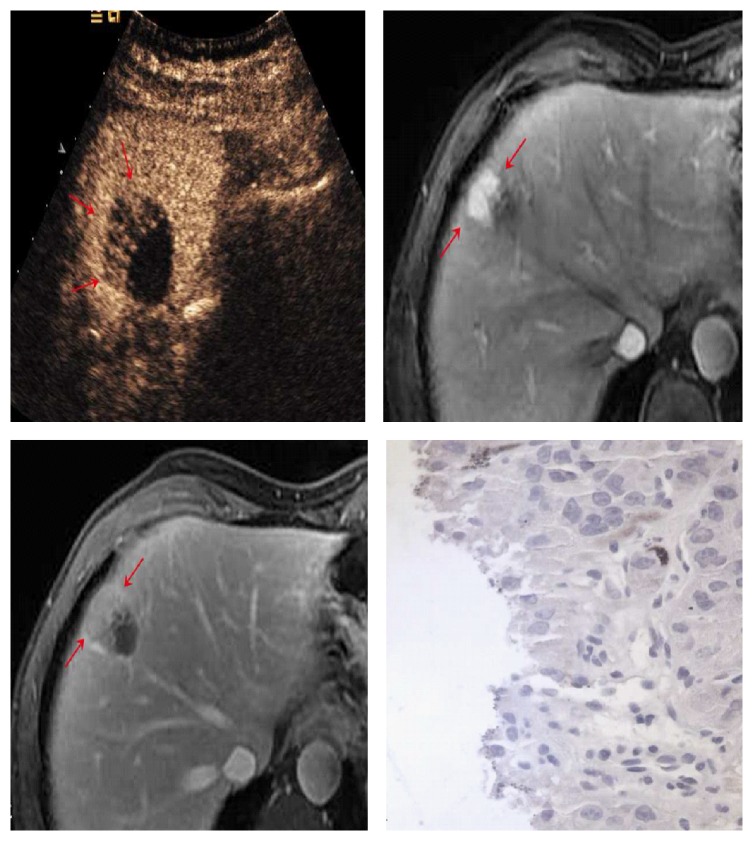
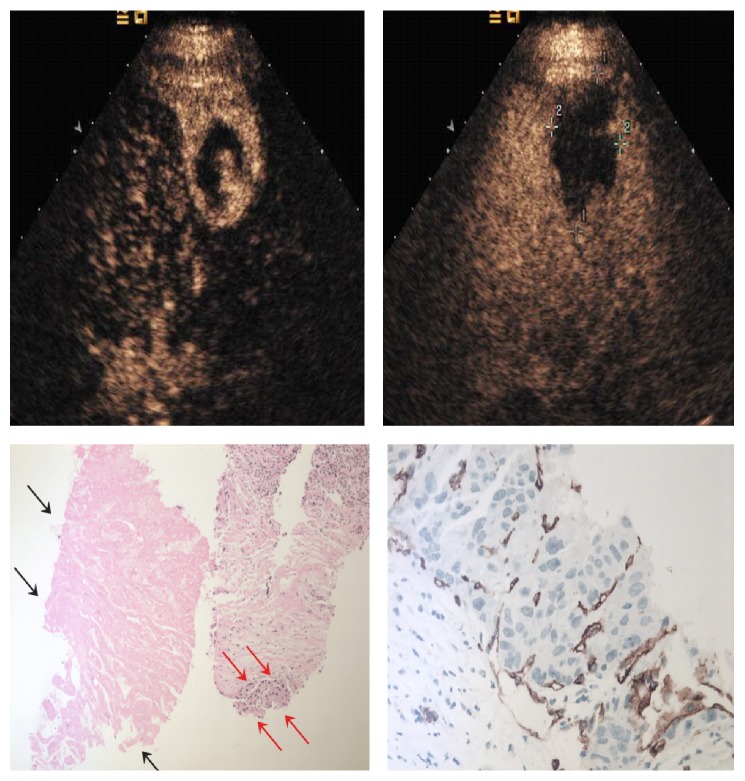
To investigate the enhancement pattern of residual tumor on contrast-enhanced ultrasonography (CEUS) in patients with hepatocellular carcinoma (HCC) treated with transarterial chemoembolization (TACE).
Our study initially included 76 patients with HCC, 73 of which were finally allocated into two groups: group 1 (43 patients, post-TACE group) and group 2 (30 patients, untreated HCC group). All patients were performed with CEUS using SonoVue, and qualitative and quantitative enhancement characteristics (rise time, peak time, and washout time) were evaluated for the residual tumors. T test or 2 test was used to estimate for differences between two groups.
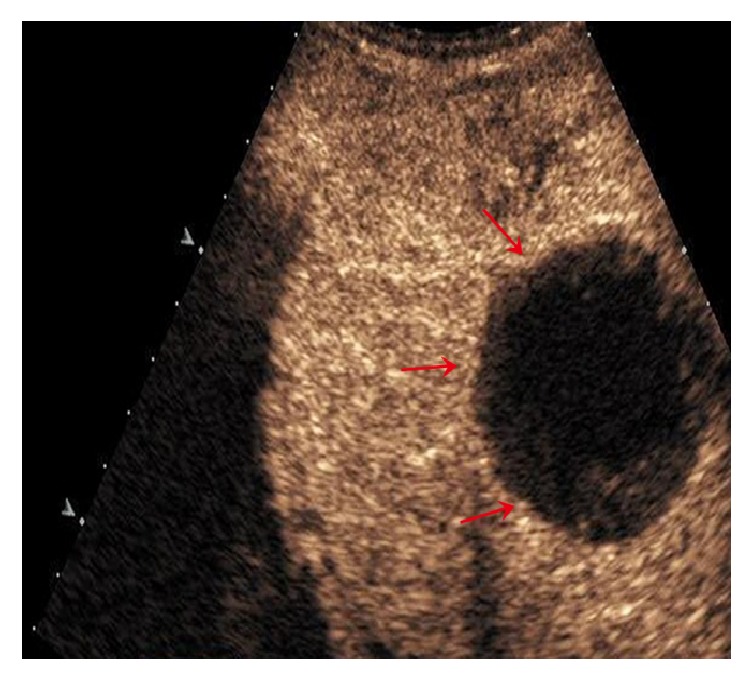
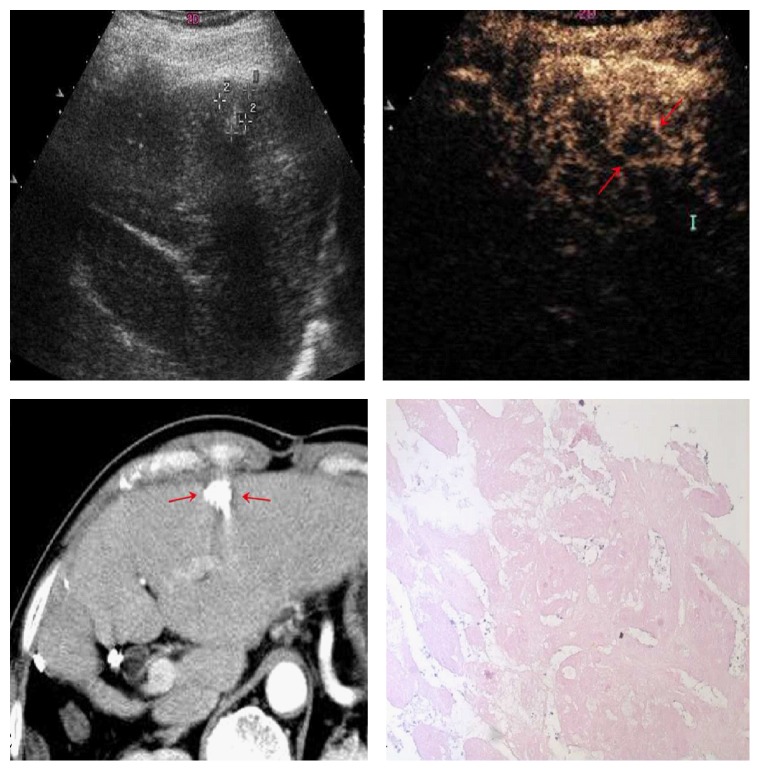
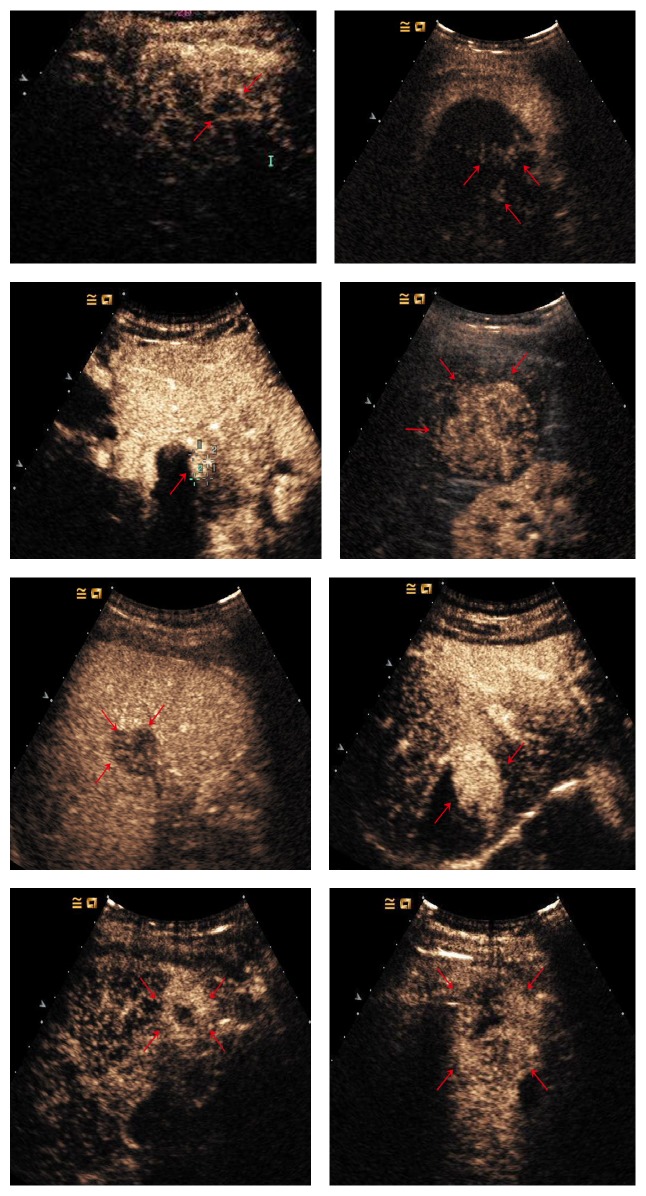
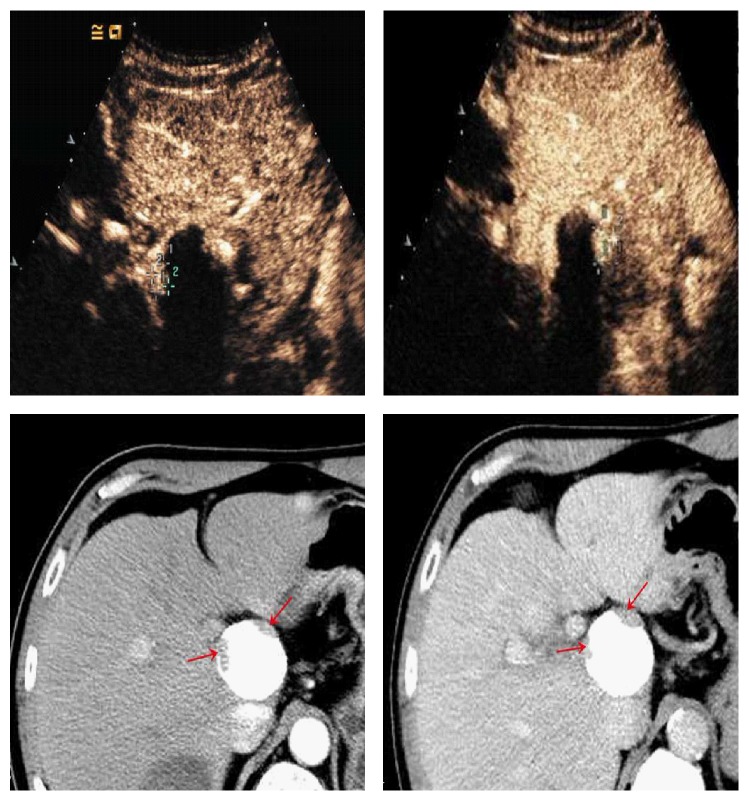
In group 1, the mean rise time, peak time, and washout times in group 1 were 16.1±2.7 sec, 31.3±3.1 sec, and 191.0±31.3 sec, respectively. In group 2, these were 15.1±3.5 sec, 30.9±3.2 sec, and 142.6±16.1 sec, respectively. The differences in rise time and peak time were not statistically significant (=0.09 and 0.30, respectively), but the washout time was significantly prolonged in group 1 (<0.01). The enhanced pattern in arterial phase was inhomogeneous (n=11), regular homogeneous (n=11), partial (n=12), peripheral (n=7), and peripheral rim-like (n=2) in group 1. The average of the longest tumor size of the whole lesion in the 5 types was 4.7±1.3cm, 2.9±1.0cm, 3.1±1.7cm, 2.5±0.6cm, and 2.1 cm.
It suggested that the washout time of post-TACE residual lesions was prolonged compared with untreated HCC nodules on CEUS imaging. Combined with the triple-phase enhancement pattern seen on CEUS, the washout time may provide additional information to guide further treatment for residual tumors.
探讨经导管肝动脉化疗栓塞(TACE)治疗后肝细胞癌(HCC)患者残留肿瘤在超声造影(CEUS)中的增强模式。
本研究最初纳入 76 例 HCC 患者,其中 73 例最终分为两组:组 1(43 例,TACE 后组)和组 2(30 例,未治疗 HCC 组)。所有患者均采用 SonoVue 进行 CEUS,评估残留肿瘤的定性和定量增强特征(上升时间、峰值时间和洗脱时间)。采用 t 检验或卡方检验估计两组间差异。
在组 1 中,组 1 的平均上升时间、峰值时间和洗脱时间分别为 16.1±2.7 秒、31.3±3.1 秒和 191.0±31.3 秒。在组 2 中,这些分别为 15.1±3.5 秒、30.9±3.2 秒和 142.6±16.1 秒。上升时间和峰值时间的差异无统计学意义(分别为=0.09 和 0.30),但组 1 的洗脱时间明显延长(<0.01)。组 1 的动脉期增强模式不均匀(n=11)、规则均匀(n=11)、部分(n=12)、外周(n=7)和外周边缘状(n=2)。5 种类型的整个病变最长肿瘤大小的平均值为 4.7±1.3cm、2.9±1.0cm、3.1±1.7cm、2.5±0.6cm 和 2.1cm。
提示 TACE 后残留病变的洗脱时间在 CEUS 成像上较未治疗的 HCC 结节延长。结合 CEUS 上的三相增强模式,洗脱时间可能为残留肿瘤的进一步治疗提供额外信息。