Human Genetics, Genome Institute of Singapore, Singapore, Singapore.
Department of Surgery, Yong Loo Lin School of Medicine, National University of Singapore, Singapore, Singapore.
Int J Cancer. 2019 Mar 1;144(5):1195-1204. doi: 10.1002/ijc.31841. Epub 2018 Nov 9.
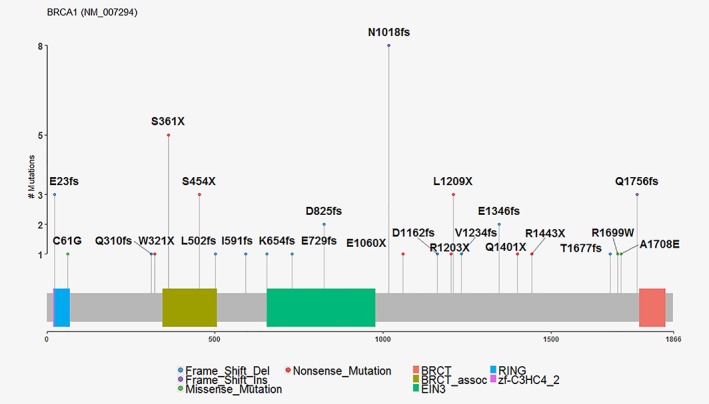
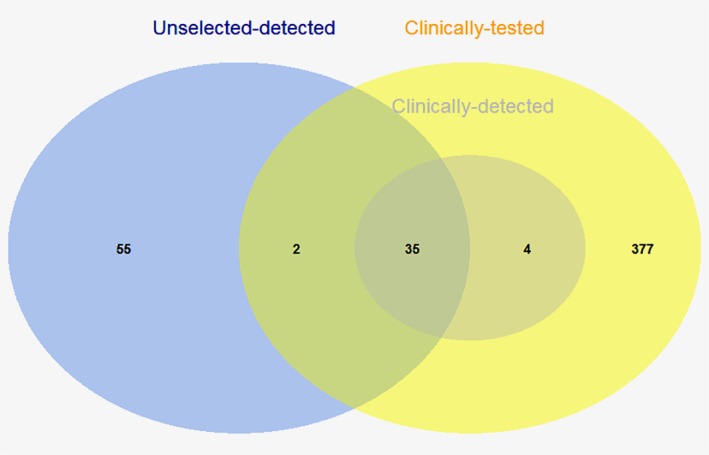
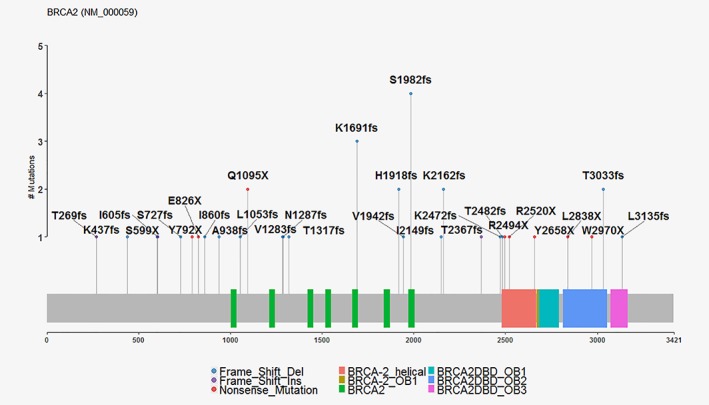
Breast cancer patients with BRCA1/2-driven tumors may benefit from targeted therapy. It is not clear whether current BRCA screening guidelines are effective at identifying these patients. The purpose of our study was to evaluate the prevalence of inherited BRCA1/2 pathogenic variants in a large, clinically representative breast cancer cohort and to estimate the proportion of BRCA1/2 carriers not detected by selectively screening individuals with the highest probability of being carriers according to current clinical guidelines. The study included 5,122 unselected Swedish breast cancer patients diagnosed from 2001 to 2008. Target sequence enrichment (48.48 Fluidigm Access Arrays) and sequencing were performed (Illumina Hi-Seq 2,500 instrument, v4 chemistry). Differences in patient and tumor characteristics of BRCA1/2 carriers who were already identified as part of clinical BRCA1/2 testing routines and additional BRCA1/2 carriers found by sequencing the entire study population were compared using logistic regression models. Ninety-two of 5,099 patients with valid variant calls were identified as BRCA1/2 carriers by screening all study participants (1.8%). Only 416 study participants (8.2%) were screened as part of clinical practice, but this identified 35 out of 92 carriers (38.0%). Clinically identified carriers were younger, less likely postmenopausal and more likely to be associated with familiar ovarian cancer compared to the additional carriers identified by screening all patients. More BRCA2 (34/42, 81.0%) than BRCA1 carriers (23/50, 46%) were missed by clinical screening. In conclusion, BRCA1/2 mutation prevalence in unselected breast cancer patients was 1.8%. Six in ten BRCA carriers were not detected by selective clinical screening of individuals.
BRCA1/2 驱动型肿瘤的乳腺癌患者可能受益于靶向治疗。目前尚不清楚现行 BRCA 筛查指南是否能有效地识别这些患者。我们的研究目的是评估大型、具有临床代表性的乳腺癌队列中遗传性 BRCA1/2 致病性变异的流行率,并估计根据现行临床指南选择性筛查携带可能性最高的个体时未检测到的 BRCA1/2 携带者的比例。该研究纳入了 2001 年至 2008 年间诊断的 5122 例未经选择的瑞典乳腺癌患者。进行了靶向序列富集(48.48 个 Fluidigm Access Arrays)和测序(Illumina Hi-Seq 2,500 仪器,v4 化学)。使用逻辑回归模型比较了已通过临床 BRCA1/2 检测常规程序确定为 BRCA1/2 携带者的 BRCA1/2 携带者和通过对整个研究人群进行测序发现的其他 BRCA1/2 携带者的患者和肿瘤特征差异。在有有效变异呼叫的 5099 名患者中,通过筛查所有研究参与者确定了 92 名 BRCA1/2 携带者(占 1.8%)。只有 416 名研究参与者(8.2%)作为临床实践的一部分进行了筛查,但这确定了 35 名携带者中的 35 名(38.0%)。与通过筛查所有患者确定的其他携带者相比,临床确定的携带者更年轻,绝经后可能性更小,更可能与家族性卵巢癌相关。BRCA2 携带者(34/42,81.0%)比 BRCA1 携带者(23/50,46%)更易被临床筛查漏诊。总之,未选择的乳腺癌患者中 BRCA1/2 突变的流行率为 1.8%。选择性临床筛查个体时,有 60%的 BRCA 携带者未被发现。