1Division of General Pediatric Surgery,Johns Hopkins University and Johns Hopkins Children's Center,Baltimore, MD 21287,USA.
3Department of Pediatrics,Division of Newborn Medicine,Washington University School of Medicine,St. Louis,MO63110,USA.
Br J Nutr. 2018 Sep;120(6):665-680. doi: 10.1017/S0007114518001836.
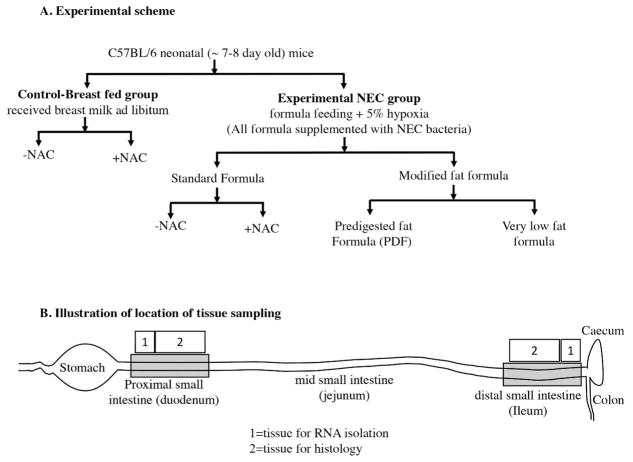
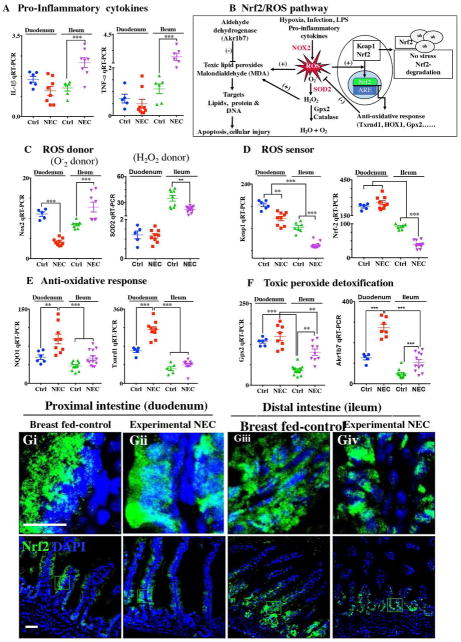
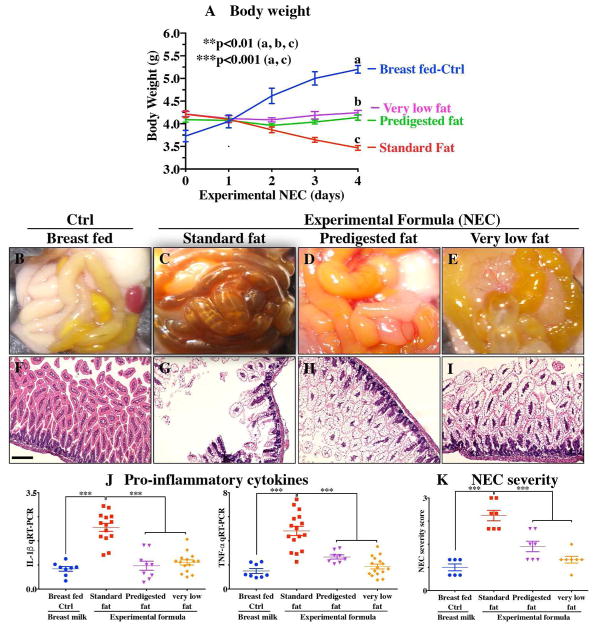
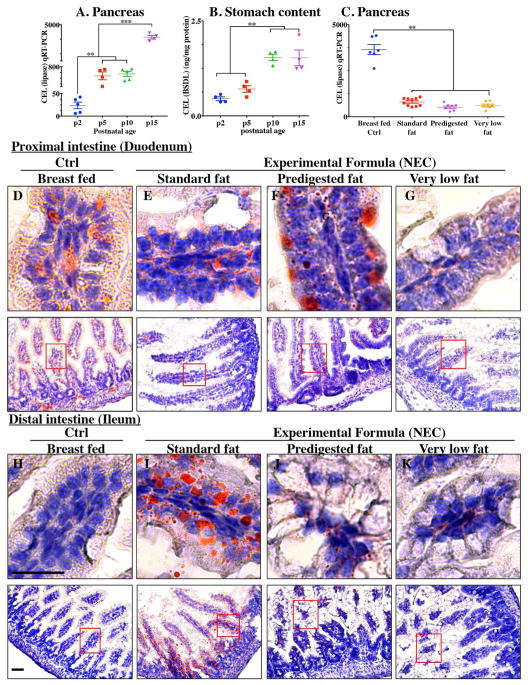
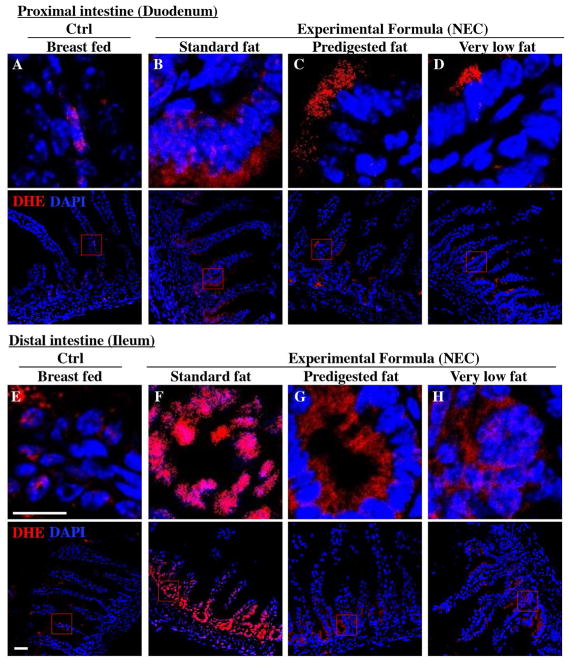
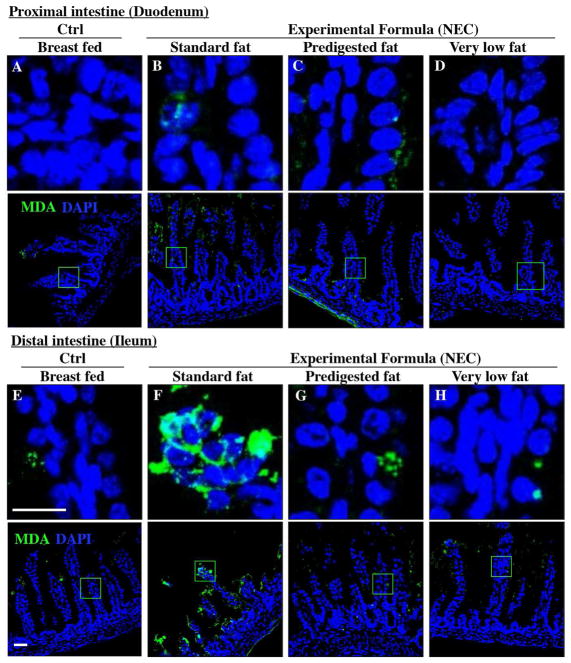
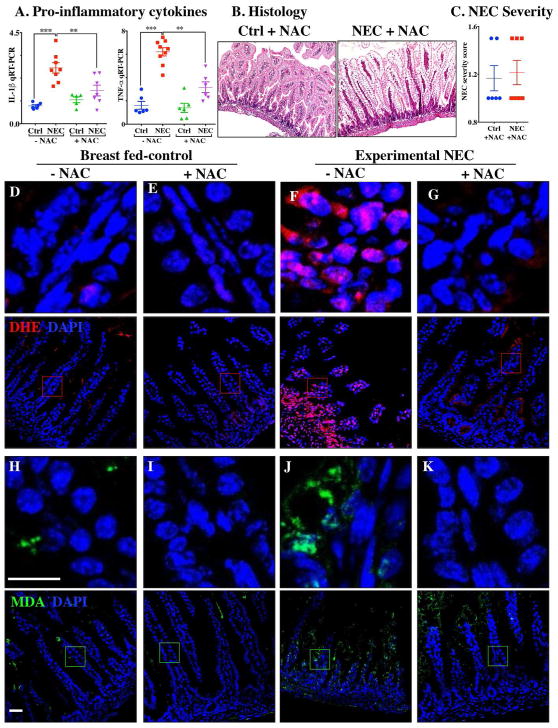
Necrotising enterocolitis (NEC) is a devastating disease that typically affects formula-fed premature infants, suggesting that dietary components may influence disease pathogenesis. TAG are the major fat components of infant formula, and their digestion requires pancreatic lipases, which may be naturally deficient in premature neonates. We hypothesise that NEC develops partly from the accumulation of incompletely digested long-chain TAG-containing unsaturated fatty acids within the intestinal epithelial cells, leading to oxidative stress and enterocyte damage. We further hypothesise that the administration of a formula that contains reduced TAG ('pre-digested fat') that do not require lipase action may reduce NEC severity. To test these hypotheses, we induced NEC in neonatal mice using three different fat formulations, namely 'standard fat', 'pre-digested fat' or 'very low fat', and determined that mice fed 'standard fat' developed severe NEC, which was significantly reduced in mice fed 'pre-digested fat' or 'very low fat'. The expression level of the critical fat-digesting enzyme carboxyl ester lipase was significantly lower in the newborn compared with older pups, leading to impaired fat digestion. The accumulation of mal-digested fat resulted in the significant accumulation of fat droplets within the intestinal epithelium of the distal ileum, resulting in the generation of reactive oxygen species and intestinal inflammation. Strikingly, these changes were prevented in pups fed 'pre-digested fat' or 'very low fat' formulas. These findings suggest that nutritional formula containing a pre-digested fat system may overcome the natural lipase deficiency of the premature gut, and serve as a novel approach to prevent NEC.
坏死性小肠结肠炎(NEC)是一种破坏性疾病,通常影响配方奶喂养的早产儿,这表明饮食成分可能影响疾病的发病机制。TAG 是婴儿配方奶粉的主要脂肪成分,其消化需要胰脂肪酶,而早产儿的胰脂肪酶可能天生不足。我们假设,NEC 的部分发病机制是由于不完全消化的长链含不饱和脂肪酸的 TAG 在肠上皮细胞内积累,导致氧化应激和肠细胞损伤。我们进一步假设,给予含有不需要脂肪酶作用的减少的 TAG(“预消化脂肪”)的配方奶粉可能会降低 NEC 的严重程度。为了验证这些假设,我们使用三种不同的脂肪配方(即“标准脂肪”、“预消化脂肪”或“极低脂肪”)在新生小鼠中诱导 NEC,并确定喂养“标准脂肪”的小鼠发生严重的 NEC,而喂养“预消化脂肪”或“极低脂肪”的小鼠的 NEC 明显减轻。与较大小鼠相比,新生小鼠中关键脂肪消化酶羧基酯脂肪酶的表达水平显著降低,导致脂肪消化受损。未消化的脂肪积累导致脂肪滴在回肠远端肠上皮内大量积聚,导致活性氧的产生和肠道炎症。引人注目的是,这些变化在喂养“预消化脂肪”或“极低脂肪”配方的幼鼠中得到了预防。这些发现表明,含有预消化脂肪系统的营养配方可能克服早产儿肠道的天然脂肪酶缺乏,并成为预防 NEC 的一种新方法。