Li Qian-Qian, Li Lan-Jun, Wang Xin-Yu, Sun Yu-Ying, Wu Jun
Department of Neurology, The First Affiliated Hospital of Zhengzhou University, Zhengzhou University, Zhengzhou, China.
Front Neurol. 2018 Aug 20;9:682. doi: 10.3389/fneur.2018.00682. eCollection 2018.
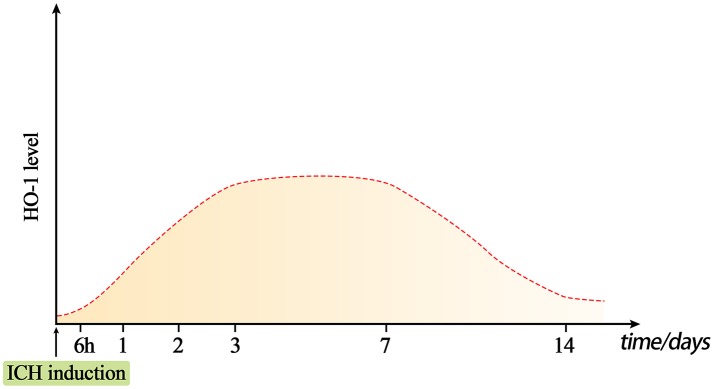
Intracerebral hemorrhage (ICH) is a fatal acute cerebrovascular disease, with a high morbidity and mortality. Following ICH, erythrocytes release heme and several of its metabolites, thereby contributing to brain edema and secondary brain damage. Heme oxygenase is the initial and rate-limiting enzyme of heme catabolism, and the expression of heme oxygenase-1 (HO-1) is rapidly induced following acute brain injury. As HO-1 exerts it effects via various metabolites, its role during ICH remains complex. Therefore, in-depth studies regarding the role of HO-1 in secondary brain damage following ICH may provide a theoretical basis for neuroprotective function after ICH. The present review aims to summarize recent key studies regarding the effects of HO-1 following ICH, as well as its influence on ICH prognosis.
脑出血(ICH)是一种致命的急性脑血管疾病,发病率和死亡率都很高。脑出血后,红细胞释放血红素及其几种代谢产物,从而导致脑水肿和继发性脑损伤。血红素加氧酶是血红素分解代谢的起始和限速酶,急性脑损伤后血红素加氧酶-1(HO-1)的表达会迅速被诱导。由于HO-1通过各种代谢产物发挥作用,其在脑出血期间的作用仍然很复杂。因此,深入研究HO-1在脑出血后继发性脑损伤中的作用可能为脑出血后的神经保护功能提供理论依据。本综述旨在总结近期关于脑出血后HO-1的作用及其对脑出血预后影响的关键研究。