State Key Laboratory of Pharmaceutical Biotechnology, School of Life Sciences, Nanjing University, Nanjing, China.
Center for New Drug Pharmacological Research of Lunan Pharmaceutical Group, State Key Laboratory, Generic Manufacture Technology of Chinese Traditional Medicine, Linyi, China.
Front Immunol. 2018 Aug 16;9:1881. doi: 10.3389/fimmu.2018.01881. eCollection 2018.
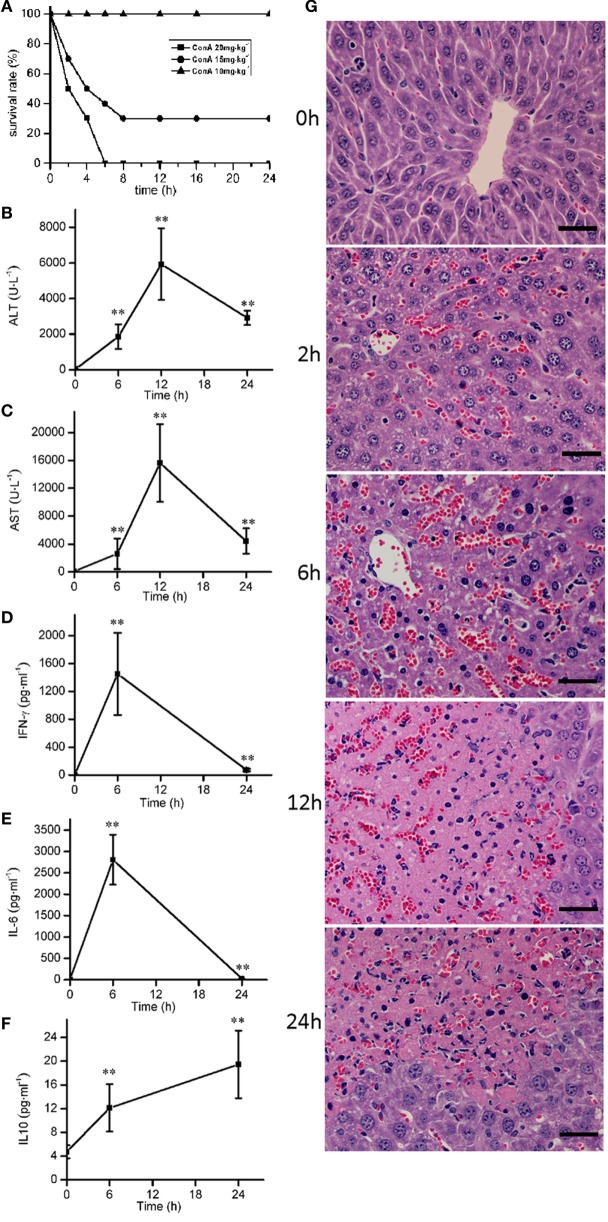
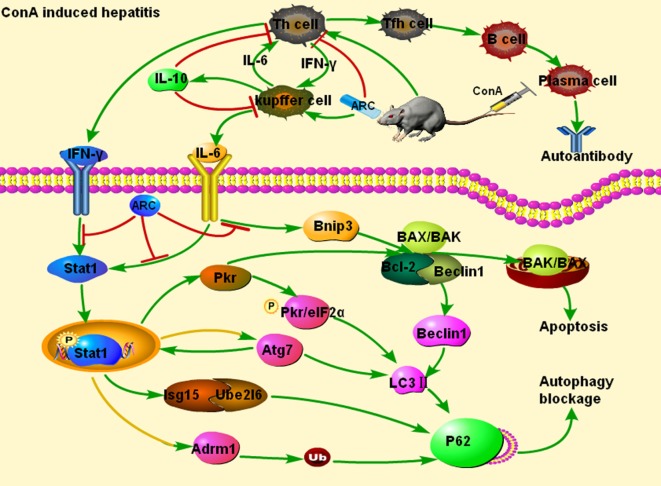
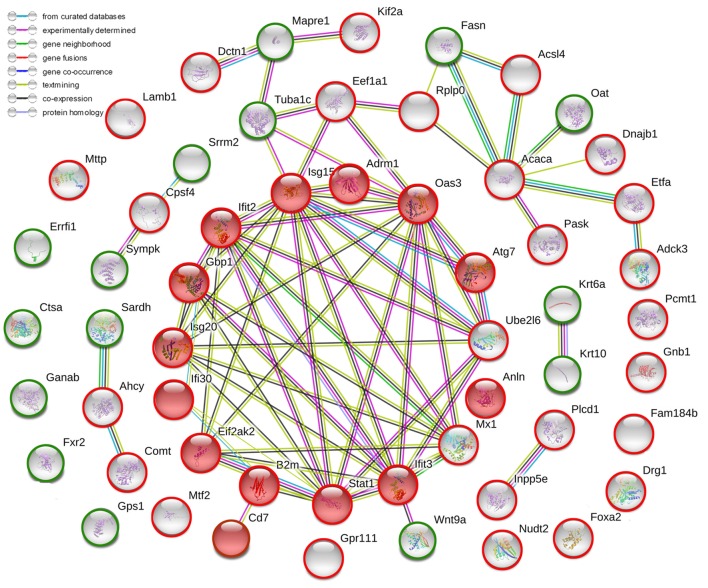
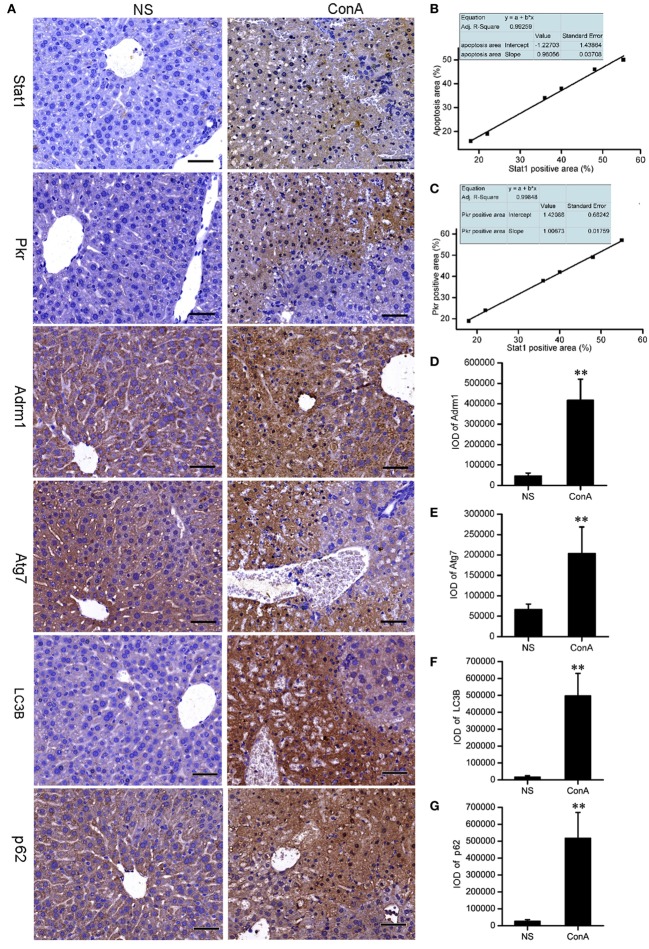
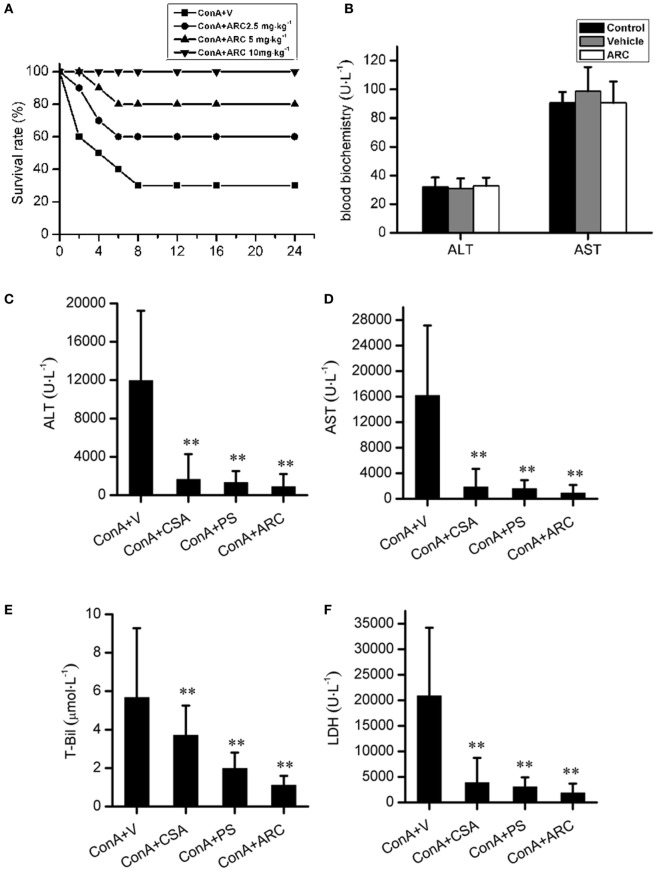
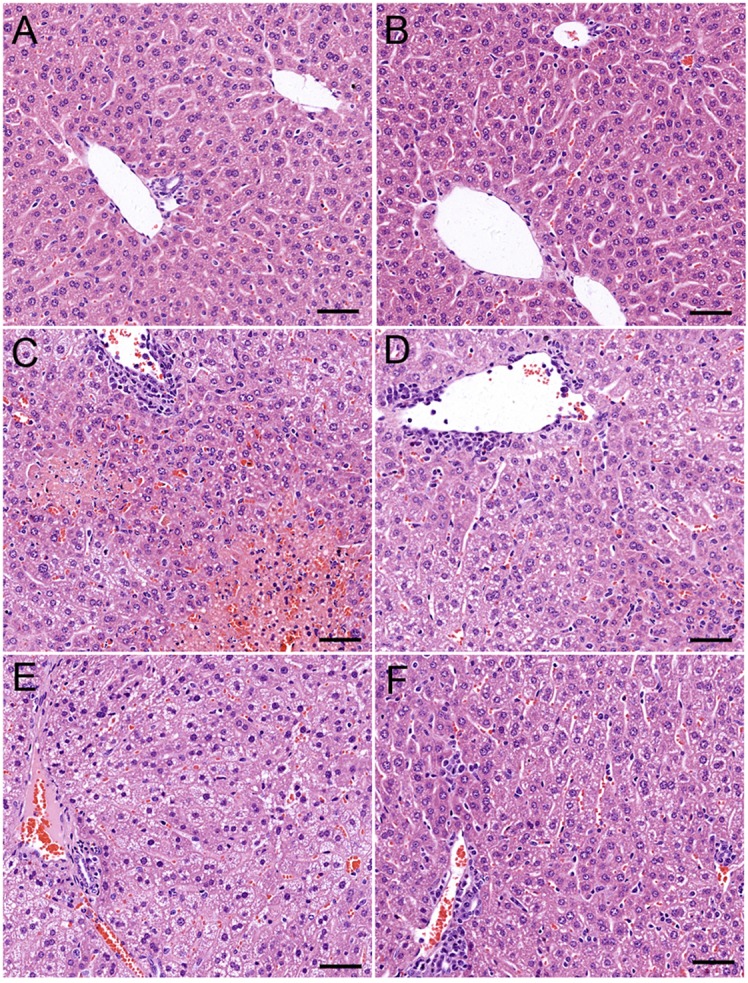
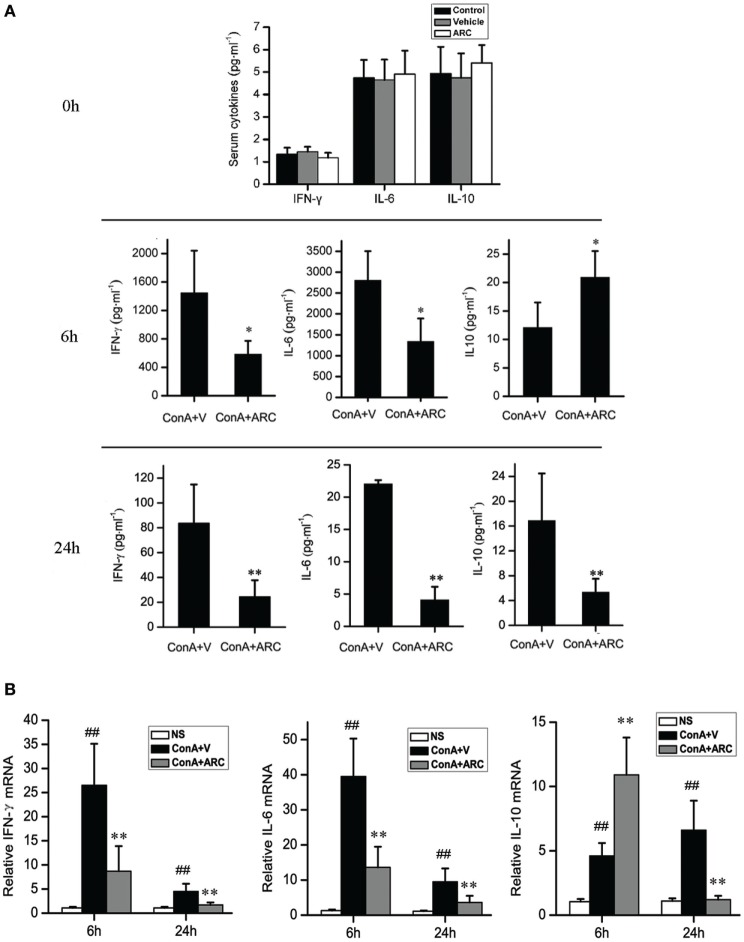
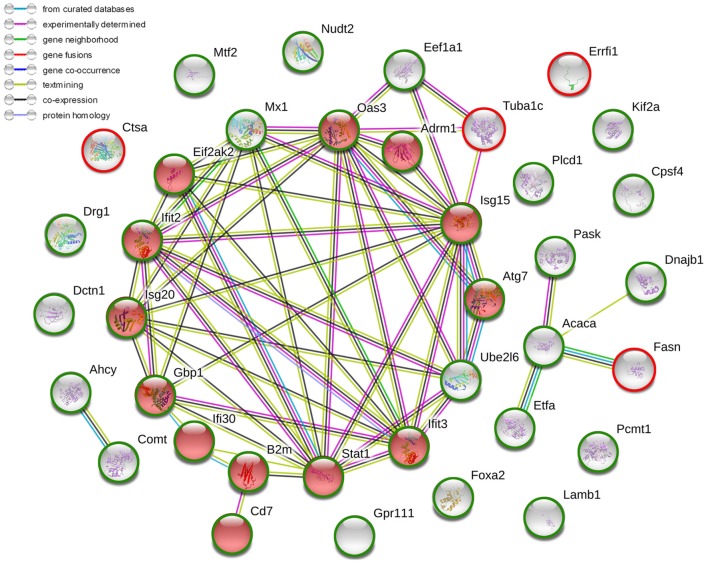
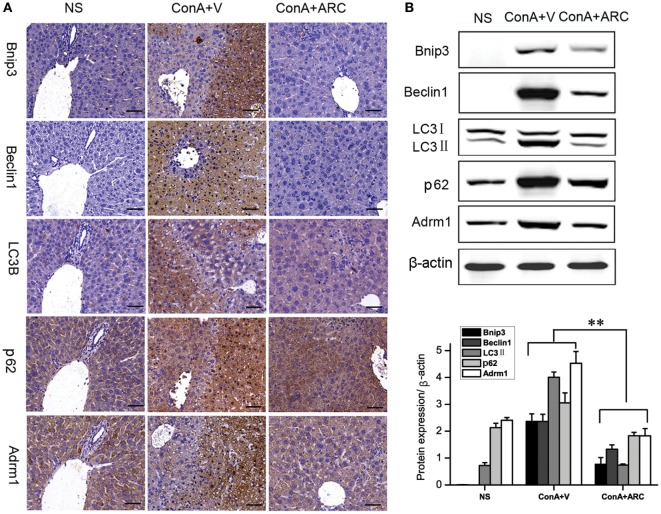
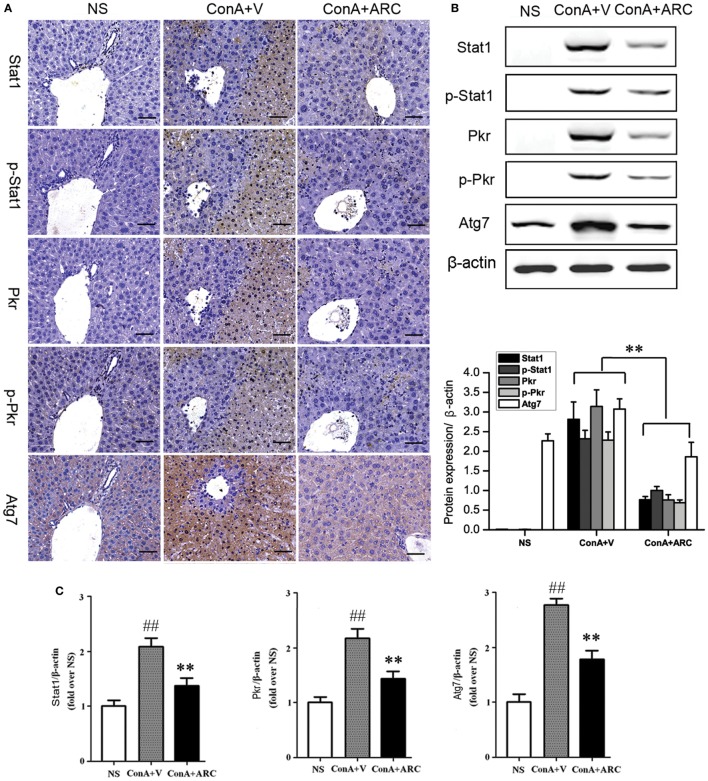
Concanavalin A-induced autoimmune hepatitis is a well-established experimental model for immune-mediated liver injury. It has been widely used in the therapeutic studies of immune hepatitis. The in-depth analysis of dysregulated proteins from comparative proteomic results indicated that the activation of immune system resulted in the deregulation of autophagy. Follow-up studies validated that some immune related proteins, including Stat1, Pkr, Atg7, and Adrm1, were indeed upregulated. The accumulations of LC3B-II and p62 were confirmed by immunohistochemistry and Western blot analyses. Arctigenin pretreatment significantly alleviated the liver injury, as evidenced by biochemical and histopathological investigations, whose protective effects were comparable with Prednisone acetate and Cyclosporin A. Arctigenin pretreatment decreased the levels of IL-6 and IFN-γ, but increased the ones of IL-10. Next, the quantitative proteomic analysis demonstrated that ARC pretreatment suppressed the activation of immune system through the inhibition of IFN-γ signaling, when it downregulated the protein expressions of Stat1, P-Stat1, Pkr, P-Pkr, Bnip3, Beclin1, Atg7, LC3B, Adrm1, and p62. Meanwhile, Arctigenin pretreatment also reduced the gene expressions of Stat1, Pkr, and Atg7. These results suggested that Arctigenin alleviated autophagy as well as apoptosis through inhibiting IFN-γ/IL-6/Stat1 pathway and IL-6/Bnip3 pathway. In summary, the comparative proteomic analysis revealed that the activation of immune system led to Concanavalin A-induced hepatitis. Both autophagy and apoptosis had important clinical implications for the treatment of immune hepatitis. Arctigenin might exert great therapeutic potential in immune-mediated liver injury.
刀豆球蛋白 A 诱导的自身免疫性肝炎是一种成熟的免疫介导性肝损伤的实验模型。它已被广泛应用于免疫性肝炎的治疗研究。通过比较蛋白质组学结果的失调蛋白进行深入分析表明,免疫系统的激活导致自噬失调。后续研究验证了一些免疫相关蛋白,包括 Stat1、Pkr、Atg7 和 Adrm1,确实上调。免疫组化和 Western blot 分析证实 LC3B-II 和 p62 的积累。牛蒡子苷元预处理显著减轻了肝损伤,这可通过生化和组织病理学研究来证实,其保护作用与泼尼松龙和环孢素 A 相当。牛蒡子苷元预处理降低了 IL-6 和 IFN-γ 的水平,但增加了 IL-10 的水平。接下来,定量蛋白质组学分析表明,ARC 预处理通过抑制 IFN-γ 信号通路来抑制免疫系统的激活,从而下调 Stat1、P-Stat1、Pkr、P-Pkr、Bnip3、Beclin1、Atg7、LC3B、Adrm1 和 p62 的蛋白表达。同时,牛蒡子苷元预处理也降低了 Stat1、Pkr 和 Atg7 的基因表达。这些结果表明,牛蒡子苷元通过抑制 IFN-γ/IL-6/Stat1 通路和 IL-6/Bnip3 通路,减轻自噬和凋亡。综上所述,比较蛋白质组学分析表明,免疫系统的激活导致刀豆球蛋白 A 诱导的肝炎。自噬和凋亡对免疫性肝炎的治疗具有重要的临床意义。牛蒡子苷元可能在免疫介导性肝损伤中具有很大的治疗潜力。