The Institute of Cancer Research, London, United Kingdom.
The Royal Marsden, London, United Kingdom.
J Clin Invest. 2018 Oct 1;128(10):4441-4453. doi: 10.1172/JCI121924. Epub 2018 Sep 4.
Understanding the integrated immunogenomic landscape of advanced prostate cancer (APC) could impact stratified treatment selection.
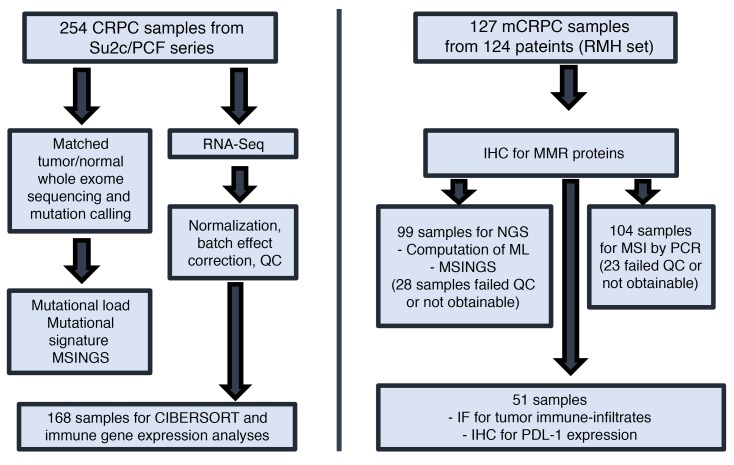
Defective mismatch repair (dMMR) status was determined by either loss of mismatch repair protein expression on IHC or microsatellite instability (MSI) by PCR in 127 APC biopsies from 124 patients (Royal Marsden [RMH] cohort); MSI by targeted panel next-generation sequencing (MSINGS) was then evaluated in the same cohort and in 254 APC samples from the Stand Up To Cancer/Prostate Cancer Foundation (SU2C/PCF). Whole exome sequencing (WES) data from this latter cohort were analyzed for pathogenic MMR gene variants, mutational load, and mutational signatures. Transcriptomic data, available for 168 samples, was also performed.
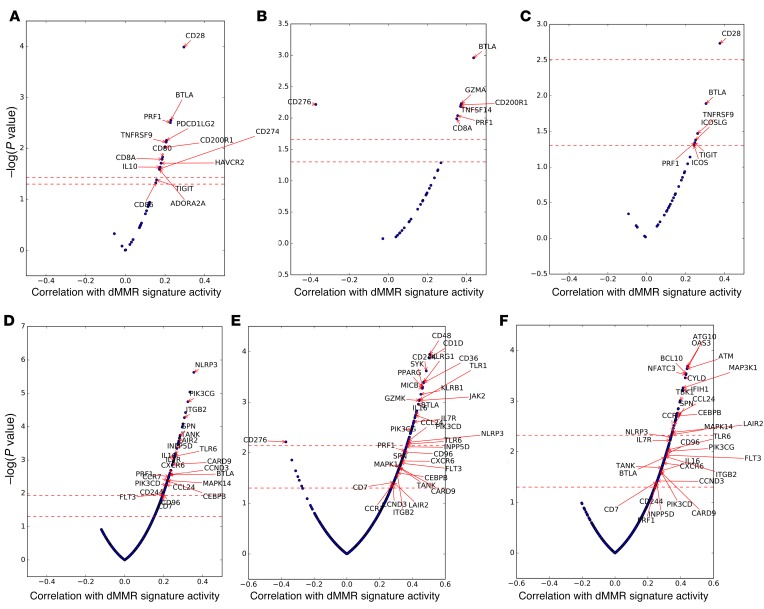
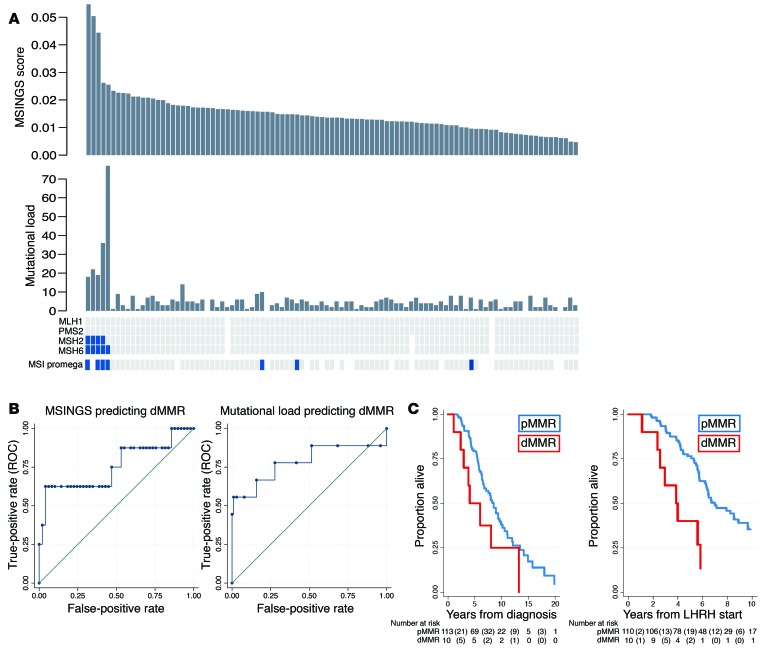
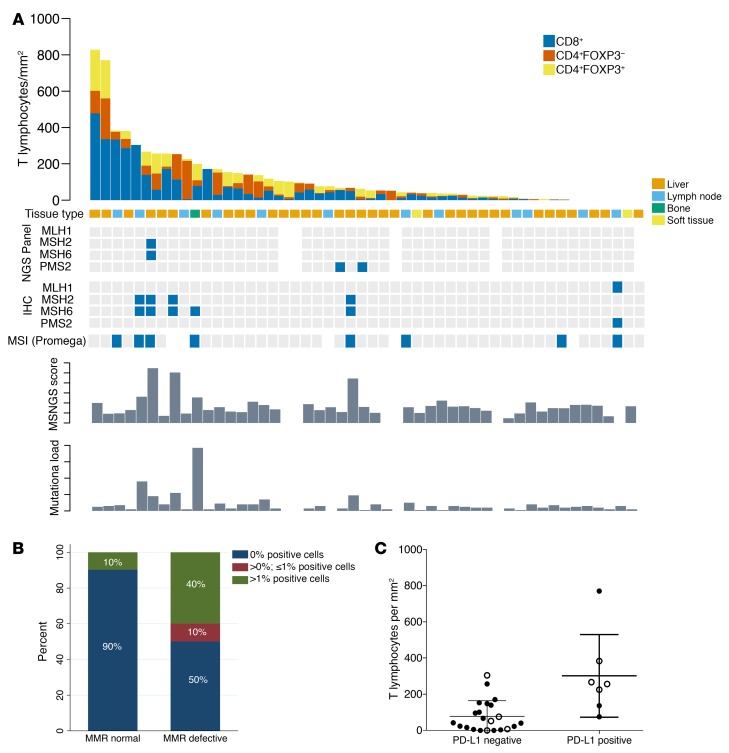
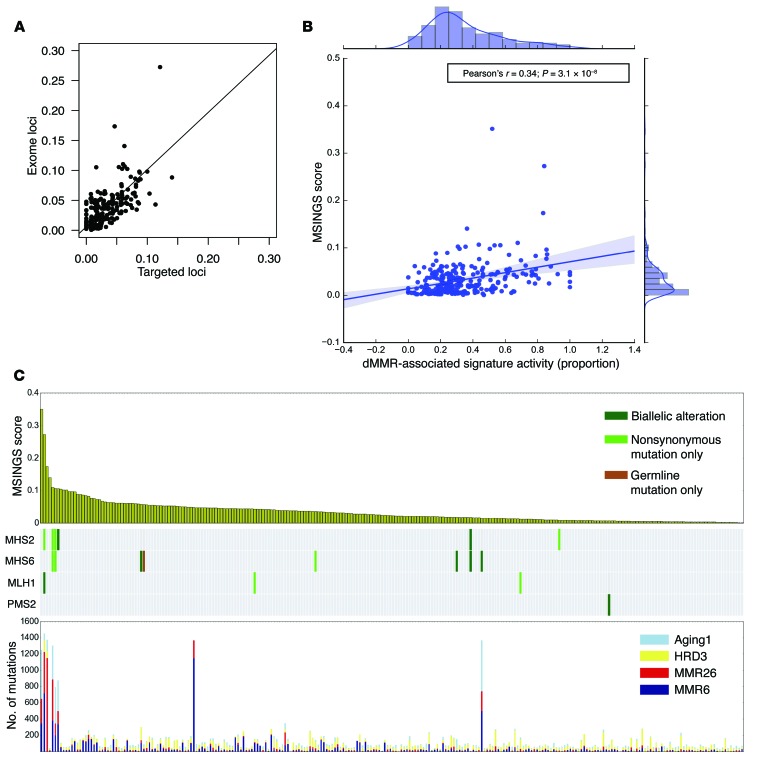
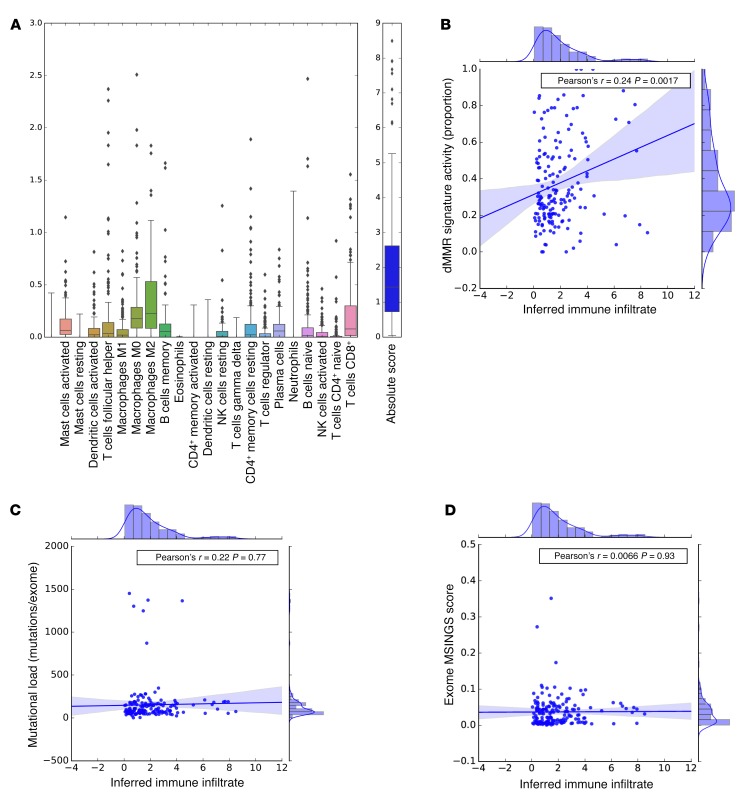
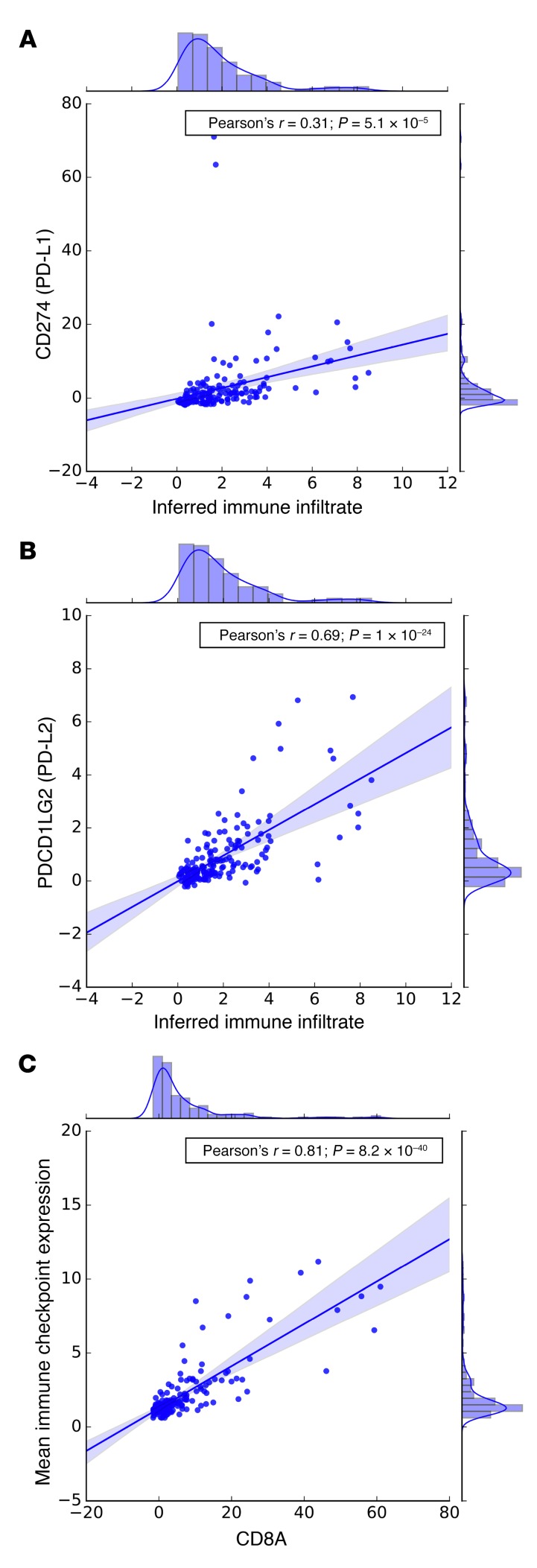
Overall, 8.1% of patients in the RMH cohort had some evidence of dMMR, which associated with decreased overall survival. Higher MSINGS scores associated with dMMR, and these APCs were enriched for higher T cell infiltration and PD-L1 protein expression. Exome MSINGS scores strongly correlated with targeted panel MSINGS scores (r = 0.73, P < 0.0001), and higher MSINGS scores associated with dMMR mutational signatures in APC exomes. dMMR mutational signatures also associated with MMR gene mutations and increased immune cell, immune checkpoint, and T cell-associated transcripts. APC with dMMR mutational signatures overexpressed a variety of immune transcripts, including CD200R1, BTLA, PD-L1, PD-L2, ADORA2A, PIK3CG, and TIGIT.
These data could impact immune target selection, combination therapeutic strategy selection, and selection of predictive biomarkers for immunotherapy in APC.
We acknowledge funding support from Movember, Prostate Cancer UK, The Prostate Cancer Foundation, SU2C, and Cancer Research UK.
了解晚期前列腺癌(APC)的综合免疫基因组图谱可能会影响分层治疗选择。
在 124 名患者的 127 份 APC 活检样本中(皇家马斯登 [RMH] 队列),通过免疫组化检测错配修复蛋白缺失或通过 PCR 检测微卫星不稳定性(MSI)确定缺陷性错配修复(dMMR)状态;然后在同一队列和来自癌症研究协会/前列腺癌基金会的 254 份 APC 样本中评估靶向面板下一代测序(MSINGS)的 MSI;对后一队列的全外显子组测序(WES)数据进行分析,以确定致病性 MMR 基因突变、突变负荷和突变特征。还对 168 份样本的转录组数据进行了分析。
总体而言,RMH 队列中有 8.1%的患者存在一定程度的 dMMR,这与总生存时间缩短有关。较高的 MSINGS 评分与 dMMR 相关,这些 APC 中 T 细胞浸润和 PD-L1 蛋白表达增加。外显子组 MSINGS 评分与靶向面板 MSINGS 评分密切相关(r = 0.73,P < 0.0001),并且 APC 外显子组中较高的 MSINGS 评分与 dMMR 突变特征相关。dMMR 突变特征也与 MMR 基因突变和增加的免疫细胞、免疫检查点和 T 细胞相关转录物相关。具有 dMMR 突变特征的 APC 过度表达多种免疫转录物,包括 CD200R1、BTLA、PD-L1、PD-L2、ADORA2A、PIK3CG 和 TIGIT。
这些数据可能会影响 APC 中免疫治疗靶点的选择、联合治疗策略的选择以及免疫治疗预测生物标志物的选择。
我们感谢 Movember、英国前列腺癌协会、前列腺癌基金会、SU2C 和英国癌症研究协会的资助。