Zhang Yong, Duan Fuhong, Ma Wuhua
Department of Anesthesiology, The First Affiliated Hospital of Guangzhou University of Chinese Medicine, 16# Jichang Road, Guangzhou, 510405, China.
Department of MRI, The First Affiliated Hospital of Zhengzhou University, No. 1, Jianshe East Road, Zhengzhou, 450052, China.
BMC Anesthesiol. 2018 Sep 5;18(1):123. doi: 10.1186/s12871-018-0589-2.
Continuous hiccups during surgery not only affect the surgical procedure, they can also cause adverse effects for the patient. Apart from active investigation of the cause of the hiccups, their timely termination is also necessary.
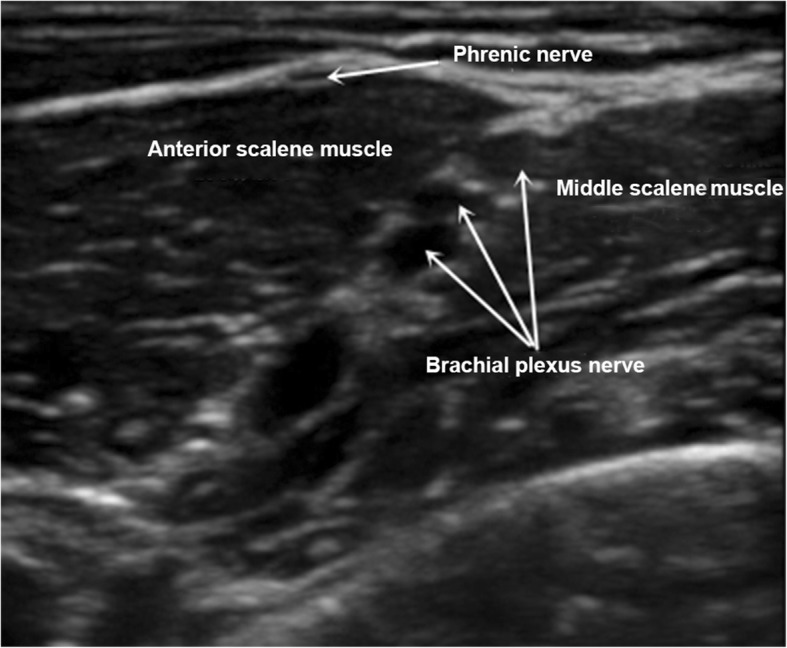
We reported a case of a 70-year-old woman with continuous intraoperative hiccups that appeared during vaginal hysterectomy under low continuous epidural anesthesia. After the ineffectiveness CO repeated inhalation and intravenous administration of chlorpromazine and methoxychlorpromide, we performed unilateral phrenic nerve block under ultrasound guidance. Hiccups were terminated without any related complications.
During intraoperative continuous hiccups, ultrasound guided phrenic nerve block may be a suitable treatment option when physical methods and drug therapy are not effective. However, given the absence of a vital risk related to hiccups, this block should imply the complete absence of any respiratory contraindication and a prolonged postoperative respiratory monitoring.
手术期间持续性呃逆不仅会影响手术进程,还会给患者带来不良影响。除了积极探究呃逆的原因外,及时终止呃逆也很有必要。
我们报告了一例70岁女性患者,在低位连续硬膜外麻醉下行阴式子宫切除术时出现术中持续性呃逆。在重复吸入二氧化碳以及静脉注射氯丙嗪和甲氧氯普胺无效后,我们在超声引导下实施了单侧膈神经阻滞。呃逆终止,未出现任何相关并发症。
术中出现持续性呃逆时,当物理方法和药物治疗无效时,超声引导下膈神经阻滞可能是一种合适的治疗选择。然而,鉴于呃逆不存在重大风险,这种阻滞应意味着完全不存在任何呼吸禁忌证,并且术后需要延长呼吸监测时间。