Cardiovascular Research Center, School of Medical Sciences, Örebro University Södra Grev Rosengatan 32, 703 62, Örebro, Sweden.
Present address: Department of Biochemistry and Molecular Biology, Faculty of Medicine, Dalhousie University, Dalhousie Medicine New Brunswick, Saint John, NB, E2L 4L5, Canada.
Cell Commun Signal. 2018 Sep 5;16(1):55. doi: 10.1186/s12964-018-0268-4.
IL-6 classic signaling is linked to anti-inflammatory functions while the trans-signaling is associated with pro-inflammatory responses. Classic signaling is induced via membrane-bound IL-6 receptor (IL-6R) whereas trans-signaling requires prior binding of IL-6 to the soluble IL-6R. In both cases, association with the signal transducing gp130 receptor is compulsory. However, differences in the downstream signaling mechanisms of IL-6 classic- versus trans-signaling remains largely elusive.
In this study, we used flow cytometry, quantitative PCR, ELISA and immuno-blotting techniques to investigate IL-6 classic and trans-signaling mechanisms in Human Umbilical Vein Endothelial Cells (HUVECs).
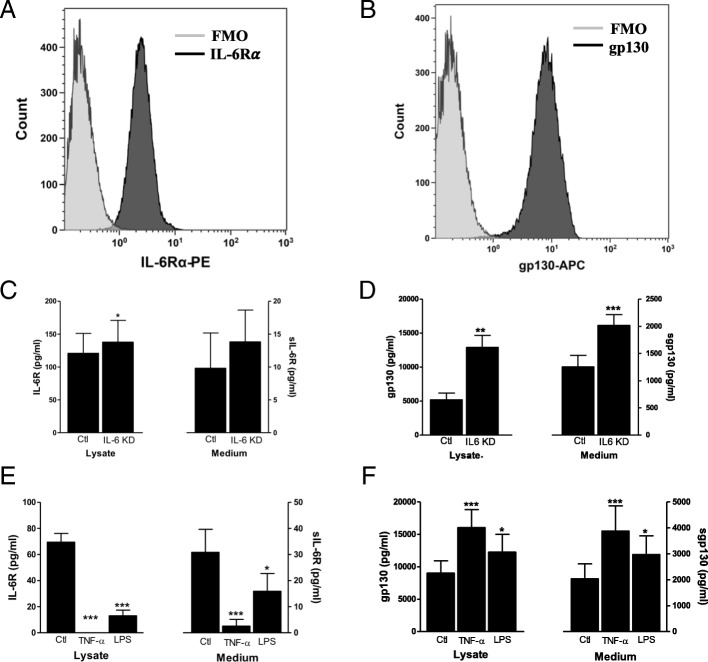
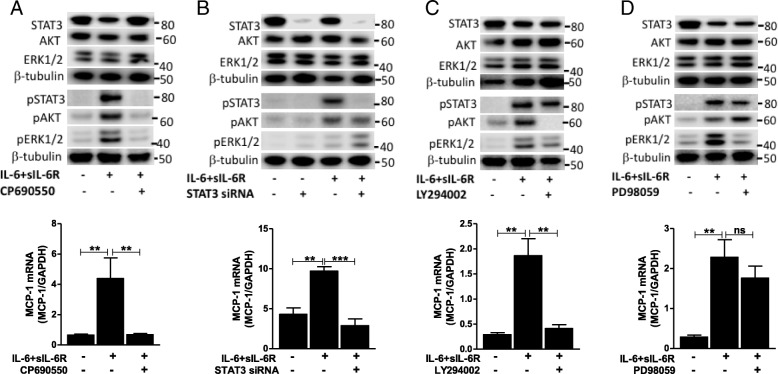
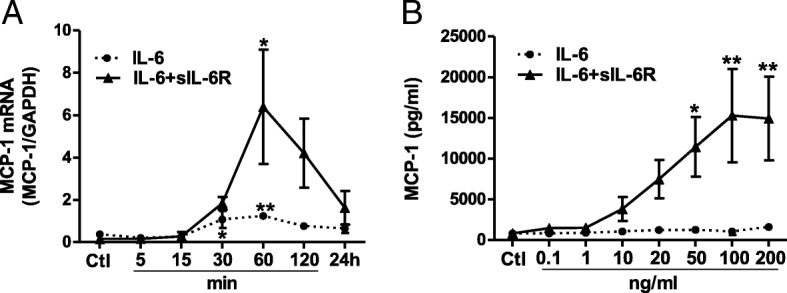
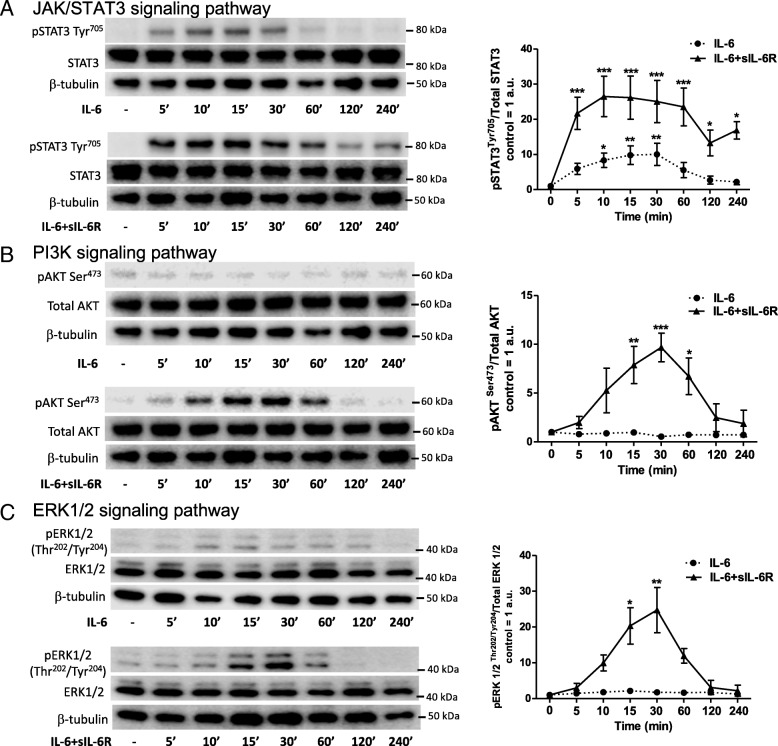
We show that both IL-6R and gp130 are expressed on the surface of human vascular endothelial cells, and that the expression is affected by pro-inflammatory stimuli. In contrast to IL-6 classic signaling, IL-6 trans-signaling induces the release of the pro-inflammatory chemokine Monocyte Chemoattractant Protein-1 (MCP-1) from human vascular endothelial cells. In addition, we reveal that the classic signaling induces activation of the JAK/STAT3 pathway while trans-signaling also activates the PI3K/AKT and the MEK/ERK pathways. Furthermore, we demonstrate that MCP-1 induction by IL-6 trans-signaling requires simultaneous activation of the JAK/STAT3 and PI3K/AKT pathways.
Collectively, our study reports molecular differences in IL-6 classic- and trans-signaling in human vascular endothelial cells; and elucidates the pathways which mediate MCP-1 induction by IL-6 trans-signaling.
IL-6 经典信号与抗炎功能有关,而转信号与促炎反应有关。经典信号通过膜结合的 IL-6 受体(IL-6R)诱导,而转信号需要 IL-6 预先与可溶性 IL-6R 结合。在这两种情况下,与信号转导 gp130 受体的关联都是强制性的。然而,IL-6 经典信号与转信号的下游信号机制之间的差异在很大程度上仍难以捉摸。
在这项研究中,我们使用流式细胞术、定量 PCR、ELISA 和免疫印迹技术来研究人脐静脉内皮细胞(HUVEC)中的 IL-6 经典和转信号机制。
我们表明,IL-6R 和 gp130 都表达在人血管内皮细胞的表面,并且表达受促炎刺激的影响。与 IL-6 经典信号不同,IL-6 转信号诱导人血管内皮细胞释放促炎趋化因子单核细胞趋化蛋白-1(MCP-1)。此外,我们揭示经典信号诱导 JAK/STAT3 途径的激活,而转信号也激活 PI3K/AKT 和 MEK/ERK 途径。此外,我们证明 IL-6 转信号诱导 MCP-1 的诱导需要 JAK/STAT3 和 PI3K/AKT 途径的同时激活。
总之,我们的研究报告了人血管内皮细胞中 IL-6 经典信号与转信号之间的分子差异;并阐明了介导 IL-6 转信号诱导 MCP-1 的途径。