Department of Microbiology and Immunology. University of Michigan Medical School, Ann Arbor, Michigan, USA.
Center for Biologics Evaluation and Research, U.S. Food and Drug Administration, Silver Spring, Maryland, USA.
mSphere. 2018 Sep 5;3(5):e00335-18. doi: 10.1128/mSphere.00335-18.
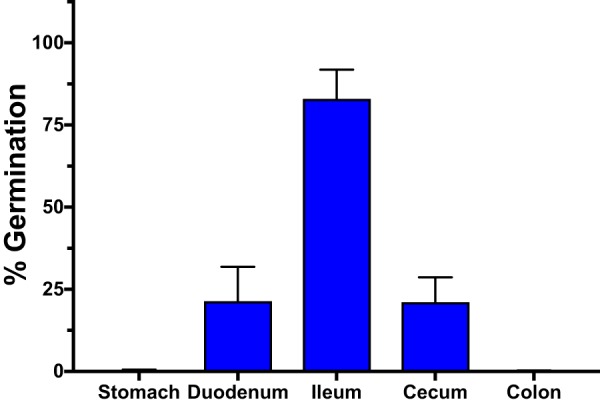
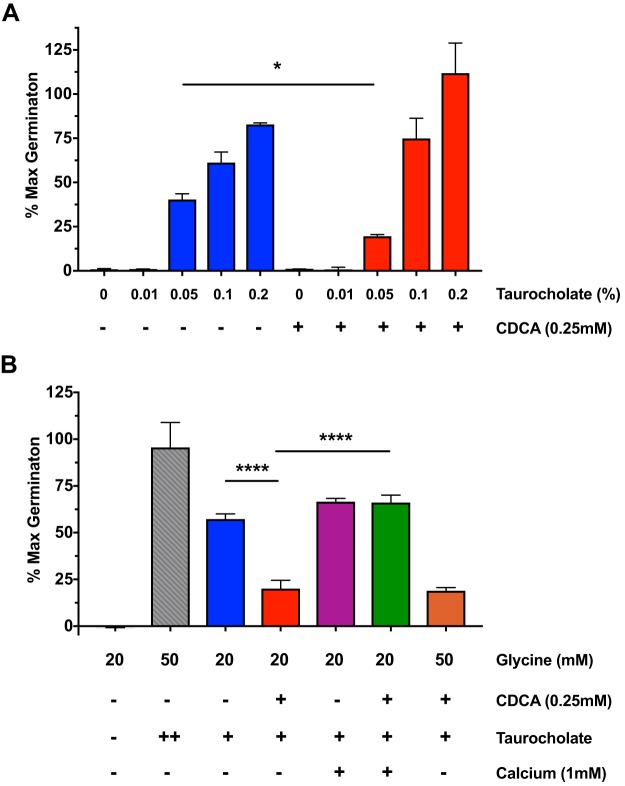
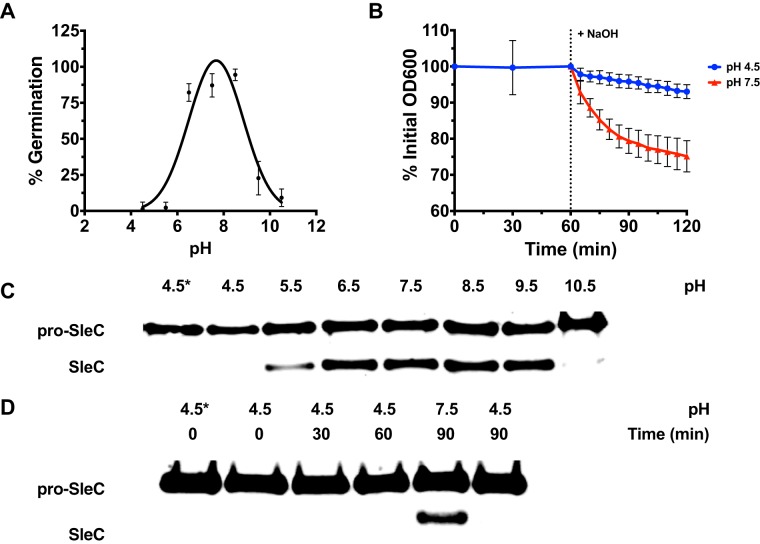
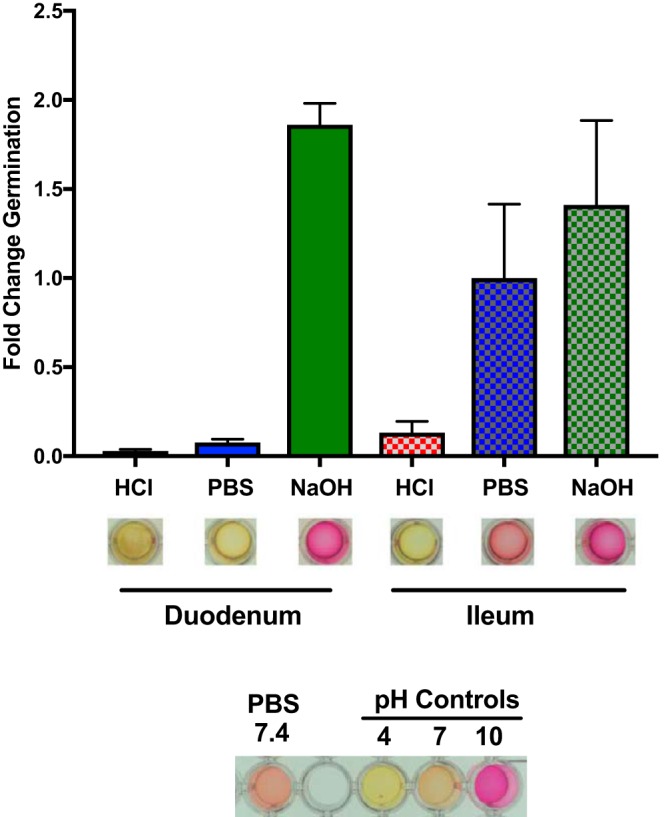
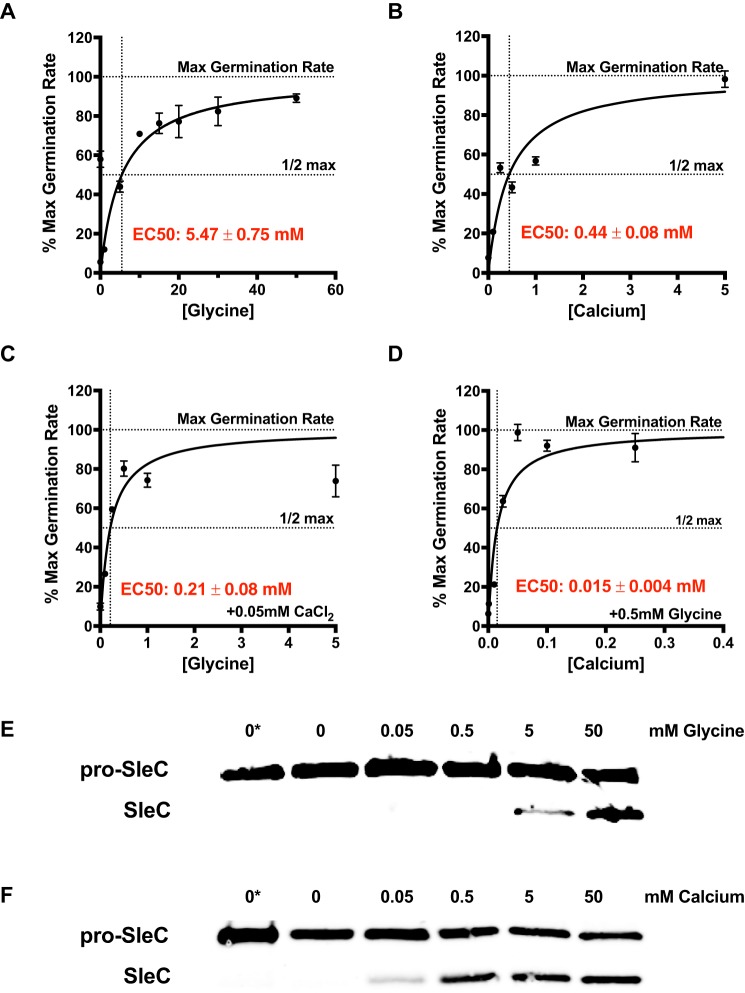
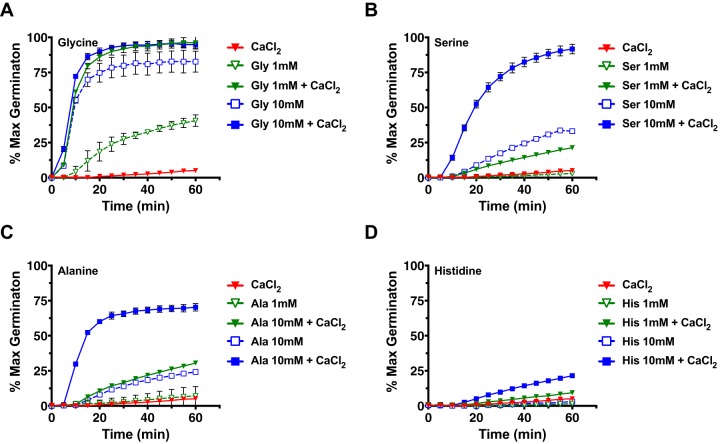
is a Gram-positive obligate anaerobe that forms spores in order to survive for long periods in the unfavorable environment outside a host. is the leading cause of nosocomial infectious diarrhea worldwide. infection (CDI) arises after a patient treated with broad-spectrum antibiotics ingests infectious spores. The first step in pathogenesis is the metabolic reactivation of dormant spores within the gastrointestinal (GI) tract through a process known as germination. In this work, we aim to elucidate the specific conditions and the location within the GI tract that facilitate this process. Our data suggest that germination occurs through a two-step biochemical process that is regulated by pH and bile salts, amino acids, and calcium present within the GI tract. Maximal germination occurs at a pH ranging from 6.5 to 8.5 in the terminal small intestine prior to bile salt and calcium reabsorption by the host. Germination can be initiated by lower concentrations of germinants when spores are incubated with a combination of bile salts, calcium, and amino acids, and this synergy is dependent on the availability of calcium. The synergy described here allows germination to proceed in the presence of inhibitory bile salts and at physiological concentrations of germinants, effectively decreasing the concentrations of nutrients required to initiate an essential step of pathogenesis. is an anaerobic spore-forming human pathogen that is the leading cause of nosocomial infectious diarrhea worldwide. Germination of infectious spores is the first step in the development of a infection (CDI) after ingestion and passage through the stomach. This study investigates the specific conditions that facilitate spore germination, including the following: location within the gastrointestinal (GI) tract, pH, temperature, and germinant concentration. The germinants that have been identified in culture include combinations of bile salts and amino acids or bile salts and calcium, but , these function at concentrations that far exceed normal physiological ranges normally found in the mammalian GI tract. In this work, we describe and quantify a previously unreported synergy observed when bile salts, calcium, and amino acids are added together. These germinant cocktails improve germination efficiency by decreasing the required concentrations of germinants to physiologically relevant levels. Combinations of multiple germinant types are also able to overcome the effects of inhibitory bile salts. In addition, we propose that the acidic conditions within the GI tract regulate spore germination and could provide a biological explanation for why patients taking proton pump inhibitors are associated with increased risk of developing a CDI.
艰难梭菌是一种革兰氏阳性专性厌氧菌,为了在宿主外不利的环境中长期存活,它会形成孢子。艰难梭菌是全球医院内感染性腹泻的主要病因。艰难梭菌感染(CDI)是在接受广谱抗生素治疗的患者摄入感染性孢子后发生的。其发病机制的第一步是通过称为发芽的过程使胃肠道(GI)内休眠的孢子进行新陈代谢再激活。在这项工作中,我们旨在阐明促进这一过程的具体条件和 GI 道内的位置。我们的数据表明,艰难梭菌的发芽是通过一个受 pH 值和胆盐、氨基酸和钙等 GI 道内存在的物质调节的两步生化过程进行的。最大发芽发生在小肠末端,pH 值在 6.5 到 8.5 之间,在此之前,宿主会吸收胆盐和钙。当孢子与胆盐、钙和氨基酸组合孵育时,较低浓度的发芽剂即可启动发芽,并且这种协同作用取决于钙的可用性。这里描述的协同作用允许在抑制性胆盐和生理浓度的发芽剂存在的情况下进行发芽,从而有效地降低了启动发病机制的必要步骤所需的营养物质浓度。艰难梭菌是一种能形成孢子的人类厌氧病原体,是全球医院内感染性腹泻的主要病因。感染性孢子的发芽是摄入并通过胃部后发生艰难梭菌感染(CDI)的第一步。本研究调查了促进艰难梭菌孢子发芽的具体条件,包括以下方面:在胃肠道(GI)道内的位置、pH 值、温度和发芽剂浓度。在培养中已经鉴定出的发芽剂包括胆盐和氨基酸或胆盐和钙的组合,但这些物质的作用浓度远远超过哺乳动物 GI 道中通常发现的正常生理范围。在这项工作中,我们描述并量化了以前未报道的当添加胆盐、钙和氨基酸时观察到的协同作用。这些发芽剂鸡尾酒通过降低所需的发芽剂浓度到生理相关水平来提高发芽效率。多种发芽剂类型的组合也能够克服抑制性胆盐的作用。此外,我们提出 GI 道内的酸性条件调节艰难梭菌的孢子发芽,并为为什么服用质子泵抑制剂的患者患 CDI 的风险增加提供了生物学解释。