Schroter Sara, Price Amy, Flemyng Ella, Demaine Andrew, Elliot Jim, Harmston Rebecca R, Richards Tessa, Staniszewska Sophie, Stephens Richard
BMJ, London, UK.
Department of Continuing Education, University of Oxford, Oxford, UK.
BMJ Open. 2018 Sep 5;8(9):e023357. doi: 10.1136/bmjopen-2018-023357.
In 2014/2015, and () became the first journals to routinely include patients and the public in the peer review process of journal articles. This survey explores the perspectives and early experiences of these reviewers.
A cross-sectional survey.
Patient and public reviewers for and who have been invited to review.
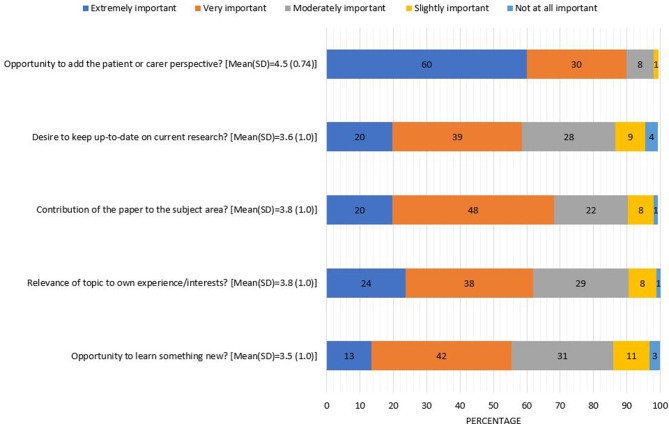
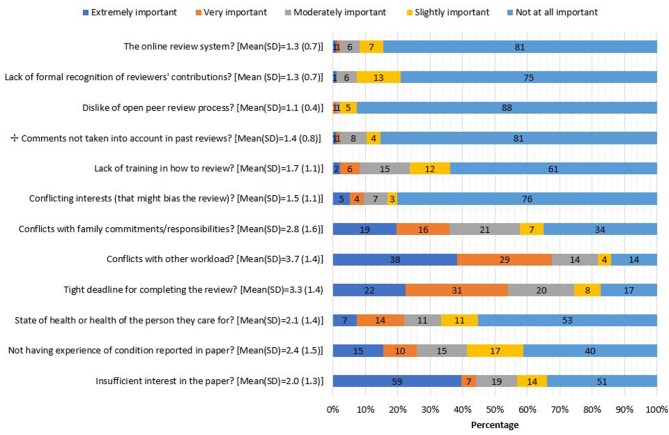
The response rate was 69% (157/227) for those who had previously reviewed and 31% (67/217) for those who had not yet reviewed. Reviewers described being motivated to review by the opportunity to include the patient voice in the research process, influence the quality of the biomedical literature and ensure it meets the needs of patients. Of the 157 who had reviewed, 127 (81%) would recommend being a reviewer to other patients and carers. 144 (92%) thought more journals should adopt patient and public review. Few reviewers (16/224, 7%) reported concerns about doing open review. Annual acknowledgement on the journals' websites was welcomed as was free access to journal information. Participants were keen to have access to more online resources and training to improve their reviewing skills. Suggestions on how to improve the reviewing experience included: allowing more time to review; better and more frequent communication; a more user-friendly process; improving guidance on how to review including videos; improving the matching of papers to reviewers' experience; providing more varied sample reviews and brief feedback on the usefulness of reviews; developing a sense of community among reviewers; and publicising of the contribution that patient and public review brings.
Patient and public reviewers shared practical ideas to improve the reviewing experience and these will be reviewed to enhance the guidance and support given to them.
在2014/2015年,《BMJ》和《JAMA》成为首批将患者和公众常规纳入期刊文章同行评审过程的期刊。本调查探讨了这些评审人员的观点和早期经历。
横断面调查。
受邀参与《BMJ》和《JAMA》评审的患者和公众评审人员。
曾参与评审的人员回复率为69%(157/227),未参与过评审的人员回复率为31%(67/217)。评审人员表示,他们参与评审的动机在于有机会在研究过程中纳入患者的声音、影响生物医学文献的质量并确保其满足患者需求。在157名参与过评审的人员中,127名(81%)会向其他患者和护理人员推荐担任评审人员。144名(92%)认为更多期刊应采用患者和公众评审。很少有评审人员(16/224,7%)报告对进行公开评审存在担忧。期刊网站上的年度致谢以及免费获取期刊信息受到欢迎。参与者渴望获得更多在线资源和培训以提高他们的评审技能。关于如何改善评审体验的建议包括:给予更多评审时间;更好且更频繁地沟通;采用更用户友好的流程;改进关于如何评审的指导,包括提供视频;使论文与评审人员的经验更匹配;提供更多样化的示例评审以及关于评审有用性的简短反馈;在评审人员之间营造社区感;宣传患者和公众评审所带来的贡献。
患者和公众评审人员分享了改善评审体验的实用想法,将对这些想法进行审视,以加强为他们提供的指导和支持。