Division of Pulmonary and Critical Care Medicine, Oregon Health and Science University, Portland, OR 97239, USA.
Department of Pathology, Stanford University, Stanford, CA 94305, USA.
Sci Transl Med. 2018 Sep 5;10(457). doi: 10.1126/scitranslmed.aar8477.
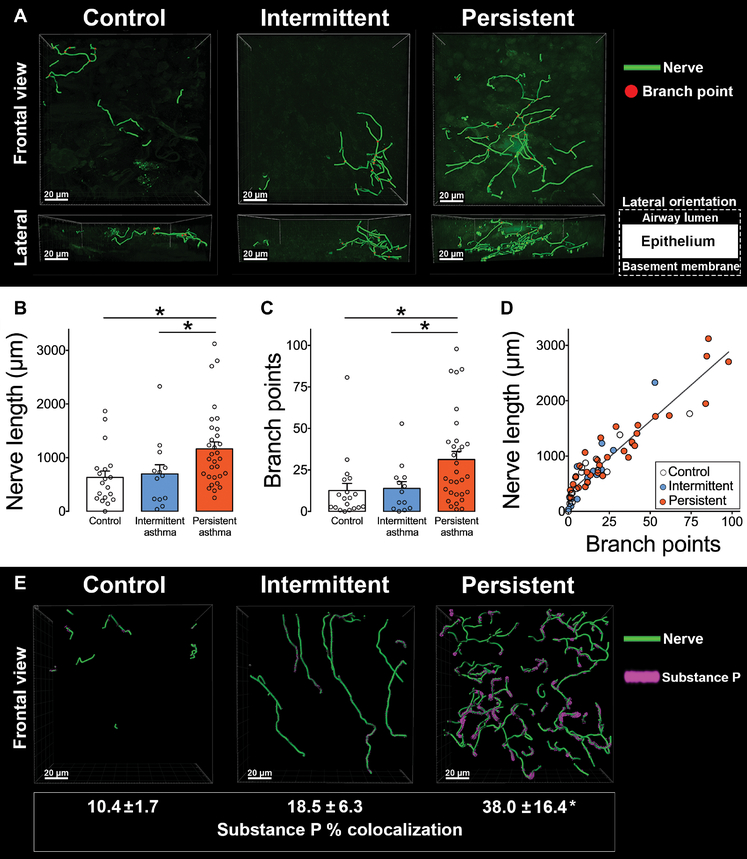
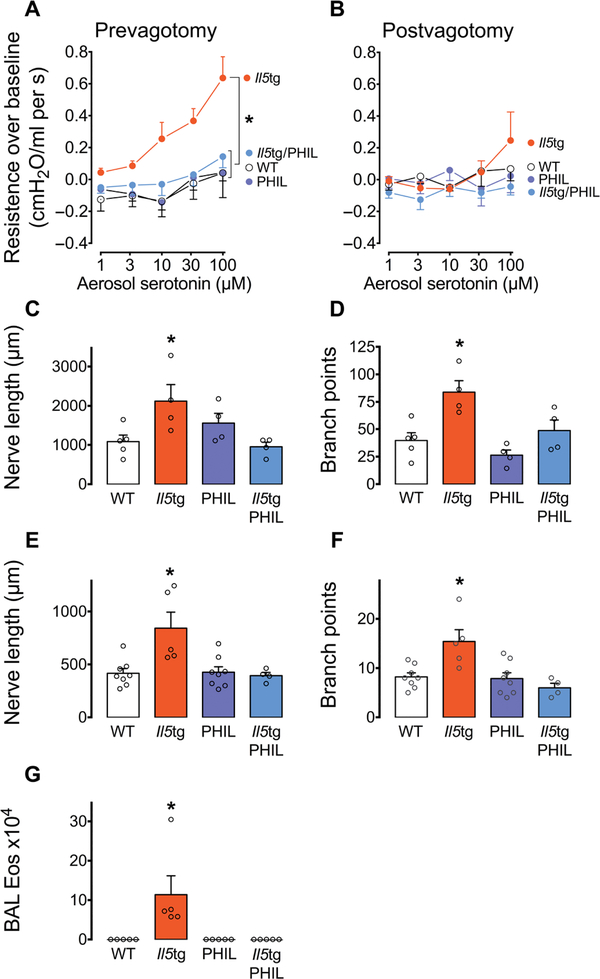
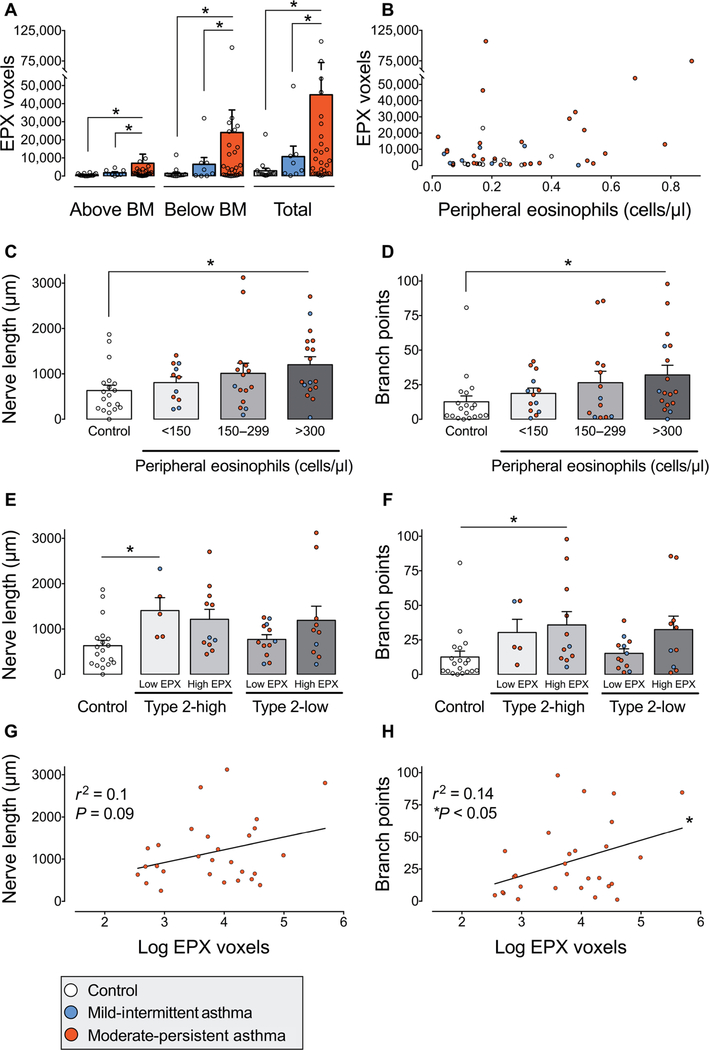
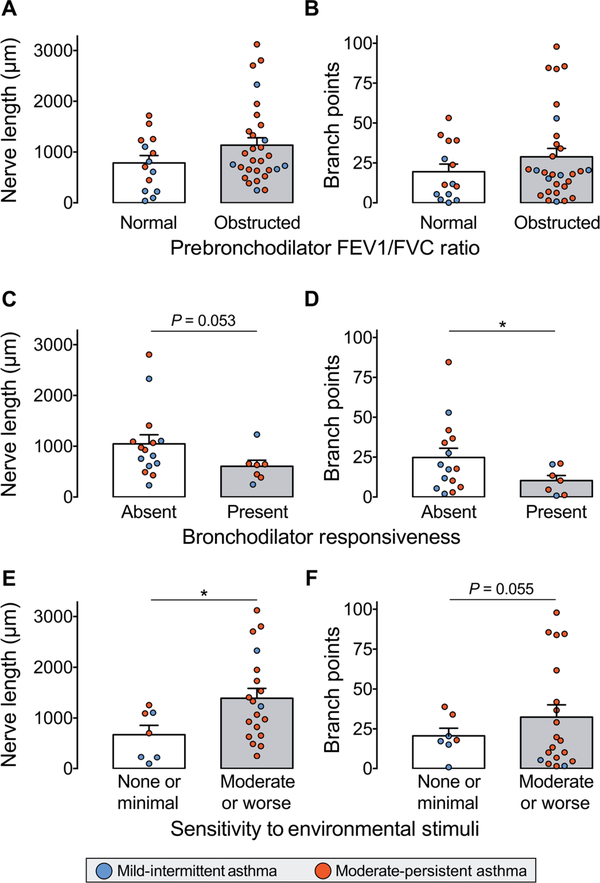
In asthma, airway nerve dysfunction leads to excessive bronchoconstriction and cough. It is well established that eosinophils alter nerve function and that airway eosinophilia is present in 50 to 60% of asthmatics. However, the effects of eosinophils on airway nerve structure have not been established. We tested whether eosinophils alter airway nerve structure and measured the physiological consequences of those changes. Our results in humans with and without eosinophilic asthma showed that airway innervation and substance P expression were increased in moderate persistent asthmatics compared to mild intermittent asthmatics and healthy subjects. Increased innervation was associated with a lack of bronchodilator responsiveness and increased irritant sensitivity. In a mouse model of eosinophilic airway inflammation, the increase in nerve density and airway hyperresponsiveness were mediated by eosinophils. Our results implicate airway nerve remodeling as a key mechanism for increased irritant sensitivity and exaggerated airway responsiveness in eosinophilic asthma.
在哮喘中,气道神经功能障碍导致过度的支气管收缩和咳嗽。众所周知,嗜酸性粒细胞会改变神经功能,并且 50%至 60%的哮喘患者存在气道嗜酸性粒细胞增多。然而,嗜酸性粒细胞对气道神经结构的影响尚未确定。我们测试了嗜酸性粒细胞是否会改变气道神经结构,并测量了这些变化的生理后果。我们在有和没有嗜酸性粒细胞性哮喘的人群中的研究结果表明,与轻度间歇性哮喘和健康受试者相比,中度持续性哮喘患者的气道支配和 P 物质表达增加。支配增加与支气管扩张剂反应性降低和刺激性敏感性增加有关。在嗜酸性粒细胞性气道炎症的小鼠模型中,神经密度的增加和气道高反应性是由嗜酸性粒细胞介导的。我们的研究结果表明,气道神经重塑是导致嗜酸性粒细胞性哮喘中刺激性敏感性增加和气道反应性过度的关键机制。