Wan Li, Ren Liang, Chen Lulan, Wang Guoxiang, Liu Xu, Wang Benjamin H, Wang Yun
Department of Neurology, Institutes of Brain Science & State Key Laboratory of Medical Neurobiology, Zhongshan Hospital, Fudan University, Shanghai, China.
Front Mol Neurosci. 2018 Aug 21;11:287. doi: 10.3389/fnmol.2018.00287. eCollection 2018.
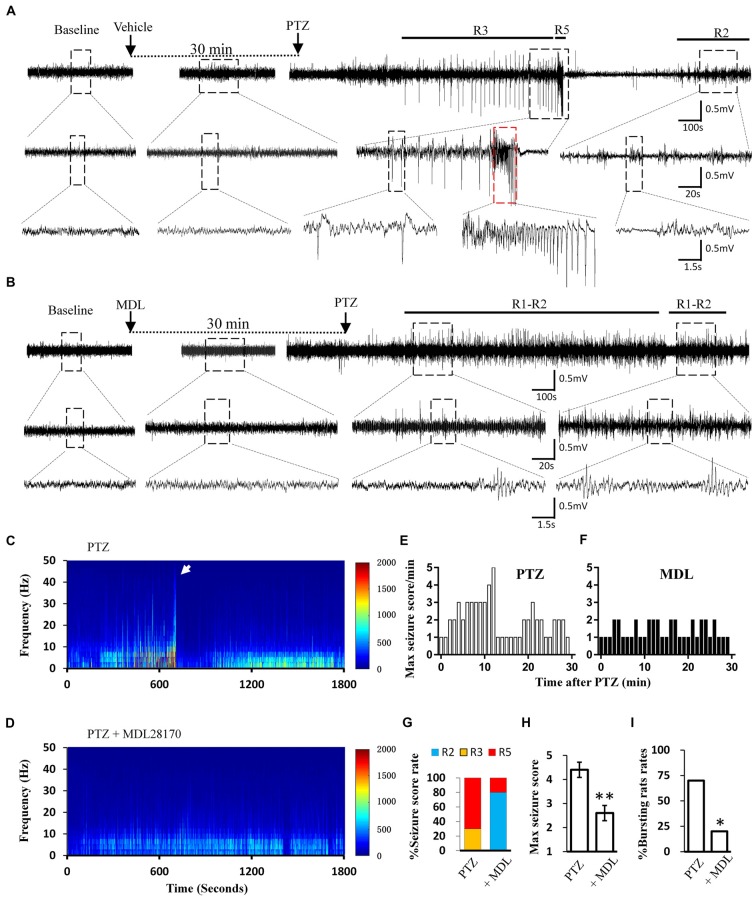
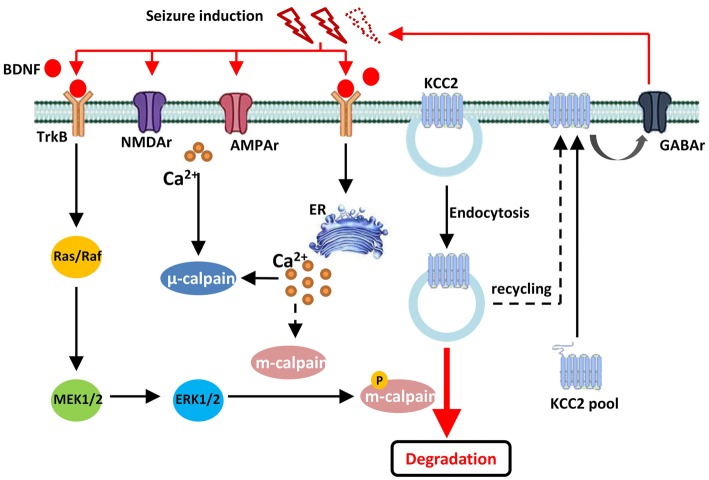
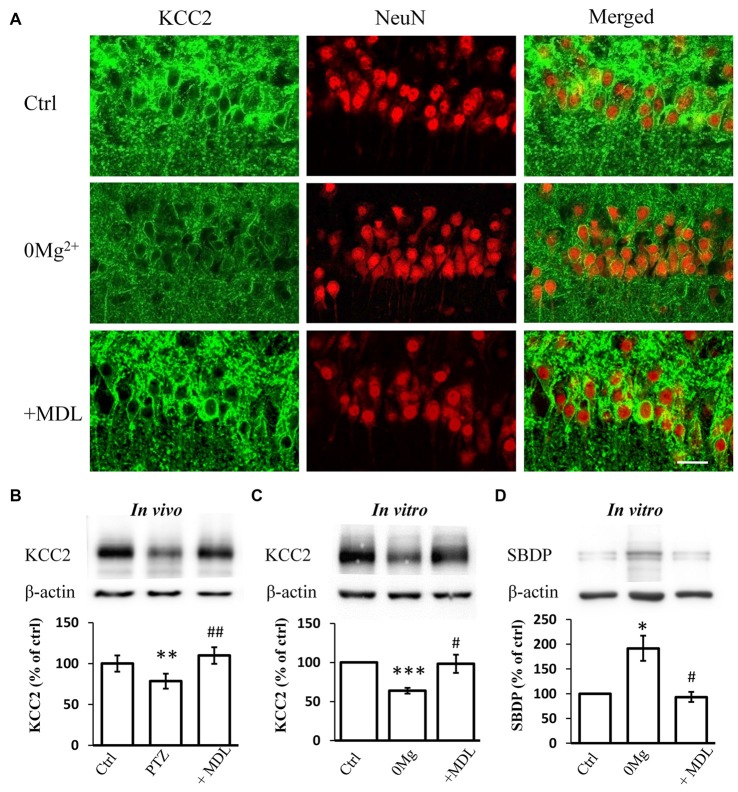
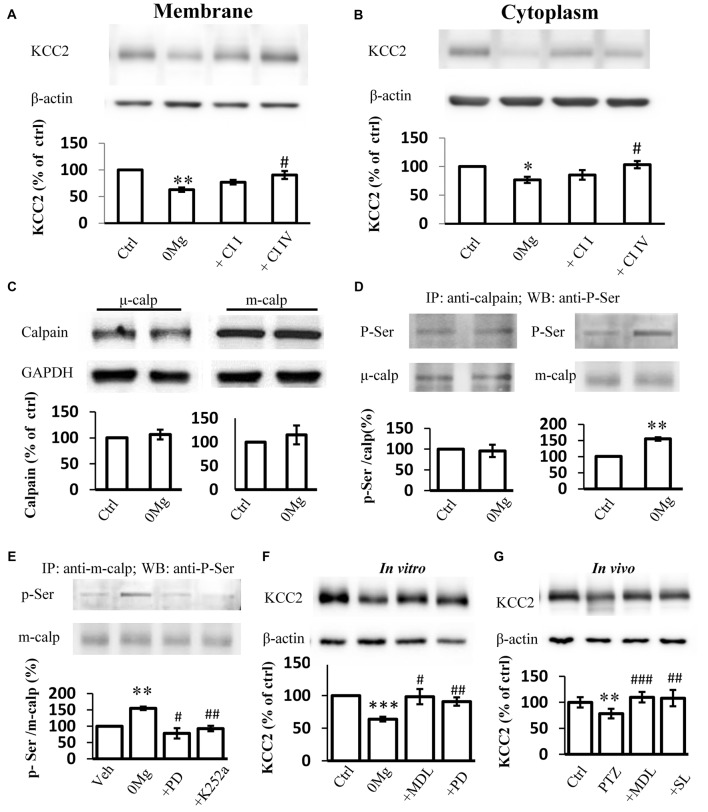
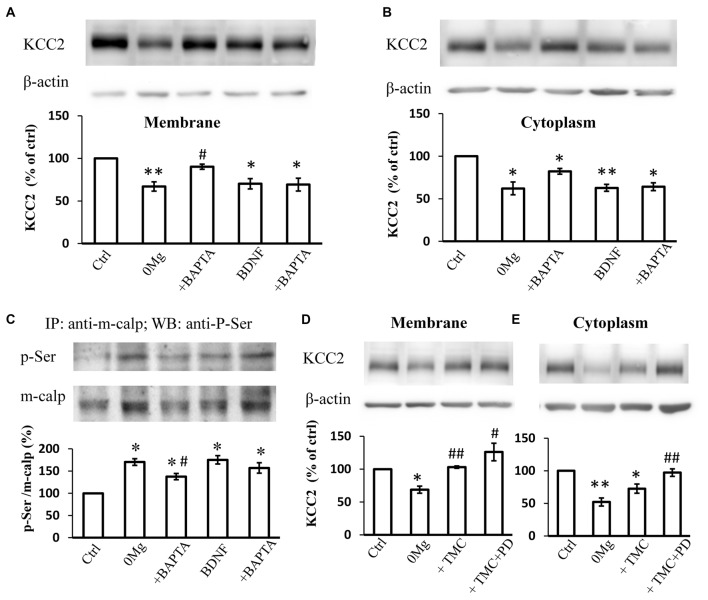
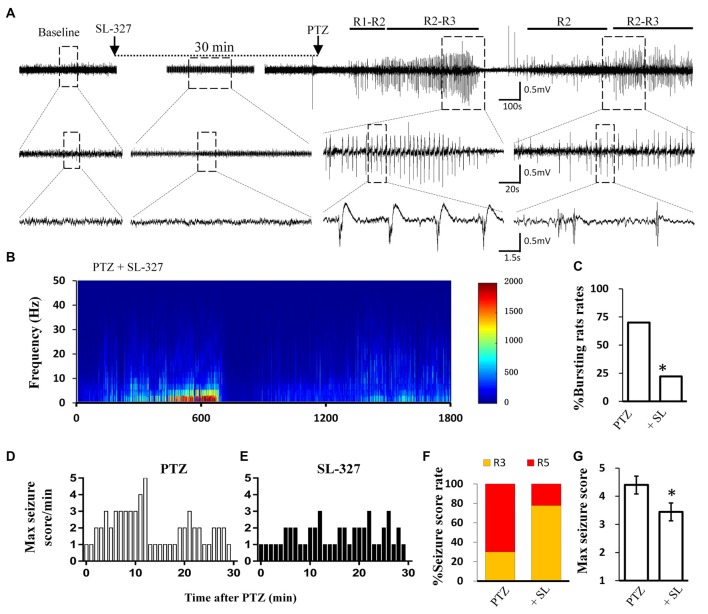
Potassium chloride co-transporter 2 (KCC2), a major chloride transporter that maintains GABA receptor inhibition in mature mammalian neurons, is down-regulated in the hippocampus during epileptogenesis. Impaired KCC2 function accelerates or facilitates seizure onset. Calpain, with two main subtypes of m- and μ-calpain, is a Ca-dependent cysteine protease that mediates the nonlysosomal degradation of KCC2. Although recent studies have demonstrated that calpain inhibitors exert antiepileptic and neuroprotective effects in animal models of acute and chronic epilepsy, whether calpain activation affects seizure induction through KCC2 degradation remains unknown. Our results showed that: (1) Blockade of calpain by non-selective calpain inhibitor MDL-28170 prevented convulsant stimulation induced KCC2 downregulation, and reduced the incidence and the severity of pentylenetetrazole (PTZ) induced seizures. (2) m-calpain, but not μ-calpain, inhibitor mimicked MDL-28170 effect on preventing KCC2 downregulation. (3) Phosphorylation of m-calpain has been significantly enhanced during seizure onset, which was partly mediated by the calcium independent MAPK/ERK signaling pathway activation. (4) MAPK/ERK signaling blockade also had similar effect as total calpain blockade on both KCC2 downregulation and animal seizure induction. The results indicate that upregulated m-calpain activation by MAPK/ERK during convulsant stimulation down regulates both cytoplasm- and membrane KCC2, and in turn facilitates seizure induction. This finding may provide a foundation for the development of highly effective antiepileptic drugs targeting of m-calpain.
氯化钾共转运体2(KCC2)是一种主要的氯化物转运体,在成熟哺乳动物神经元中维持GABA受体抑制作用,在癫痫发生过程中海马体中的KCC2会下调。KCC2功能受损会加速或促进癫痫发作的起始。钙蛋白酶有m-钙蛋白酶和μ-钙蛋白酶两种主要亚型,是一种钙依赖性半胱氨酸蛋白酶,介导KCC2的非溶酶体降解。尽管最近的研究表明钙蛋白酶抑制剂在急性和慢性癫痫动物模型中发挥抗癫痫和神经保护作用,但钙蛋白酶激活是否通过KCC2降解影响癫痫发作诱导尚不清楚。我们的结果表明:(1)非选择性钙蛋白酶抑制剂MDL-28170阻断钙蛋白酶可防止惊厥刺激诱导的KCC2下调,并降低戊四氮(PTZ)诱导癫痫发作的发生率和严重程度。(2)m-钙蛋白酶抑制剂而非μ-钙蛋白酶抑制剂模拟了MDL-28170对防止KCC2下调的作用。(3)在癫痫发作起始期间,m-钙蛋白酶的磷酸化显著增强,这部分是由非钙依赖性的MAPK/ERK信号通路激活介导的。(4)MAPK/ERK信号通路阻断对KCC2下调和动物癫痫发作诱导的作用与完全阻断钙蛋白酶相似。结果表明,惊厥刺激期间MAPK/ERK上调m-钙蛋白酶激活,下调细胞质和膜上的KCC2,进而促进癫痫发作诱导。这一发现可能为开发靶向m-钙蛋白酶的高效抗癫痫药物提供基础。