Giuliani Cesidio, Bucci Ines, Napolitano Giorgio
Unit of Endocrinology, Department of Medicine and Sciences of Aging and Ce.S.I.-Me.T., University of Chieti-Pescara, Chieti, Italy.
Front Endocrinol (Lausanne). 2018 Aug 21;9:471. doi: 10.3389/fendo.2018.00471. eCollection 2018.
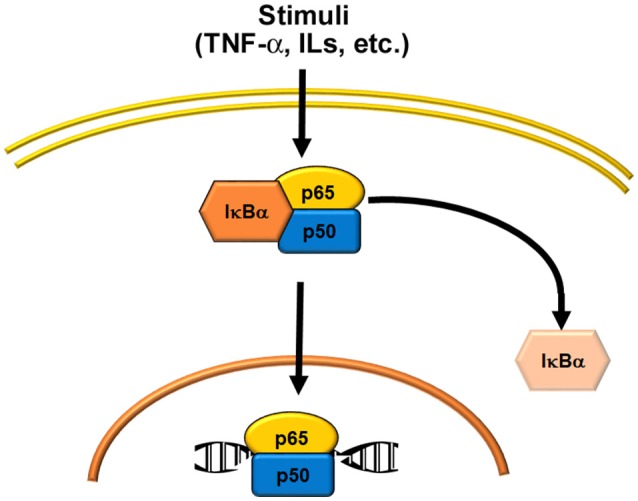
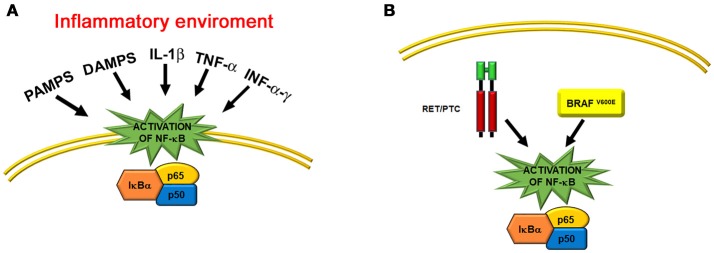
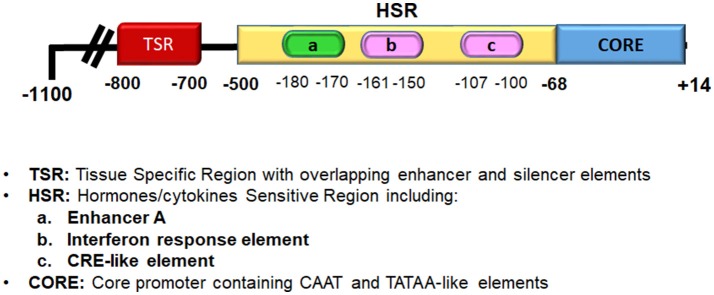
Nuclear factor-kappa B (NF-κB) is a ubiquitous transcription factor that is involved in inflammatory and immune responses, as well as in regulation of expression of many other genes related to cell survival, proliferation, and differentiation. In mammals, NF-κB comprises five subunits that can bind to promoter regions of target genes as homodimers or heterodimers. The most common dimer is the p50/p65 heterodimer. The several combinations of dimers that can be formed contribute to the heterogeneous regulation of NF-κB target genes, and this heterogeneity is further increased by interactions of the NF-κB dimers with other transcription factors, such as steroid hormone receptors, activator protein-1 (AP-1), and cAMP response element binding protein (CREB). In the thyroid, several studies have demonstrated the involvement of NF-κB in thyroid autoimmunity, thyroid cancer, and thyroid-specific gene regulation. The role of NF-κB in thyroid autoimmunity was hypothesized more than 20 years ago, after the finding that the binding of distinct NF-κB heterodimers to the major histocompatibility complex class I gene is hormonally regulated. Further studies have shown increased activity of NF-κB in thyroid autoimmune diseases and in thyroid orbitopathy. Increased activity of NF-κB has also been observed in thyroid cancer, where it correlates with a more aggressive pattern. Of particular interest, mutation of some oncogenes or tumor suppressor genes involved in thyroid carcinogenesis results in constitutive activation of the NF-κB pathway. More recently, it has been shown that NF-κB also has a role in thyroid physiology, as it is fundamental for the expression of the main thyroid-specific genes, such as sodium iodide symporter, thyroid peroxidase, thyroglobulin, , and ().
核因子-κB(NF-κB)是一种普遍存在的转录因子,参与炎症和免疫反应,以及许多其他与细胞存活、增殖和分化相关基因的表达调控。在哺乳动物中,NF-κB由五个亚基组成,这些亚基可以作为同二聚体或异二聚体与靶基因的启动子区域结合。最常见的二聚体是p50/p65异二聚体。可以形成的几种二聚体组合有助于NF-κB靶基因的异质性调控,并且这种异质性通过NF-κB二聚体与其他转录因子(如类固醇激素受体、激活蛋白-1(AP-1)和环磷酸腺苷反应元件结合蛋白(CREB))的相互作用而进一步增加。在甲状腺中,多项研究表明NF-κB参与甲状腺自身免疫、甲状腺癌和甲状腺特异性基因调控。20多年前,在发现不同的NF-κB异二聚体与主要组织相容性复合体I类基因的结合受激素调节后,人们就推测NF-κB在甲状腺自身免疫中的作用。进一步的研究表明,NF-κB在甲状腺自身免疫性疾病和甲状腺眼病中的活性增加。在甲状腺癌中也观察到NF-κB活性增加,这与更具侵袭性的模式相关。特别值得注意的是,参与甲状腺癌发生的一些癌基因或肿瘤抑制基因的突变会导致NF-κB途径的组成性激活。最近,研究表明NF-κB在甲状腺生理学中也起作用,因为它对主要甲状腺特异性基因(如钠碘同向转运体、甲状腺过氧化物酶、甲状腺球蛋白等)的表达至关重要。